Call Now
866-949-6097
or fill out the form below.
For your convenience and immediate
attention, call 866-949-6097.
Call Now
866-949-6097
or fill out the form below.
There are over a dozen species of carpenter ants. Carpenter ants dwell inside wooden structures, excavating galleries to ensure warmth and protection for their young larvae. These galleries contain slit-like windows, which serve as entry and exit points, as well as means for ejection of trash and dead ants from the nest.
Carpenter ants dwell in and around forested areas and prefer the dead and rotting wood of logs, trees or stumps. Although carpenter ants play a large role in the natural ecosystem, they are also problematic because they also damage wood that has been used to build homes.
Carpenter ants may also enter indoor structures as they forage for food or water. Carpenter ants can cause damage to houses and buildings through their nesting. However, it is best to contact a pest control expert if you suspect a carpenter ant infestation within your home or building: when their nests are disturbed, carpenter ants bite in defense.
While carpenter ant bites are not poisonous and do not carry disease, worker carpenter ants can inject formic acid into the skin, causing pain. They use this ability to fight other insects and ant species when threatened. Most carpenter ant bites will feel like a pinch and do not need treatment unless the skin is broken. If this occurs, wash the areas with soap and water, apply antibiotic ointment and cover the wounds with a bandage.
Carpenter Ant Identification: How to Identify a Carpenter Ant
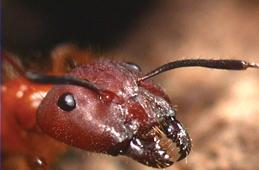
What Does a Carpenter Ant Look Like?
© Orkin, Inc. 2009