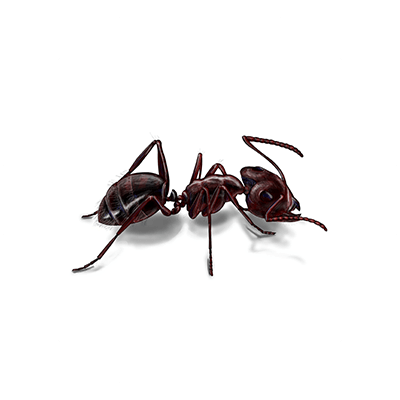
Carpenter Ant Queens
A carpenter ant colony can consist of thousands of workers, but typically only one queen. Like other ant species, the carpenter ant queens are responsible for laying eggs. Winged male swarmers exist to mate with the female swarmers. Shortly after mating, male carpenter ants die, having accomplished their only task.
Carpenter ant queens measure about 13 to 17 mm in length and, depending on the species, are dark brown, yellow, red or black in color. After mating with the male carpenter ant, the queen sheds her wings and looks for a new nesting site for her young. The queen prefers moist and rotten wood to establish a new colony. After locating a nesting site, she seals herself inside the wood until the first brood of 9 to 16 eggs hatches and develops into adults.
While raising the first batch of workers, the carpenter ant queen uses stored fat reserves and her wing muscles for nutrition until they become fully mature workers. The development of carpenter eggs to adult workers spans approximately 6 to 12 weeks. After the first generation of workers becomes capable of foraging for food, they take over all responsibilities for the colony except egg-laying. Adult workers forage for food, expand their nest by excavating wood, and care for the queen and developing ants.
Because the first generation of workers was fed from the carpenter queen ant's bodily fluids, they are typically smaller in size. Succeeding generations grow larger through a healthy foraged diet of honeydew, insects and other small invertebrates.
Carpenter ant queens lay eggs that become workers and future queens. After at least two years, the queen produces winged swarmers to form new colonies. A carpenter ant queen can survive up to 25 years and lay thousands of fertilized eggs during her lifespan.