Carpenter Ant Life Cycle

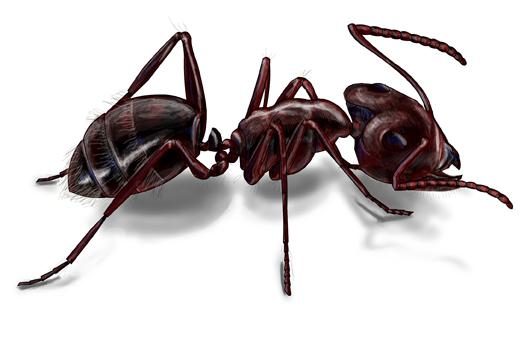
Carpenter Ant
The life cycle of carpenter ants begins with the nuptial flight, which usually occurs in the late spring or early summer, depending on environmental factors. During this mating flight, male winged carpenter ants, or swarmers, mate with winged females. Soon after mating, the females shed their wings and the males die.
The female ants then search for a new site to build their colonies. The queen typically seeks a small crack in a wooden structure. She then closes herself inside that chamber, and lays the first batch of eggs. She remains inside the chamber until her first batch of eggs becomes adult workers. During this time, the queen uses her stored fat reserves and wing muscles for nourishment.
The queen provides food for the young by means of her salivary glands until they become workers capable of foraging. The queen looks after her first brood, and, once grown, that first brood of adult workers takes care of subsequent broods.
It takes three to six years to establish a large and stable colony. The life cycle of a carpenter ant is estimated to be 6 to 12 weeks from egg to adult. Cold weather can stretch the development time of carpenter ants up to 10 months.
The only role of the carpenter ant queen is to lay eggs, but as soon as worker carpenter ants mature into adults, they take on the responsibilities of the colony. They forage for food, tend to the eggs, larvae and pupae, and excavate galleries to broaden and propagate their nest. Functions are divided into two castes: major workers who act as soldiers to guard the nest, and minor workers who forage for food and take care of the young.
After two or more years, the queen begins to produce winged males and females who will leave to begin other colonies of carpenter ants. A typical carpenter ant colony contains one queen.