Carpenter Ant Facts & Information
Protect your home or business from carpenter ants by learning techniques for identification and control.

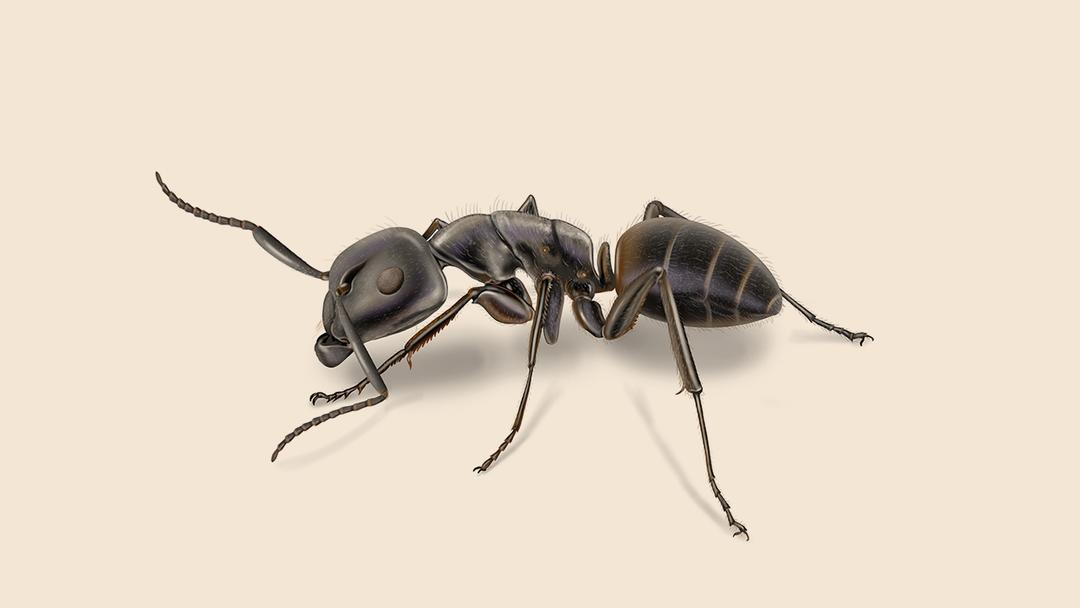
Carpenter Ant Treatment
How do I get rid of carpenter ants?
How Orkin Helps Get Rid Of Carpenter Ants
In controlling a carpenter ant infestation, it is necessary to first find the nest. Once identified, it can be removed or treated chemically. All moisture conditions that the ants found conducive must be corrected.
If treated early, serious structural damage to houses and buildings can be avoided. However, these ants could damage structures immensely if they continue undiscovered for an extended period.
DIY control methods often involve incorrect procedures that can allow the colony to rebound when surviving members resume their burrowing and foraging.
Orkin Pros are trained to help manage carpenter ants and similar pests. Since every building or home is different, your Orkin Pro will design a unique carpenter ant treatment program for your situation.
Frequently Asked Questions
Behavior, Diet & Habits
Understanding Carpenter Ants
What do carpenter ants look like?
-
Length: Carpenter ants are among the largest ants in the United States, ranging from 3.4 to 13 mm long. More size information.
-
Color: The most common color is black, but some species have reddish or yellowish coloration. The color also varies among species, ranging from jet-black to dark brown, red, black, yellow, orange, yellowish tan or light brown. Some ants exhibit both red and black coloration.
-
Mandibles: Workers have large mandibles.
Read more about carpenter ant identification.
Where do carpenter ants live?
Carpenter ants reside both outdoors and indoors in moist, decaying or hollow wood.
What do carpenter ants eat?
Carpenter ants do not eat wood as termites do, but instead remove wood and deposit the debris outside of their nests in small piles. They will feed on a variety of food people eat—particularly sweets and meats. They will also feed on other insects.
Carpenter Ant's Attraction to Moisture
In natural environments, carpenter ants dwell in both dead and living trees, stumps and rotting logs. However, they may also establish their nests inside of homes and buildings where wood is found, especially where wood has been exposed to severe moisture.
Carpenter Ant Reproduction
Queens lays 9 to 16 eggs the first year and may live up to 25 years. Eggs complete their life cycle in about 6 to 12 weeks.
Carpenter Ant Galleries & Nests
Ants of the genus Camponotus are known as carpenter ants because they prefer to establish their colonies in galleries excavated from damp or damaged wood. They cut galleries into the wood grain to form their nests and provide passageways for movement from section to section of the nest. This activity produces wood shavings mixed with parts of dead ants which provides clues to nesting locations.
Carpenter ants clean their nesting sites, and their galleries are not lined with mud or moist soil as termite galleries typically are. The workers keep their galleries as smooth as sandpapered wood.
Carpenter Parent vs. Satellite Colonies
Carpenter ants build two types of nests: parent colonies and satellite colonies. Parent colonies consist of a queen, her brood, and workers. Satellite colonies consist of workers, older larvae, and pupae. Workers create satellite colonies when the parent colony lacks sufficient space or when there is a suitable supply of food or water. There may be several satellite colonies associated with a parent colony.
Carpenter Ant Photo Gallery
Below are various images and photos of carpenter ants to help you understand what they look like.

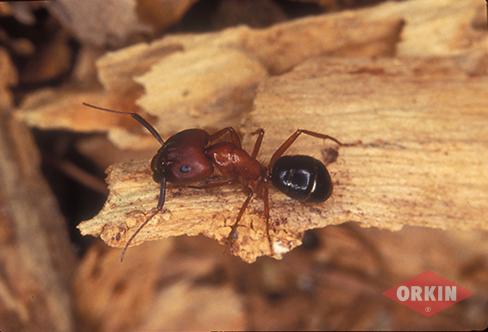
Carpenter ant with reddish coloration


Carpenter Ant Pinchers Close Up

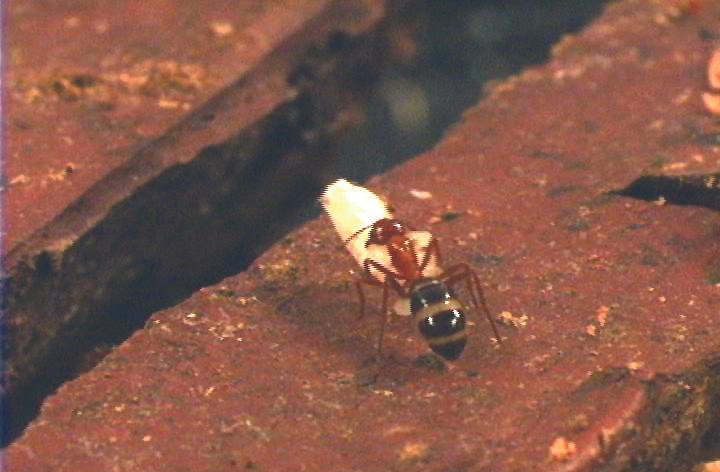
Carpenter Ant Building Mound
More Carpenter Ant Facts
How to Identify a Carpenter Ant
Carpenter ants are large, typically black or dark-colored ants, known for their ability to excavate wood to create nests, which can lead to structural damage in homes.
What Does a Carpenter Ant Look Like?
Carpenter ants are large with a narrow waist, bent antennae, and strong jaws used for excavating wood.
Carpenter ants are among the largest ant species, with worker ants typically ranging from 1/4 to 1/2 inch in length, and queens reaching up to 1 inch.
Carpenter ant larvae are small, white, legless grubs that resemble tiny, curled worms and develop within the nest until they pupate into adult ants.
Carpenter ant bites can be painful due to their strong mandibles, but they are not venomous and typically only occur when the ants feel threatened."
Natural Carpenter Ant Pesticide
Natural carpenter ant pesticides often use ingredients like diatomaceous earth, essential oils, or boric acid to effectively control and repel these wood-destroying pests.
Red and black carpenter ants are a common species characterized by their distinct bicolored appearance, with a reddish thorax and a black abdomen, and are known for their wood-damaging behavior.
Boric acid is an effective treatment for carpenter ants, working as a slow-acting poison that they carry back to their nest, ultimately eliminating the colony.
Regular Ant And Carpenter Ant Differences
Learn about the biggest differences between regular ants and carpenter ants.
Learn about what they are and how they can infest homes