Fire Ant Bites
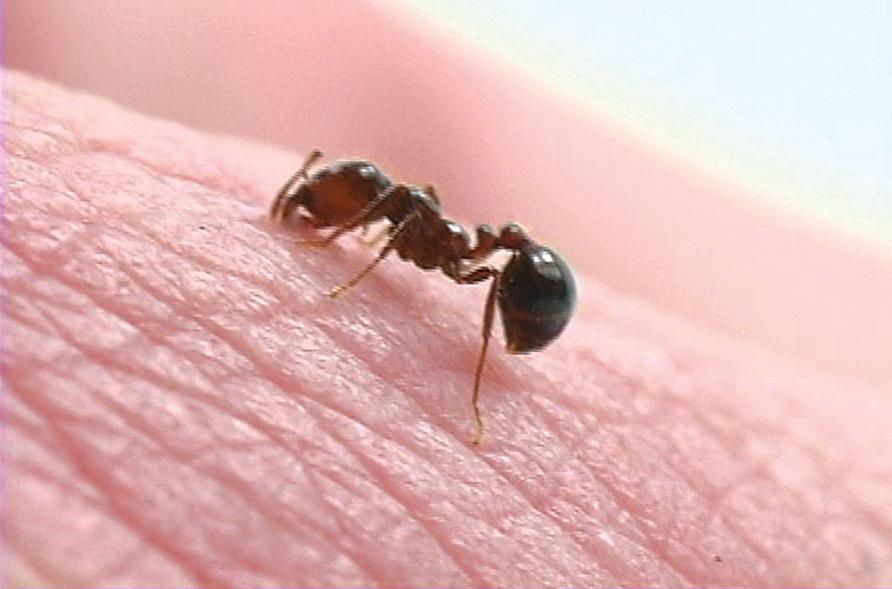
Imported red fire ants dwell in large numbers and react aggressively to combat threats to their colonies. A red fire ant will secure itself to its prey with a pair of clamp like mandibles. Once secured, the ant will use its abdominal stinger to inject alkaloid venom into the victim. The ant can deliver multiple stings, pivoting in a circle until it is brushed off or until its victim dies.
Red Imported Fire Ants
Learn about red imported fire ants & why it is important to get rid of these pests.
What does a fire ant bite look like?
The bite of a red fire ant produces a burning or stinging sensation. Stings first manifest as red welts. Fire ant stings are identified by the sting’s appearance and the ant’s aggressive efforts to come from their above-ground nest in huge numbers to sting. Each ant bites and then repeatedly stings if not removed. If the ant stings often enough, multiple stings may show up in a small, semi-circular pattern. Fire ant stings appear as a reddish lump on the skin that in time becomes a small blister. The symptoms of fire ant stings may vary depending upon the sensitivity of the person and the number of times they are stung.
Fire Ant Bite Symptoms
Most people develop itchy bumps that may appear like localized hives or single lumps at sting sites. Bumps usually disappear in about an hour, and small blisters may appear within four hours of the initial reaction. About a day after a bite, blisters normally become filled with a pus-like substance. When healed, the blistered lesions may leave scars.
A more extensive localized reaction may occur which involves swelling that extends beyond the sting site. For example, a single sting on the forearm could cause swelling across the entire arm. This condition may exist for two to three days.
Some very sensitive persons may develop much more serious allergic symptoms that may include:
-
Areas other than sting sites may itch and swell
-
Vomiting, stomach cramping, intense nausea, and diarrhea
-
Tightness in the chest and difficulty in breathing
-
Hoarseness or swelling of the tongue or throat, or difficulty swallowing
Even more severe, life-threatening reactions may occur when anaphylaxis, a severe, whole-body allergic reaction, arises. Anaphylaxis reactions can begin within minutes after the sting(s) and involve dizziness, a drop in blood pressure, unconsciousness or cardiac arrest. It is always best to seek the advice and care of a physician for treatment of fire ant stings and bites.
Why do fire ants bite?
Fire ants bite as a defense mechanism to protect their colony. When they feel threatened, they latch onto their target with their jaws and inject venom through a stinger, causing a painful burning sensation. Unlike other ant species, fire ants are particularly aggressive and will swarm if they sense danger to their nest. Their bites aren't just about feeding but also serve as a survival tactic to ward off perceived threats and defend their queen and colony.
Infected Fire Ant Bite
If left untreated, the red bumps from fire ant bites can develop into white pustules that may become infected. Scratching or breaking open the pustules, or failing to keep the sting sites clean, increases the risk of a secondary bacterial infection. Infected bites can also leave scars.
How to Identify Fire Ant Bites on Pets
It’s important to remove pets from the area where fire ants are present. Fire ant stings on pets can be identified by numerous small, red bumps, typically on areas with little or no fur, such as the eyes, ears, and belly. In some cases, fire ants may also sting around the eyes.
Fire Ant Bite Treatment
Potential first aid for fire ant bites includes over-the-counter products for itching or pain and cold compresses. If a fire ant sting victim experiences allergic symptoms, such as headaches, nausea or dizziness, or difficulty breathing, professional medical treatment should be sought immediately.
Fire Ant Control
If you're dealing with a fire ant infestation, it’s best to contact an exterminator to eliminate these pests and prevent future attacks.Contact your local Orkin branch for help protecting your home with our ant control services.
Learn More About Ants
Pharaoh ants use powerful pheromones to communicate and lead other ants to food sources. Learn how these pheromones help them thrive and spread infestations.
DIY ant treatments may provide temporary relief, but they often fail to eliminate entire colonies. Explore the challenges of self-treatment and why professional help may be needed.
Rogers ants are known for their aggressive behavior and ability to build large colonies. Learn about their habits, nesting preferences, and how to control infestations.
What is an Argentine Ant Colony?
Argentine ants form massive colonies that can span miles. Discover how these invasive ants create supercolonies and the challenges they pose to environments and structures.
Get Rid of Western Harvester Ants
Western harvester ants are known for collecting and storing seeds, playing a vital role in their ecosystem.
Does Boric Acid Kill Fire Ants?
Boric acid can be an effective treatment for fire ants when used correctly. Learn how it works, the benefits, and why professional control may still be necessary for severe infestations.