Fire Ant Life Cycle
The life cycle of the red imported fire ant (Solenopsis invicta) resembles that of most ant species—the first stage is the egg. This stage is followed in turn by the larva, the pupae and finally the adult ant. However, the fire ant life cycle occurs on two levels: the lives of individual ants, described above, and the life of the colony.
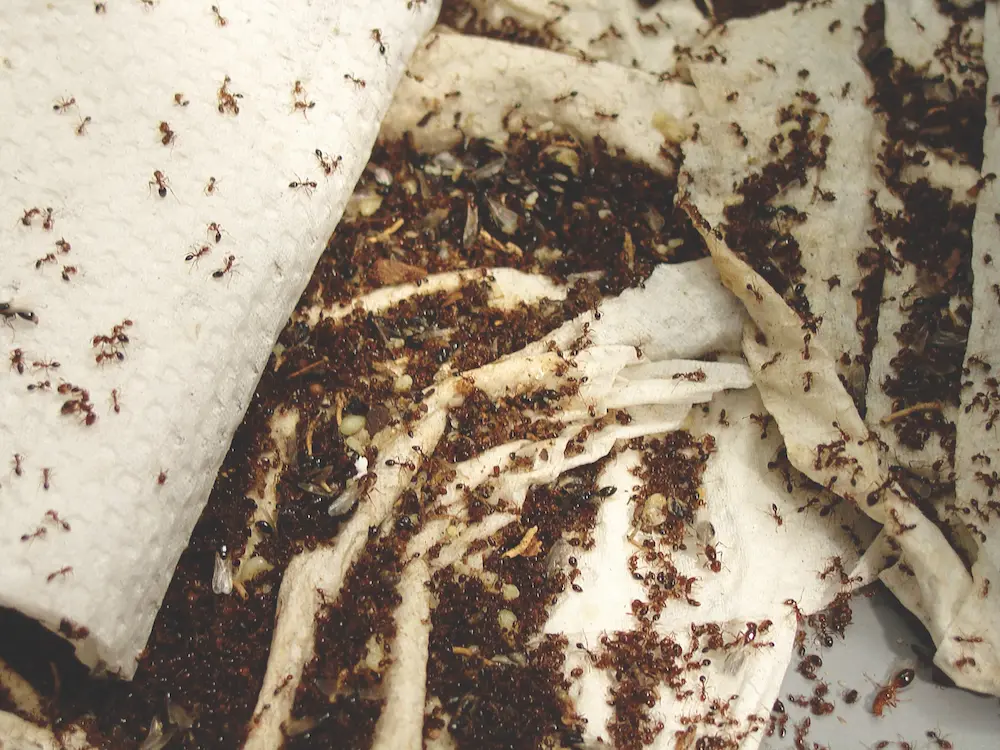
Fire Ant Colony
The Queen & Reproduction
After fertilization, a new queen lays approximately a dozen eggs, which hatch within seven to 10 days. The queen feeds and cares for the immature ants until they become adults, which generally occurs within 20 to 25 days of the eggs hatching. These new workers begin to forage for food and to care for their queen. Red fire ant colonies have been known to harbor multiple queens.
Because a well-fed queen may lay up to 1,500 eggs per day, the colony's population grows rapidly. To accommodate this growth, workers build an elaborate network of galleries and chambers, which act as both nurseries and living space for adult ants. When one mound reaches maximum capacity, queens have been known to move out of the colony with a group of workers to establish new colonies close by.
As the population expands, the mounds grow as well. Fire ant mounds average two feet in diameter and are approximately 18 inches high. Fire ant mounds serve to regulate underground temperatures. The ants move up and down in the galleries as the temperature changes.
In ideal conditions, queens have been known to live up to seven years. The average life span of a worker ant is five weeks.