Odorous Ant Facts & Information
Protect your home or business from odorous ants by learning techniques for identification and control.
Treatment
How do I get rid of odorous ants?
What Orkin Does
Orkin Pros are trained to help manage Odorous Ants and similar pests. Since every building or home is different, your Orkin Pro will design a unique ant treatment program for your situation.
Keeping ants out of homes and buildings is an ongoing process, not a one-time treatment. Orkin’s exclusive A.I.M. solution is a continuing cycle of three critical steps — Assess, Implement and Monitor. Orkin can provide the right solution to keep ants in their place...out of your home, or business.
Frequently Asked Questions
Behavior, Diet & Habits
Understanding Odorous Ants
Appearance
-
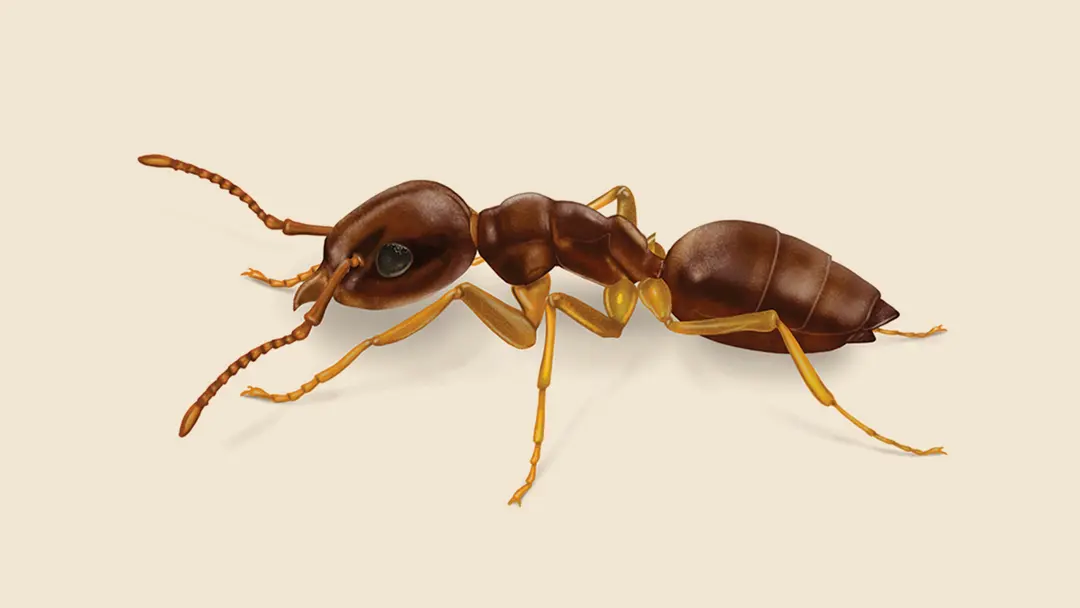
Size: Odorous house ants, sometimes called odorous ants, are small, measuring 2.4 to 3.3 mm in length.
-
Color: They have dark brown or black bodies with one node on their petiole, which is hidden by their abdomens.
-
Shape: Odorous house ants have an unevenly shaped thorax when viewed from the side.
-
Smell: The most distinguishable characteristic of odorous house ants is the smell of rotten coconut that is emitted when their bodies are crushed.
Nesting
Odorous house ants are opportunists, nesting both indoors and outdoors. Nests are found in a great variety of situations.
Indoors, odorous ants can nest in wall crevices, near heaters, water pipes, under carpets, beneath floors or sometimes behind paneling. They are most likely to invade buildings during rainy weather. Odorous ants travel in trails, foraging day and night.
Outdoors, odorous house ants place their shallow nests beneath soil as well as in logs, mulch, debris and under rocks.
Diet
Odorous house ants forage for food night and day. Outdoors they prefer honeydew from aphids and mealybugs. When the honeydew supply is reduced in autumn, they may move indoors for food. Indoors, they eat meats, sugary foods, dairy products, pastries, cooked or raw vegetables and fruit juices.
When alarmed by a predator, worker odorous ants will move in quick, erratic motions, raising their abdomens into the air.
Reproduction & Life Cycle
Like all ants, odorous house ants live in colonies. Each colony may contain two or more queens and over 100,000 workers. The queens of an odorous ant colony can produce thousands of workers and hundreds of reproductives.
New colonies are created in two possible ways. The first is when the colony produces winged male and female reproductives who swarm out of the nest, mate and the fertilized female establishes the new colony. Swarming typically occurs in the summer months. The second way odorous ants form new colonies is when a queen and workers bud off from the main colony and form their own new colony.
These ants develop by complete metamorphosis from egg, larva and pupa to adult. Development time from egg to adult is affected by several variables, such as temperature, but typically ranges from 34 to 83 days.