Pavement Ant Facts & Information
Protect your home or business from pavement ants by learning techniques for identification and control.
Treatment
How do I get rid of pavement ants?
What Orkin Does
Orkin Pros are trained to help manage Pavement Ants and similar pests. Since every building or home is different, your Orkin Pro will design a unique ant treatment program for your situation.
Keeping ants out of homes and buildings is an ongoing process, not a one-time treatment. Orkin’s exclusive A.I.M. solution is a continuing cycle of three critical steps — Assess, Implement and Monitor. Orkin can provide the right solution to keep ants in their place...out of your home, or business.
Frequently Asked Questions
Behavior, Diet & Habits
Understanding Pavement Ants
Appearance
-
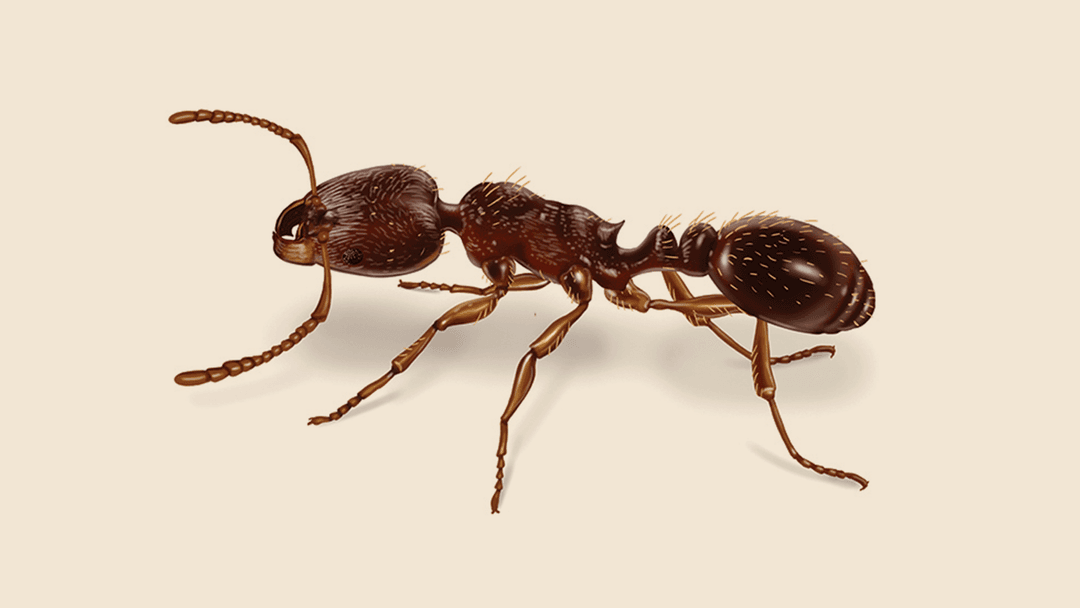
Color: Pavement ants are light brown to black with appendages lighter than rest of the body.
-
Size: They are about 2.5 to 3 mm long, with parallel lines on head and thorax.
-
Antennae: They have 12-segmented antennae with a three-segmented club.
Behavior
Pavement ants invade buildings while foraging for food. Nests are outdoors under stones, along curbs or in cracks of pavement. They can nest indoors in walls and under floors.
Bites
Pavement ants don’t bite, although they do possess the ability to sting. Pavement ants are docile and not aggressive, preferring to avoid confrontation rather than stinging to defend themselves.
Diet
Pavement ants will feed on a wide variety of foods, including meats, grease, live and dead insects, seeds and honeydew from aphids. They prefer to eat greasy foods, and can eat many foods consumed by humans. They forage for food for their colonies and set up trails to food sources from their nests. Pavement ant workers enter houses to forage and can become a nuisance when large groups infest a kitchen or garden patio. They can sting and bite.
Nesting
These ants are found throughout the United States and are major pests in the Midwest. Pavement ants earned their name because they nest in cracks in driveways and under sidewalks, piling the resulting dirt in a mound on top of the pavement.
Pavement ants also dwell in the undersides of logs, bricks, stones, patio blocks and boards. Pavement ants may also nest under mulching or open soil close to building foundations. They also can nest indoors, such as under floors, inside insulation and within walls.
The nests of pavement ants are difficult to locate, so the most efficient way to manage an infestation is to contact a pest control professional.
Reproduction & Life Cycle
Pavement ants undergo complete metamorphosis, passing through the egg, larval and pupal stages before becoming mature adults.
Reproduction occurs when winged males and females swarm, often in June and July. After mating, the females search out a new nesting site and become the queen for a new colony.
Colonies
A typical colony of pavement ants includes multiple queens and numerous workers. A queen establishes a new colony of pavement ants by laying eggs. Pavement worker ants then tend the queen’s brood until they develop into adults. During their development, broods are transferred from location to location to protect them from fluctuations in moisture and temperature.