Blow Fly Facts & Identification
Protect your home or business from blow flies by learning techniques for identification and control.
Treatment
How do I get rid of blow flies?
What Orkin Does
Your local Orkin Pro is trained to help manage blow flies and similar pests. Since every building or home is different, your Orkin Pro will design a unique fly treatment program for your situation.
Orkin can provide the right solution to keep blow flies in their place...out of your home, or business.
Frequently Asked Questions
Behavior, Diet & Habits
Understanding Blow Flies
Appearance
-
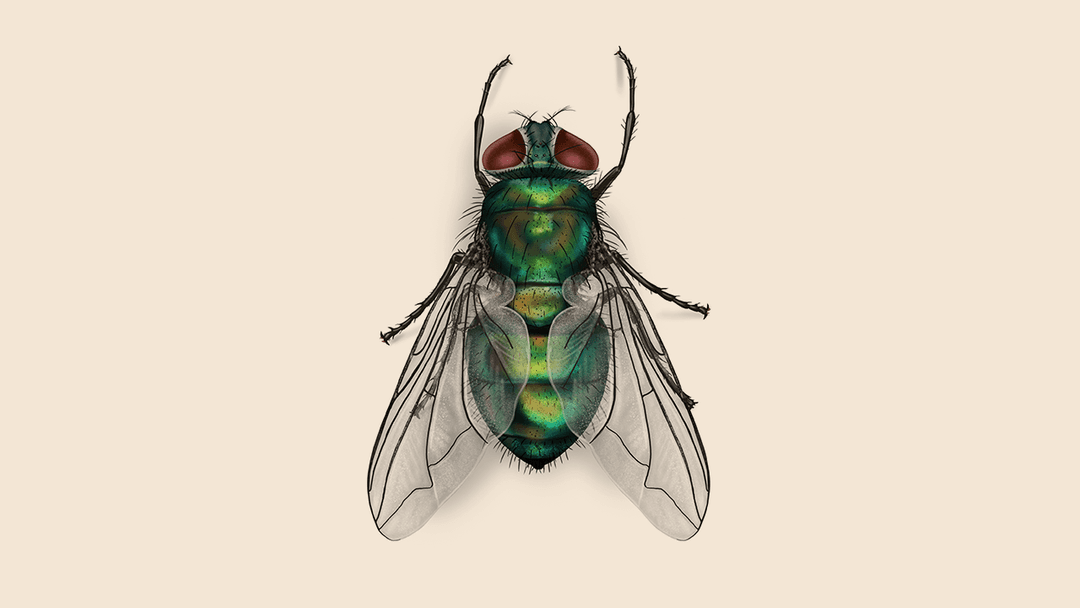
Color: Adult blow flies are often metallic, while larvae are pale in color.
-
Characteristics: Adults have sponge-like mouth parts, with feathery hairs on the terminal antennal segments of the males. Larvae have hook-like mouth parts.
-
Larvae: Blow fly larvae are also known as maggots. Measuring 9 to 22 mm in length, maggots are equipped with hook-like mouthparts and spiracles for breathing. They are soft and appear similar to worms or grains of rice. Each body segment of the blow fly maggot has a median row of fleshy tubercles that resemble hair.
Behavior
Blow flies belong to the Family Calliphoridae of flies under the Order Diptera. To date, there are approximately 80 species in North America.
Diet
Blow flies are attracted to decaying meat and are typically the first organisms to come into contact with dead animals. The meat of dead animals is essential for larval survival and growth. They are also attracted to plants that give off the smell of rotting meat and as such, can be a pollinator for those plants.
Habitat
Blow fly maggots are generally seen near dead animals. Different species of blow flies are active at different times: the Calliphora vomitoria are most commonly found on carrion during cooler months, while the Phaenicia sericata are more active in hot seasons. Other species thrive more in the shade, while some require hot temperatures to complete the maggot developmental stage.
Life Cycle
Blow fly larvae are also known as maggots. Measuring 9 to 22 mm in length, maggots are equipped with hook-like mouthparts and spiracles for breathing. They are soft and appear similar to worms or grains of rice. Each body segment of the blow fly maggot has a median row of fleshy tubercles that resemble hair.
Female blow flies typically lay their eggs on decaying meat, where maggots hatch within a few hours to a few days depending on species. These maggots undergo three stages within several days, after which they leave their food source and pupate in soil. Within a few days, the pupation will be complete, at which point they emerge as adults.
Blow fly eggs are laid in rotting meat, where maggots feed and complete their development before seeking a dry location within which to pupate. After maturing, larvae create outer skins, known as puparia, that look like rat droppings or cockroach egg cases. Pupae develop within the puparium, maturing into adults.
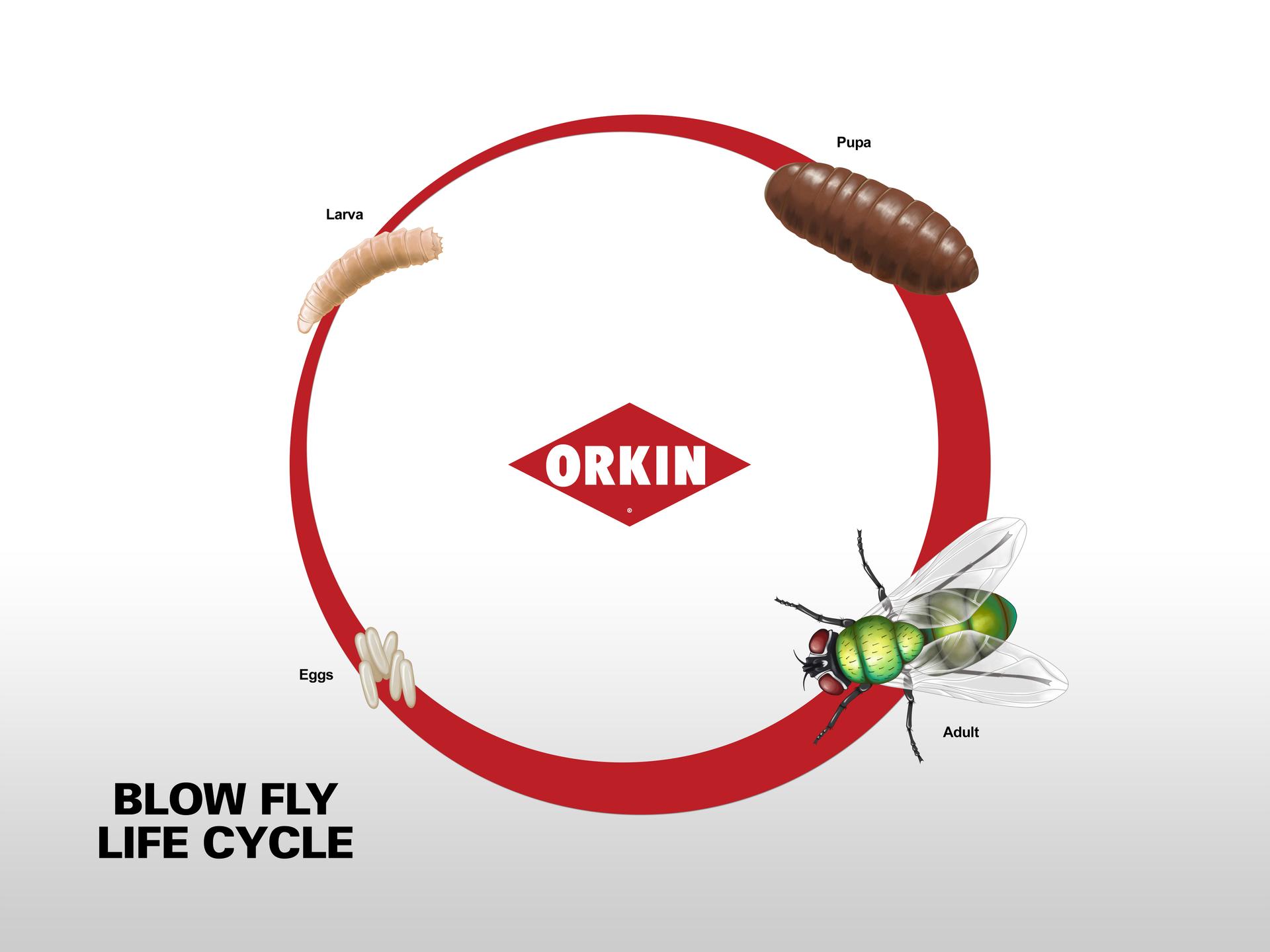
Blow Fly Lifecycle