Deer Fly Identification & Removal
Protect your home or business from deer flies by learning techniques for identification and control.

Treatment
How do I get rid of deer flies?
What Orkin Does
Orkin Pros are trained to help manage flies. Since every home is different, the Orkin Pro will design a unique fly treatment program to help you repel deer flies.
However, this is an ongoing process, not a one-time treatment. Orkin’s exclusive A.I.M. solution is a continuing cycle of three critical steps — Assess, Implement and Monitor.
Orkin can provide the right solution to keep deer flies in their place...out of your home.
Frequently Asked Questions
Behavior, Diet & Habits
Understanding Deer Flies
Appearance
-
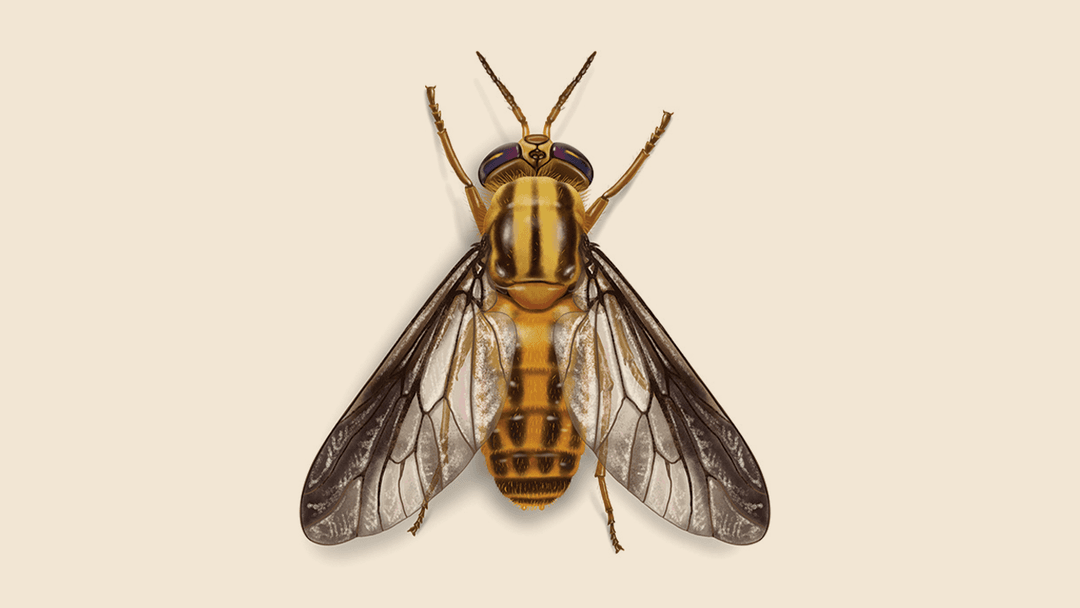
Size: Deer fly adults range in size from about ¼ to 1/3 inches long.
-
Wings: Their wings are clear, but with dark bands or patches.
-
Color: Their bodies are gray or light brown and some species have yellow and black striping.
-
Eyes: Some of the more distinctive deer fly characteristics are their large, often brightly colored eyes
-
Antennae: antennae are usually longer than their head.
Diet
Female deer flies are persistent blood feeders, but the males do not consume blood. Instead, they subsist by feeding on pollen and nectar from plants. Larvae are aquatic and feed primarily on organic debris. Pupae do not feed. Deer flies natural predators include frogs and toads, spiders, wasps and hornets, dragonflies and some bird species.
Bites
The female deer fly bite involves two pairs of mouthpart “blades” that the fly uses to cut the skin. Once the skin is injured, blood begins to flow and the female then uses other mouthpart components to lap up and ingest the exposed blood. Deer flies will feed on a variety of mammals that include humans, pets, livestock and deer. The insects usually target high on a host's body, such as the head or neck. In contrast, horse flies feed on various areas but often prefer the legs.
Also, deer flies prefer to attack a moving host, while horse flies prefer to attack a stationary host. Deer fly females will continue to return to a host and bite repeatedly if their feeding behavior is interrupted for some reason. Much like mosquitoes, the stimuli used to locate a host involves carbon dioxide given off by warm-blooded animals plus visual cues such as motion, size, shape and dark color.
The general signs and symptoms of deer fly bites are:
-
Localized symptoms including swelling and an itchy red area around the bite.
-
Persistent itching and scratching of bite wounds leading to secondary bacterial infections if the bite is not kept clean and disinfected.
-
Since deer flies inject anticoagulant-containing saliva during blood feeding, some life threatening serious reactions may occur in people that are highly allergic to the anticoagulant compounds. Symptoms may include a rash on the body, wheezing, swelling around the eyes, swelling of the lips and dizziness or weakness.
Habitat
Deer flies are plentiful in damp, wooded or wetland environments such as marshes, ponds and streams, and their activity peaks in June and July throughout much of their area of distribution.
Reproduction & Life Cycle
Deer fly larvae develop in the mud and aquatic muck that occurs along the edges of bodies of water such as ponds, stream banks, wetlands or seepage areas. Female flies lay batches of 100 to 800 eggs on vegetation that stands over water or wet sites. Larvae hatch and fall below, where they feed on decaying organic matter or small organisms in the environment.
Larvae develop through 6-13 larval stages, the mature larvae crawl to drier areas to pupate, and in a matter of a few weeks, emerge as adults. When not flying to locate a host, adults rest on shrubbery or tall grass. Deer flies generally have a one year life cycle, but some species may complete 2-3 generations per year.
Female deer flies must consume a blood meal in order to yield fertile fly eggs.
More Information
Chemical and source reduction control of deer flies is very difficult since they develop in natural habitats where insecticides, if legal to apply, offer little more than a minor, short-term degree of effectiveness and the extent of their habitat is extremely wide-spread. Therefore, if a property owner needs to control deer flies, it is best to contact your pest management professional for advice on methods that are effective and what can legally and practically be done to control deer flies. One method that is moderately helpful is the use of traps, although their effect is limited to a somewhat small scale.
The use of repellents are helpful, but even the best repellents are not overly effective. A better prevention option is to cover and clothe exposed parts of the body to reduce the likelihood of deer fly bites.
There is evidence that deer flies in the western U.S. are involved in the transmission of tu¬laremia, also known as deer fly fever or rabbit fever. Compared to ticks, deer flies are minor vectors of tularemia. In equatorial African rain forests, a filarial parasite that causes loiasis is transmitted by deer flies that inhabit those areas.