Flesh Fly Facts & Information
Protect your home or business from flesh flies by learning techniques for identification and control.

Treatment
How do I get rid of flesh flies?
What Orkin Does
Flesh fly prevention and control comprises both exterior and, if necessary, interior procedures. The first step in a control program is to contact your pest management professional for assistance. Your pest management professional will positively identify the offending pest, conduct an inspection and then develop an integrated pest management plan (IPM) to resolve the problem. The key components of a flesh fly IPM plan include:
-
Identification: Since not all flies have the same behavior and habitat, it is important to correctly identify the offending insect so that an effective and efficient IPM program can be put into place.
-
Inspection: Your pest management professional’s inspection will provide the information and observations needed to develop the proper IPM plan.
-
Sanitation: Keep the property clean and get rid of all sources that provide flesh flies a suitable development habitat.
-
Exclusion: Seal and repair screens, holes, gaps, and any other entryway that flesh flies may use to enter the home.
-
Traps: Illuminate traps to attract and capture flies.
-
Baits: Using chemical products to treat fly resting places, using chemical fly baits and using aerosol products.
Frequently Asked Questions
Behavior, Diet & Habits
Understanding Flesh Flies
Appearance
-
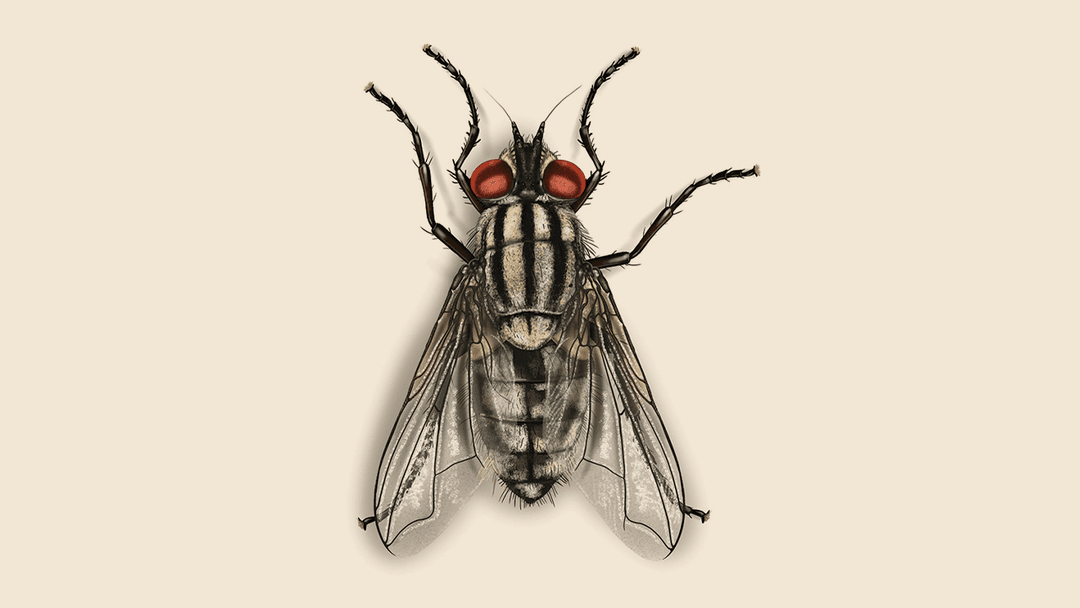
Characteristics: Flesh flies look like house flies, but are generally larger.
-
Color: They are gray with a checkerboard pattern on the top of their abdomen. Three black stripes run along the top surface of their thorax, and sometimes a reddish-brown tip at the end of the abdomen.
Behavior
Flesh flies look like house flies, but are generally larger. These pests are sometimes among the first insects to arrive at a dead animal carcass and are similar to blow flies in biology and habits. Also, forensic investigators may use the development of flesh fly larvae in a carcass or corpse to help determine time of death.
Diet
These materials attract flesh flies and provide the ideal food source for the pests as well as a place to lay their eggs:
-
Carrion
-
Decaying feces
-
Organic waste
-
Blow fly larvae
-
Lesser house fly larvae
-
Grasshopper nymphs
Habitat
Not commonly found in the home, flesh flies frequently infest industrial buildings like meat processing and packing facilities. Adult flesh flies don't bite humans, but they do feed on liquid substances, and may infest wounds, carrion, and excrement.
Geographic Range
Flesh flies are worldwide in distribution and are found in most regions of the United States.
Life Cycle
While the life cycle of flesh flies varies by species and location, generally the flies overwinter in their pupal stage within temperate climates and emerge as adults in the spring. Soon after becoming adults, they mate and the female flesh fly may lay eggs. More likely she will deposit 20-40 larvae that have hatched within her body which she directly lays on the carrion, feces, or rotting plant materials. A single female can produce hundreds of eggs during her lifetime.
Lifespan
Flesh fly larvae feed for 3 or 4 days and become pupae that burrow into nearby soil. After about 10 to 15 days, they will emerge as adults. Flesh flies go through several generations each year. Depending on the species, eggs may hatch within 24 hours and the entire life cycle of the fly may be completed within 1-2 weeks.