Fruit Flies
Protect your home or business from fruit flies by learning techniques for identification and control.

Treatment
How do I get rid of fruit flies?
What You Can Do
Bacterial digesters are available to pour down infested drains. Bleach can sometimes be effective; although it is rarely stays in the drain long enough to address the accumulated slime that attracts fruit flies. While not effective at eliminating an infestation, fruit fly traps may provide temporary relief by trapping some of the adults.
What Orkin Does
Orkin Pros are trained to help manage fruit flies. Since every home is different, the Orkin Pro will design a unique fly treatment program for your situation.
Keeping fruit flies out of your home is an ongoing process, not a one-time treatment. Orkin’s exclusive A.I.M. solution is a continuing cycle of three critical steps—Assess, Implement and Monitor.
Orkin can provide the right solution to keep fruit flies in their place...out of your home.
Frequently Asked Questions
Behavior, Diet & Habits
Understanding Fruit Flies
What do fruit flies look like?
-
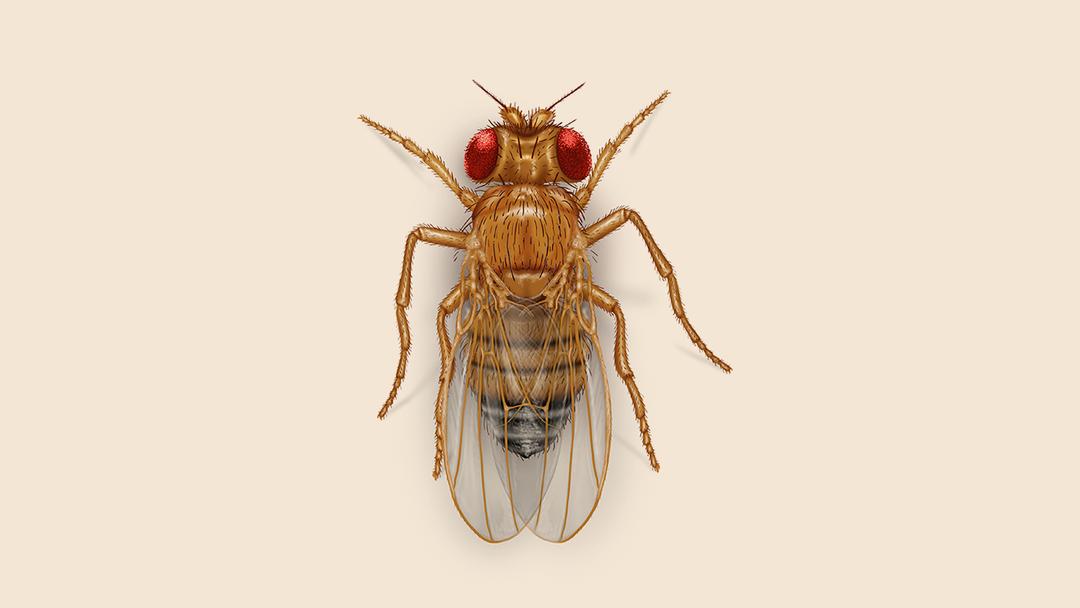
Size: Drosophila melanogaster is a species of small fly. Adults are 3 to 4 mm long.
-
Eyes: May have red eyes, though some are dark eyed
-
Body: Tan thorax. The abdomen is black on top, gray underneath.
-
Color: Fruit flies can appear to be brown or tan in color.
What do fruit flies eat?
Fruit flies eat ripened fruit and vegetables and fermenting products. Ream more about fruit flies in food.
When are fruit flies active?
Populations tend to build during the summer, becoming very abundant at harvest time. Indoors, fruit flies are frequently active at all times of the year.
Life Cycle of a Fruit Fly
The common fruit fly (Drosophila melanogaster)is known for its ability to reproduce rapidly. Larvae of fruit flies develop in moist areas where organic material and standing water are present. The entire life cycle lasts 25 days or more depending on the environmental conditions and the availability of food.
Like other fly species, fruit flies experience a four-stage life cycle: beginning as eggs, they undergo larval and pupal stages before emerging as adults. The early life stages span approximately a few days and fruit flies can complete their development in as little as week in ideal temperature conditions. Adult fruit flies can live up to 30 days.
Types of Fruit Flies
-
Mexican Fruit Flies
-
Citrus Fruit Flies
-
Olive Fruit Flies
-
Caribbean Fruit Flies
-
Mediterranean Fruit Flies
-
Western Cherry Fruit Flies
Fruit Fly Prevention Tips
It is extremely difficult to rid a home of the common fruit fly. Fruit flies are attracted to sugary, organic materials. As their name suggests, they are commonly found infesting fruit. However, fruit flies are also capable of breeding in decaying meat, trash bins and large spills of soda or alcohol. Any fruit brought home following that should be stored in the refrigerator if appropriate.
Regularly wipe counters, clean spills and empty your trash cans to help prevent fruit fly infestations.
The first step in addressing a fruit fly infestation is the destruction of their feeding and breeding grounds. Fruit flies often lay their eggs in rotten fruit and other soft, sweet, organic materials. If you identify a fruit fly infestation in your kitchen, dispose of all over-ripe or damaged fruit. Any subsequently purchased fruit or vegetables should be kept in the refrigerator until the fruit fly infestation dissipates.
If there is no fruit or vegetable matter in your kitchen, check your garbage and recycling bins. Fruit flies may also use unclean drains as breeding grounds. Outdoor drains are likely sources of yard-based fruit flies, as are overripe fruits beneath the trees from which they have fallen.
After isolating the fly breeding ground, control methods may be utilized. Although eradication may require several treatments, the lack of food available to fly populations will eventually cause them to die out.
How to Tell the Difference Between Fruit Flies vs. Drain Flies
Since fruit flies and drain flies are both tiny pests, it can be difficult to tell them apart. In order to properly and effectively get rid of fruit flies in the house, you need to identify whether or not that’s the correct pest that you’re dealing with. Even though they have similar features, there are a few telltale characteristics between the two. Here are a few ways to recognize a fruit fly vs. a drain fly:
Fruit Flies:
-
Have a very slender body type with brownish-yellow stripes or spots and red eyes
-
Enter the home by hitching a ride as eggs on surfaces of organic matter such as fruits and vegetables
-
Are typically found in kitchens hovering around fermenting produce on counters and kitchen scraps
Drain Flies:
-
Have a tuft of fur on their heads and a moth-like appearance with fuzzy wings and antennae
-
Feed and breed on decaying organic matter in drains, sewers, and garbage cans
For help getting rid of fruit flies and drain flies, contact your Orkin Pro at your local Orkin branch.
More Information
How to Make a DIY Apple Cider Vinegar Fruit Fly Trap
Learn how to catch fruit flies by making this at-home elixir.
Gain an understanding of these tiny pests and how long it takes for them to mature.
Where do fruit flies lay eggs?
Explore how to identify fruit fly eggs and where these eggs would most likely be found.
Learn about where larvae are typically found, what they look like and how they feed.
Read all about how long it takes for a fruit fly to pupate.
Discover the fruit fly lifespan and the journey a fruit fly takes in order to emerge as an adult.
Fruit Fly Reproduction Rates Data
Gain an understanding of how fast fruit flies reproduce and their preferred breeding locations.
Examine the diets of these small, pesky flies and their preferences of organic matter.
Learn all about the incredibly simple genetic makeup of these tiny flies.
Find out if fruit flies feed on blood and bite humans.
Discover the anatomy, behavior, origin and more of these tiny flying insects.
Where do fruit flies come from?
Read about which factors contribute to a fruit fly infestation and why.
Find out which insects like to feed on fruit flies.
Learn all about fruit flies’ disproportionately large eyes.
Acquire the knowledge necessary to tell these different flies apart from one another.
How to Get Rid of Fruit Flies in Your Kitchen
Fruit flies can often be found hovering around your pantry, sink, or trash can.
How to Get Rid of Gnats & Fruit Flies
If you're seeing small black flies in your home, you might have a gnat or fruit fly infestation.
Does vinegar repel fruit flies?
Vinegar alone may not repel fruit flies, but it does act as a attractant to help trap them.