Fruit Fly Behavior and Life Cycle Facts
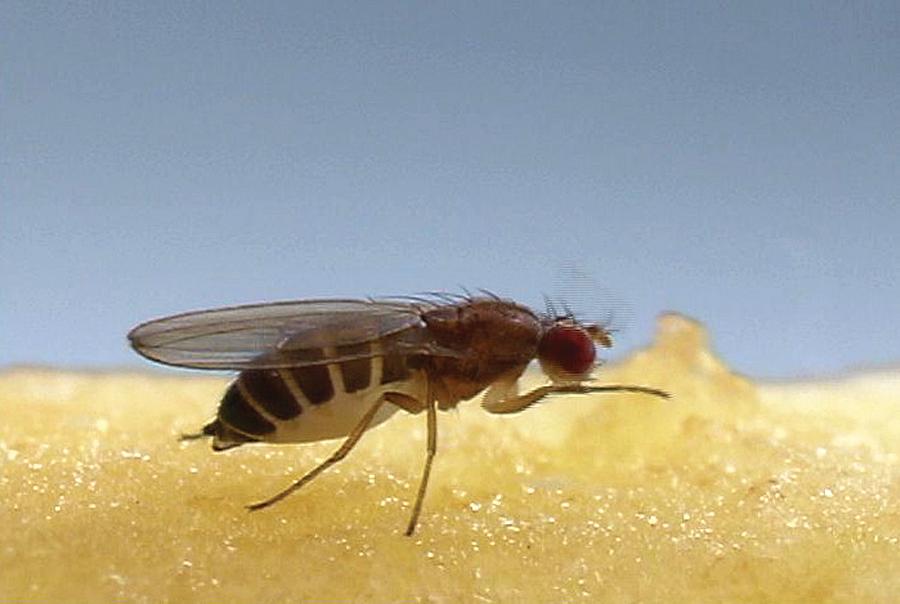
Fruit fly populations can be a problem in restaurants, homes, supermarkets, food plants, warehouses and any other locations where food is processed, served or stored. Fruit fly infestations are difficult to eradicate, particularly if the source of the infestation is not found.
Some Characteristics of Fruit Flies
Fruit flies consist of many different species that belong to the Genus Drosophila. Adults are tan and black in color with often red, protruding eyes. Fertilized fruit flies become active in late spring, laying their eggs on overripe fruit. When infested fruit is brought into the home, infestations can occur. Fruit flies may also enter homes through open doors and windows.
Female fruit flies are located by male fruit flies through sight, sound or smell. Although females may turn coy in order to ensure that males belong to the correct sex and species, males continue to pursue females in order to mate.
Fruit flies undergo a prelude of dances prior to mating. The dance begins when the male approaches the female slowly and vibrates his legs on her head. The next stage of the courtship dance begins when both flies drag their legs from side to side while facing each other. This seems to boost the male's confidence. He then spreads his wings and twists the leading edges downward. This simple gesture signifies the male's official intent to mount the female.
Eggs hatch into wormlike larvae that feed on sugary fruits. Although shiny, white, wormlike larvae are sometimes visible at the surface of infested food, some fruit fly larvae acquire the coloration of the fruit on which they feed, making them difficult to detect. Fruit fly larvae feed for approximately four days. Following this phase, larvae use stored nutrients while they pupate and undergo metamorphosis.
While pupating, the fruit fly grows six legs, two wings and characteristic, bulging eyes. After another four days of pupation, the adult fly emerges. Within eight hours of emerging, fruit flies are ready to mate. As adults, they are seen flying and hovering over available sources of sugar.
A fruit fly is capable of laying up to 500 eggs. Limiting access to potential food and egg-laying sites can prevent infestations. Without egg-laying sites, adult fruit flies will die, and there will be no future generations.
Controlling adult fruit flies may help to temporarily reduce visible populations. Although there are many commercially available sprays and traps used to kill fruit flies, populations will continue to grow and spread unless breeding sites are controlled. In the event of an infestation, all potential breeding sites must be located and eliminated or isolated.
Aside from food sources such as fruits, vegetables and sweet spills, inspect garbage cans, recycling bins and the undersides of large, household appliances. If a fruit fly infestation is widespread, it is advised that pest control professionals be hired to assist in eradication.