Fruit Fly Genetics
In the year 1930, fruit flies had already been recognized as indispensable to genetic study and research and they remain so today. Fruit fly populations are inexhaustible, simple to breed and are not costly subjects. Their genetic makeup is also incredibly simple.
Fruit Fly Chromosomes
Their chromosomes are large and undivided, allowing for easy observation. When the chromosomes of a fruit fly are stained with chemicals, they reveal straight, dark bands along their length. These bands match the locations of particular genes. The chromosomes of fruit flies gave scientists their first glimpse of genetic variations between species and individuals.
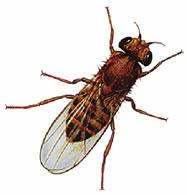
The Drosophila melanogaster is the most well known of fruit flies. It has four chromosomal pairs: one that determines sex and three autosomal chromosomes. Each chromosome has two arms, referred to as the left and the right. The chromosomal localities of individual genes are identified either by recombination units or numerical locations on each of these arms. This allows for prediction and comprehension of recombination frequencies between two genes located in the same chromosomal arm.
Because female fruit flies often mate with more than one male during mating sessions, virgin fruit flies are necessary for scientific study. Using fruit flies that have previously mated may result in mixed offspring, which skews experiment results. As a result, students can mate red- and sepia-eyed fruit flies in order to learn firsthand about dominant and recessive genes. Fruit flies are also helpful in studying mutation.
Studying the genetic makeup, transcription and replication of the fruit fly can assist in better understanding these processes in other eukaryotic organisms, such as humans. Fruit flies have been used as research subjects since 1910, when Thomas Hunt Morgan studied them at Columbia University to better understand matters of heredity. Fruit flies also make excellent research subjects because of their rapid life cycle. This allows scientists to study the effects of stimuli over the course of hundreds of generations within a matter of months.
Mutant Fruit Fly
Fruit flies have a very simple genetic structure, which makes them ideal for genetic research. It is useful to study mutant fruit flies, as their quick reproduction rate allows scientists to observe the advantages and disadvantages of certain mutations. These fruit flies are also helpful in determining whether certain stimulants cause mutation.
Some common mutations seen in fruit flies include wing structure and eye color variations. Mutant wings may be short or backward. Fruit flies are known for their red eyes, although mutations cause certain specimens to have golden or white eyes. Mutations also sometimes result in eyeless flies. Mutants may exhibit yellow and black bodies, while the standard fruit fly is light tan in color.