Gnat Facts & Information
Protect your home or business from gnats by learning techniques for identification and control.

Treatment
How do I get rid of gnats?
What Orkin Does
Keeping gnats or flies out of your home is an ongoing process, not a one-time treatment. Orkin Pros are trained to address any current gnat infestation, as well as implement solutions to help prevent future issues. The most effective gnat repellent and control methods require positive identification — which is best conducted with the assistance of an Orkin Pro as they are experts in identifying different types of gnats and flies.
Since every home is different, the Orkin Pro will design a unique treatment program. Through a specialized approach to pest control, Orkin can help protect your home with a plan suited to your specific needs. We can provide the right solution to keep gnats away and out of your home.
To learn more about how to get rid of gnats and protect your home, contact your local Orkin branch.
Frequently Asked Questions
Behavior, Diet & Habits
Understanding Gnats
What do gnats look like?
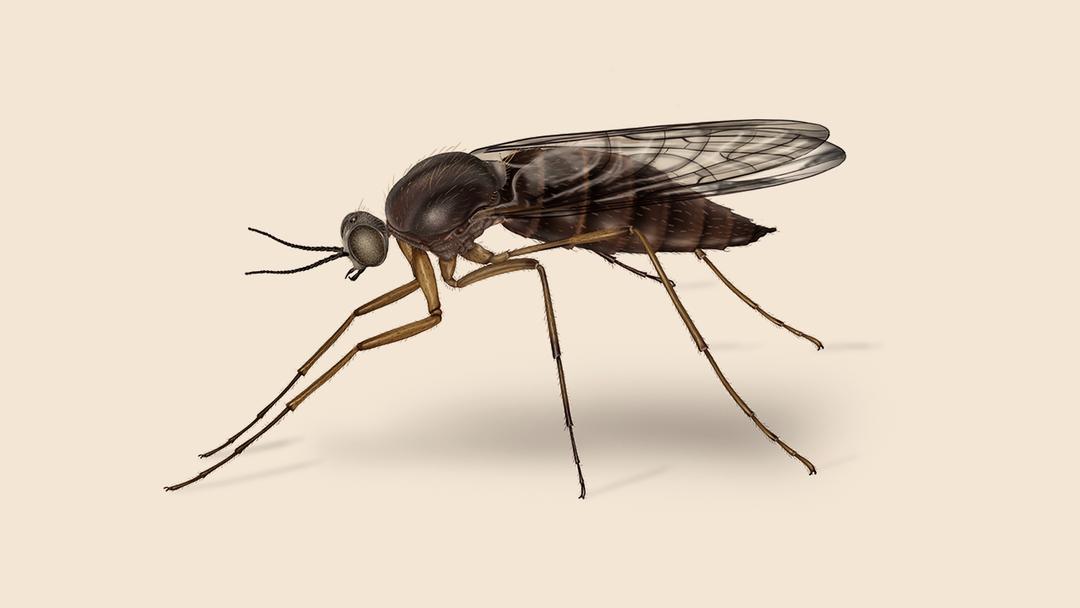
Gnats typically are small and long-legged insects. They often are weak fliers.
Behavior
Gnat is the common name for many small, winged insects in the fly grouping. Contrary to popular belief, these tiny flying insects are not “babies,” they are adults. The tiny flying insects that many people call “gnats” could really be fruit flies or fungus gnats. There are many differences between fruit flies vs gnats.
What do gnats eat?
Some species are excellent plant pollinators and feed on crop pests such as aphids and scales. Other gnats, such as the Hessian fly, are crop pests themselves. Depending on species, gnats can be biting or nonbiting and will feed on plants, other insects or blood.
Gnat Life Cycle Stages
Mating in Swarms
For some species, males assemble in large mating swarms known as ghosts. These swarms occur most commonly at dusk in large fields and above streets.
Eggs & Larvae
Depending on the species, gnat eggs are laid on land or water. Larvae may be immobile or capable of movement by way of rocks and water plants.
Adults
Adults range in size but usually are no larger than 33 mm. The larval and adult stages of the gnat are considered both beneficial and detrimental.
How to Prevent Gnats
Wet Soil
The best control for fungus gnats is to identify any plants that have wet soil and let that soil dry completely before the next watering. This will kill the larval stages in the soil. The adult gnats can be removed with a vacuum cleaner from windows and from around the plants.
Watering plants only when they need water will help prevent fungus gnat infestations.
Fruit
For most gnat populations, their food source must be located and corrected if possible. Fruit should not be exposed to open air. Keeping fruit in the refrigerator protects it from gnats and also prolongs the fruit’s period of ripeness.
Traps
Electric fly exploders that electrocute individual gnats may help to control their populations outside but also kill many beneficial insects. Inside, insect traps that are plugged into electrical outlets work by emitting ultraviolet light sources. Flying insects are attracted to this light and are caught by the sticky surface of the trap when they approach.
Most of these methods address only individual, adult specimens. In order to properly treat an entire gnat infestation, including larvae, it is best to consult a pest control professional.
More Information
Discover which gnat species are or aren’t attracted to light and the behaviors associated with each.
Learn about which small, dark insects are commonly referred to as black gnats.
While they do bite, not all gnats have the necessary mouthparts to penetrate skin.
Read about these flying pests and learn about their life cycle, habitat, and more.
Learn about where larvae are typically found and which plants are most susceptible to fungus gnat damage.
Explore how to identify gnat eggs and where these eggs would most likely be found.
Dive into what causes a gnat infestation and how to control, repel and prevent future problems.
Although there are a variety of gnat traps available, learn which ones are the most user-friendly and effective.
Gain an understanding of these tiny pests and how long it takes for them to mature.
A commonplace for these pests, learn what attracts them to your kitchen and how to prevent an infestation.
Learn what attracts gnats to plants and how to prevent them from becoming a nuisance.
A popular breeding ground for small flies, learn how to repel and keep them away from sinks in your home.
Explore which soil environments make for the perfect gnat breeding ground.
Gain an understanding of how long a gnat may live depending on its species.
How to Get Rid of Gnats Outside
Find out the most convenient and effective ways to repel and control gnats outside.
Learn about small flies’ keen sense of smell and how they use their bodies to find their preferred food sources.
Read about which factors contribute to a gnat infestation and why.
Examine the diets of these small, pesky flies and the preferences of different species.
Acquire the knowledge necessary to tell these different flies apart from one another.
Gain an understanding of where gnats breed and their preferred locations depending on the species of gnat.
Why do gnats fly in your face?
Find out why gnats are drawn to the head and are difficult to get out of your face.