Phorid Humpbacked Fly Facts & Information
Protect your home or business from phorid humpbacked flies by learning techniques for identification and control.
Treatment
How do I get rid of phorid humpbacked flies?
What Orkin Does
These flies are difficult for homeowners to completely control with any pesticides and often rarely works as the only solution. The situation has to be assessed and the source of the infestation determined (is the source a clogged drain, broken pipe or sewer line?). In many cases the floor must be removed and the pipe repaired. The soil around the break must also be removed.
Another solution to this problem is to first physically clean the drains — remove as much of the organic material as possible and then use a biological drain cleaner on a regular basis (every two weeks).
Your local Orkin Pro is trained to help manage phorid humpbacked flies and similar pests. Since every building or home is different, your Orkin Pro will design a unique fly treatment program for your situation.
Frequently Asked Questions
Behavior, Diet & Habits
Understanding Phorid Humpbacked Flies
Appearance
-
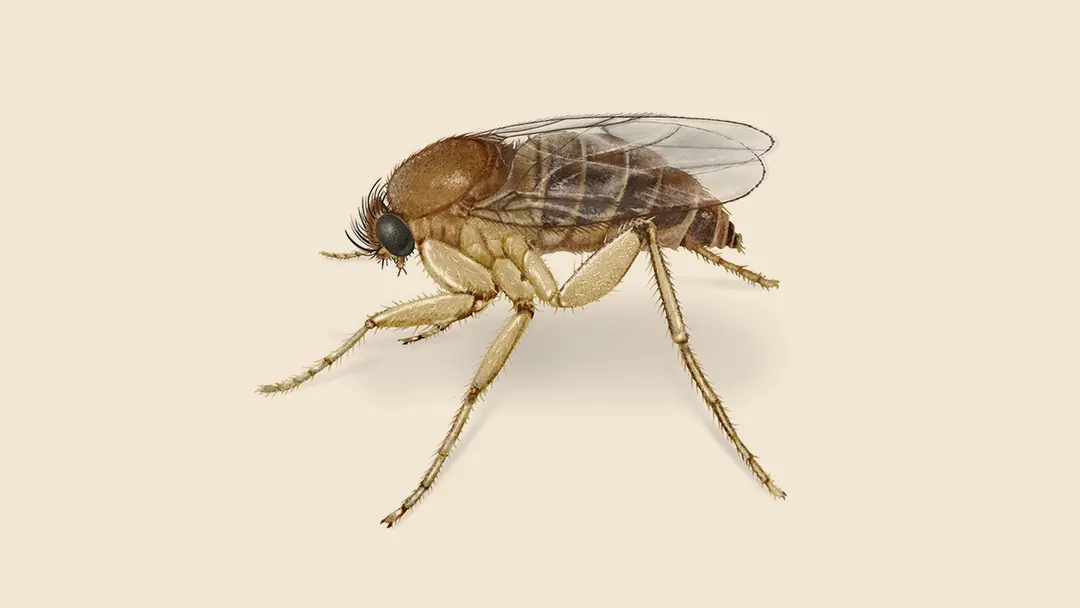
Length: Very small — 0.5 to 5.5 mm. To the naked eye, phorid flies resemble common fruit flies in appearance.
-
Color: Most are black or dull brown, but some are yellowish in color.
-
Thorax: The arched thorax of the adult gives them a humpbacked appearance. It is for this reason that phorid flies are often called "humpbacked flies."
Behavior
These pests display characteristically short and erratic flight. Adults have a peculiar habit of rapidly running across windows, TV screens, tables, walls, and plant foliage. They are frequently mistaken for "gnats."
Diet
Some foods that phorid flies eat includes:
-
Moist organic material that gathers in drains or other plumbing
-
Decomposing flour on the floor and under equipment in bakeries and kitchens
-
Decomposing vegetables such as potatoes and onions
-
Fungi
-
Insects
Reproduction
Larvae develop in moist areas where organic material and standing water are present. Phorid larvae also develop in animal matter. The entire life cycle lasts 25 days or more, depending on the environmental conditions and the availability of food.
Life Cycle
Like most flies, the phorid fly undergoes a complete four-phase life cycle including egg, larval, pupal, and adult stages. Depending on species, temperatures, and the hospitality of the environment, these pests spend 11 to 22 or more days to become adults.
More Information
Common Names
Phorid flies are also known as sewer flies and regionally as the scuttle and coffin fly because they favor decaying, moist organic material as both a source of food and for laying eggs.
Forensic & Pest Control Interests
They are fond of decaying flesh and are known to favor dead animals over rotting vegetable matter. Phorid flies are capable of creating sustainable communities in coffins and are therefore of interest to the forensic community. Certain species of phorid flies are also used as biological control agents of fire ants.