Shiny Spider Beetle Facts & Information
Protect your home or business from shiny spider beetles by learning techniques for identification and control.

Treatment
How do I get rid of shiny spider beetles?
What You Can Do
Inspecting and cleaning are the key steps in eliminating shiny spider beetles. It is important to find everything that they have infested. Steps to control and prevent these insects in your home are:
-
Empty pantry and cabinet shelves
-
Throw away infested packages
-
Vacuum empty shelves
-
Store new food products in sealed glass or plastic containers
What Orkin Does
Your local Orkin Pro is trained to help manage shiny spider beetles and similar pests. Since every building or home is different, your Orkin Pro will design a unique beetle treatment program for your situation.
Orkin can provide the right solution to keep shiny spider beetles in their place and out of your home or business.
Frequently Asked Questions
Behavior, Diet & Habits
Understanding Shiny Spider Beetles
Appearance
-
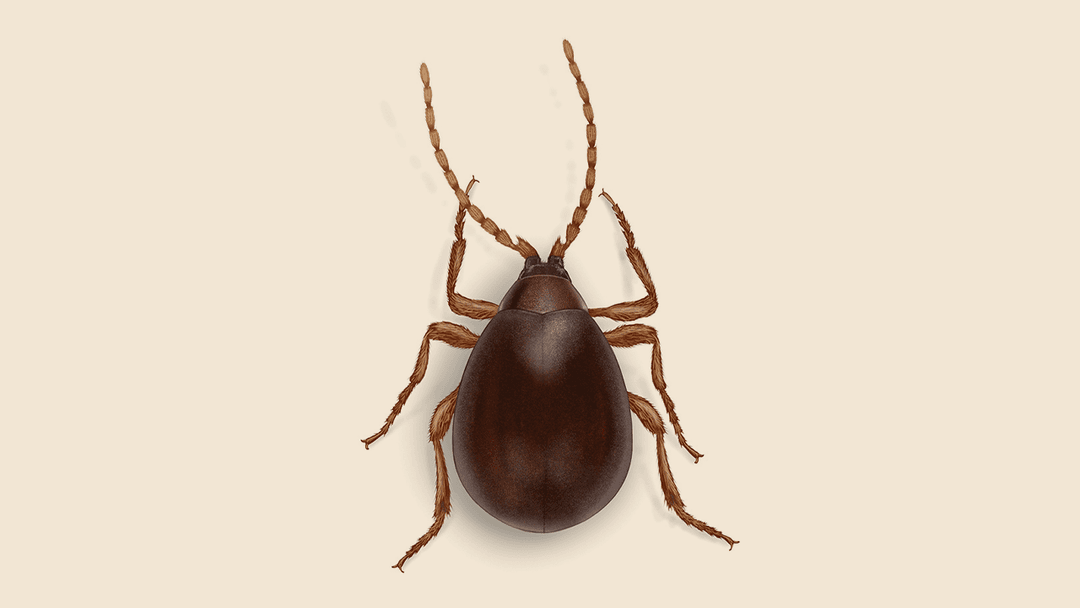
Size: Adult shiny spider beetles range in size from 1.5 to 3.5 mm.
-
Color: These beetles are solid colored. Their color varies from dark red to black.
-
Characteristics: They get their name from their long legs and oval shaped bodies that make them look like spiders. They have wing covers that give them a “humped” appearance.
These beetles are one of the most common spider beetle species in the United States. They are often confused with American spider beetles, which are cream-colored.
There are several other species, including:
-
Australian
-
Golden
Diet
Shiny spider beetles prefer to feed on moldy food. They also feed on any food products that have been stored for a very long time and are out of condition for use by people. These pests feed on the following:
-
Animal droppings
-
Dead insects
-
Paper
-
Pet food
-
Stored seeds
-
Woolens
Habitat
Common places you may find shiny spider beetles include:
-
Bakeries
-
Bird nests
-
Hotels
-
Houses
-
Warehouses
Life Cycle
Female shiny spider beetles deposit their eggs inside piles of bat, bird, or rodent droppings. When their eggs hatch, larvae feed and grow. While they are feeding, larvae spin silken webbing and spin silken cocoons to change into adults. Adults sometimes stay in their cocoons for a few days before coming out to find a mate.
Length of development depends on temperature and the amount of food they have available.