What Eats Centipedes and Millipedes?
Centipedes and millipedes that make their homes outdoors are prey to shrews, toads, badgers and birds, including domestic chickens. Ground beetles, ants and spiders may also hunt young millipedes and centipedes. Centipedes also sometimes resort to cannibalism, particularly when an injured specimen is involved. Centipedes are solitary arthropods that become defensive and violent in the company of other centipedes.

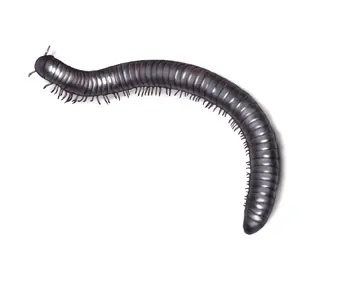
Illustration of Common North American Millipede
Centipedes possess several defense mechanisms. They are fast moving and can often outrun their hunters. They also possess poisonous claws or fangs, which can incapacitate or kill. The brightly colored final pair of legs in many centipede species waves in defensive display, warning predators of the risk of attack. When grasped by a predator, a centipede is capable of dropping legs in order to escape. The centipede will later regenerate the dropped legs.
When attacked, millipedes curl their bodies into tight spirals in order to protect their soft undersides. In defense, a millipede can release pungent fluids from its glands, which repel potential predators.