Cricket Facts & Information
Protect your home or business from crickets by learning techniques for identification and control.
IDENTIFY
Types of Crickets
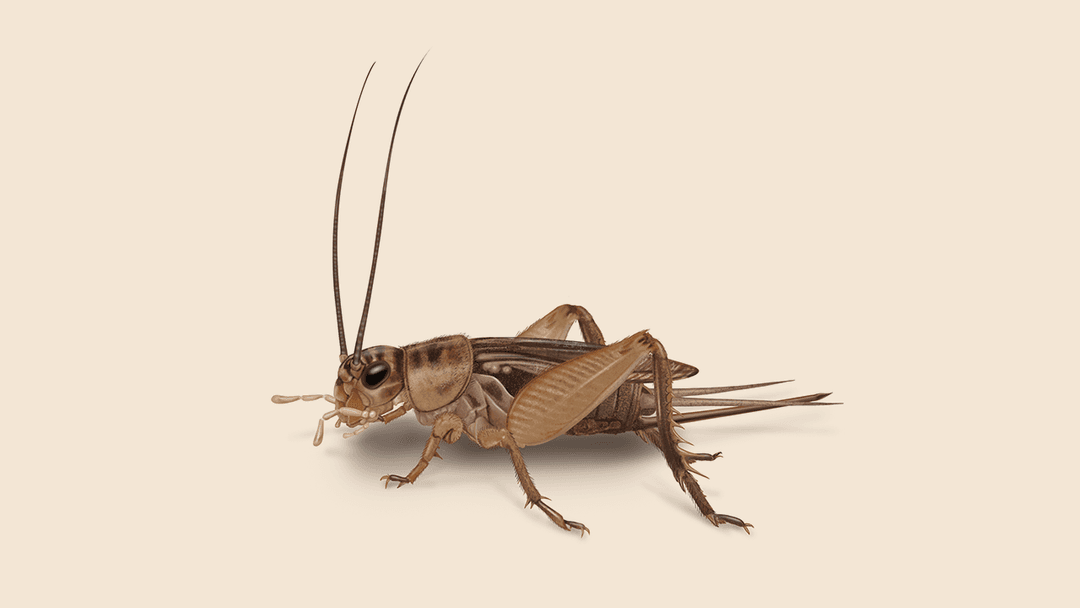
What do crickets look like?
Most of these pests have large jumping hind legs with long thin antennae that are approximately half the length of the head and abdomen combined.

Cricket Treatment
How do I get rid of crickets?
What Orkin Does For Cricket Infestations
Your local Orkin Pro is trained to help manage cricket infestations and similar pests. Since every building or home is different, your Orkin Pro will design a unique cricket treatment program for your situation. Orkin can provide the right cricket control solution to keep these pests in their place and out of your home or business.
Frequently Asked Questions
Behavior, Diet & Habits
Understanding Crickets
What do crickets look like?
-
Size: House crickets measure 16 to 22 mm in length. Field crickets can grow to measure more than 2.5 cm in length. Ground crickets are much smaller than other common crickets.
-
Color: House crickets are light yellowish-brown in color and exhibit three dark bands atop their heads. Field crickets are brown or black in color. Ground crickets are brown.
-
Wings: Held flat against the body, their wings cover at least half of their abdomen, but some species are wingless. Young appear similar to adults, although their wings are underdeveloped.
-
Characteristics: Females feature a long ovipositor in the rear, which is used to lay eggs within the soil, and both sexes have segmented, taillike appendages known as cerci.
How are crickets beneficial?
Crickets renew soil minerals by breaking down plant and animal-based materials. They also provide food for other animals, including:
What do crickets eat?
Crickets diet includes protein, grains and produce. They are omnivorous, meaning that they will eat:
-
Crops
-
Plant and animal-based materials
-
Seedlings
Where do crickets live?
Most crickets prefer damp, moist conditions. Residents may notice these insects in different places including:
-
Bathrooms
-
Basements
-
Crawl spaces
-
Under logs and rocks
Life Cycle of Crickets
Crickets complete a gradual metamorphosis from egg to nymph to adult. When attracting a mate, male crickets create sound by rubbing their forewings against each other. Their songs attract their species.
Why do crickets make noise?
Crickets are named for the high-pitched sounds male specimens produce to attract females. This chirp is created when the front wings are rubbed together and is amplified by wing surface. Different species of cricket produce distinctive and identifiable sounds.
The chirping has various meanings for certain cultures. Some cultures regard the chirp as an indication of good luck or a sign of rain. Other cultures consider it a bad sign and believe it can indicate impending illness or death.
The house cricket is known for producing a loud, continuous chirp at night, while the chirp of the field cricket is less high-pitched but occurs both day and night. Camel crickets do not produce songs.
Temperature may also dictate the number of chirps produced by a cricket. Faster and more continuous chirping is possible at higher temperatures. A cricket’s chirping can be used to approximate the temperature in Fahrenheit. Count the number of chirps in 15 seconds and add 40. The number is not exact and does vary somewhat depending on species.
Why do crickets chirp?
Crickets have different chirping “songs” for:
-
Attracting mates
-
Fighting
-
Sounding alarms
More Cricket Facts
Discover the fascinating world of baby crickets – from their tiny size to their unique behaviors. Learn about their life cycle and about various different types.
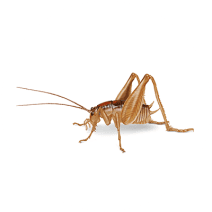
Do cave crickets really live in caves? Learn about these pests and what makes them different from other crickets.
Learn about the different types of crickets and their abilities to fly.
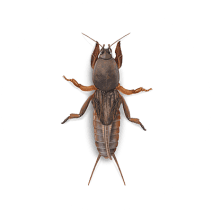
As the name implies, mole crickets mostly spend their time underground. Learn more about mole crickets and how they differ from other crickets.