What are the Differences Between Earwigs and Spiders?
Spiders and earwigs may appear similar due to their size and habitats, but they have many differences from their biology to their diet.
1. Taxonomy and Classification
The biological classification of earwigs branches differently from spiders beyond the common phylum Arthropoda.
Are spiders anthropods?
Yes, spiders are arthropods and are under the class Arachnida and the order Araneae, which also include scorpions, mites and ticks.
Are earwigs anthropods?
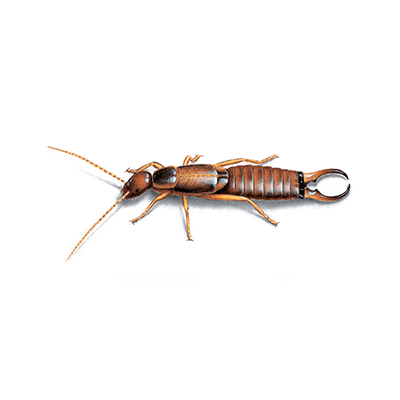
Yes, earwigs are anthropods and are under the class Insecta and the order Dermaptera, meaning “leathery wing.”
2. Body Structure
The classification and physical characteristics of earwigs and spiders are different making one not an insect.
Are spiders insects?
Spiders are under the class Arachnida, as they are not insects. Insects have three body segments and six legs as adults. Spiders have two body segments and eight legs.
Are earwigs insects?
Yes, earwigs are insects as they have six legs and three body parts.
3. Ability of Flight
One may look like they can fly as they float in the sky while the other has wings for flight.
Can spiders fly?
No, spiders don’t have wings and aren’t capable of powered flight. Young spiders may appear to fly as they drop to the ground after hatching, but they are riding small pieces of web and “ballooning” to earth as they disperse.
Can earwigs fly?
Earwigs have wings and can fly.
4. Amount Of Eyes
Earwigs and spiders have different numbers of eyes.
How many eyes do spiders have?
Spiders have six to eight simple eyes.
How many eyes do earwigs have?
Earwigs have two compound eyes.
5. Predator Characteristics
All spiders are predators with rare exception, whereas only some earwigs are predaceous.
How do spiders catch prey?
For catching prey, spiders have many mechanisms depending on the spider type. One mechanism is to spin a web and capture prey in the sticky spider web. Another mechanism, common to more robust and faster spiders would be to stalk the prey and pounce on the prey, injecting it with venom to immobilize the prey. Some capture the prey by waiting to pounce in secluded harborages such as the trap door spider.
6. Diet
Spider and earwigs diet vary in their preference for food.
What do spiders eat?
Spiders prefer to feed anywhere insect prey is available, including the habitat of earwigs.
What do earwigs eat?
Many earwigs feed on decaying vegetation and remain in hiding in moist decaying areas.
7. Production Of Venom
One has venom, and while the other may look ferocious, it does not.
Do spiders have venom?
All spiders have venom, but most are not life threatening to humans.
Do earwigs have venom?
Earwigs do not have venom.
Have an infestation of spiders or earwigs? Find a local exterminator near you to help provide the pest control solutions you need for your home or business.