
Flea Facts
Understanding Flea Problems
The more you know about fleas, the better you can predict and control their behavior. Here are some quick facts to help you on your way.
Protect your home or business from fleas by learning techniques for identification and control.
Types of Fleas
What do fleas look like?
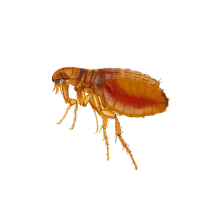
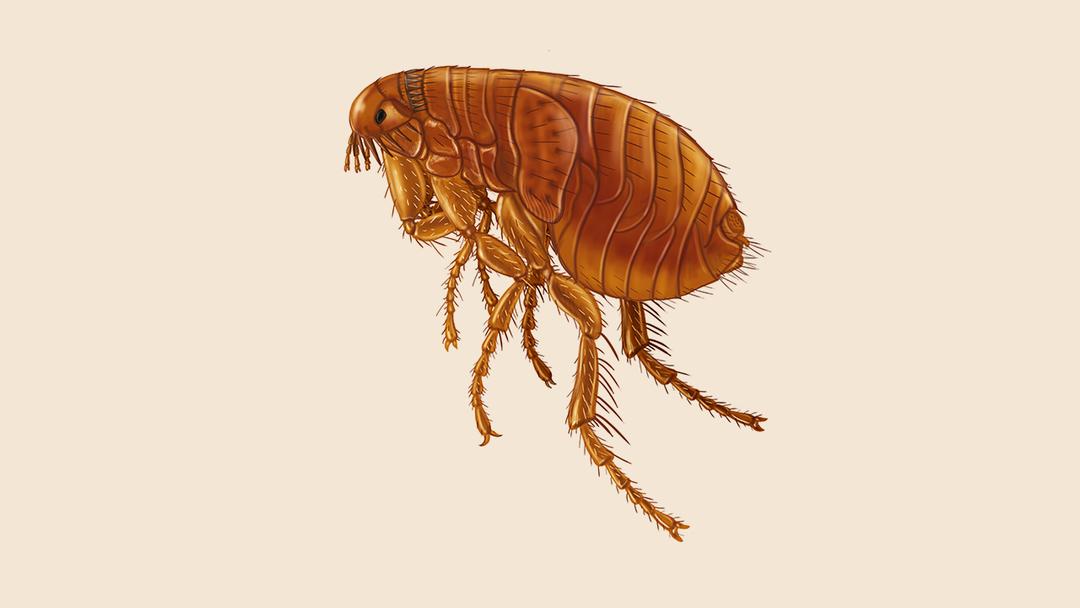
Fleas are small, wingless and about 2.5 mm long. Their bodies are shiny and reddish brown in color, covered with microscopic hair and are compressed to allow for easy movement through animal fur. Fleas do not have wings, although they are capable of jumping long distances. Read more information on what fleas look like.
Since the immature stages of fleas are very cryptic by nature, the first thing the homeowner should do is contact their pest control professional for assistance. Most of the time simply using over-the-counter products for controlling fleas will not resolve the root causes of the infestation.
An Orkin Pro will conduct a thorough inspection and locate areas where the immature stages of the flea population are residing. After completing the inspection, the next step is preparing the flea treatment and management plan. For your customized flea extermination plan, contact your local Orkin branch.
This flea control plan will include:
Species - identifying the flea species causing the problem.
Education - explaining the flea's life cycle and how their habits, habitat, and behavior can affect the pest control plan provided.
Hosts - inspecting for the presence of other animals that are the flea population’s source of food. This may include rodents either inside or outside the home or perhaps a raccoon or feral cat that is living in the crawl space.
Vets - homeowner contacting their veterinarian for advice and purchase of flea control products that can be used on pets.
Bathing - regular bathing and grooming of pets.
Chemicals - explaining the use of growth regulators that will interfere with the flea’s normal development into the adult stage.
Vacuum - using a strong vacuum to physically remove flea eggs, larvae, pupae, and adults.
Bedding - frequently washing and drying pet bedding.
Products - treating affected areas by using safe and effective flea control products where immature fleas may be located.
Inspections - scheduling a follow-up visit.
The more you know about fleas, the better you can predict and control their behavior. Here are some quick facts to help you on your way.
Fleas can transmit diseases when taking a blood meal from a host or via contaminated fecal pellets. Read more about flea-borne diseases.
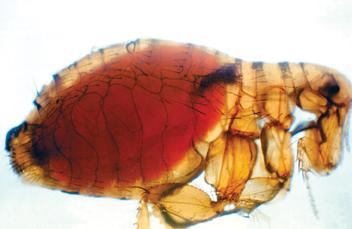
Flea After Feeding
Fleas are very small, oval-shaped insects with thin, flat bodies that allow them to easily move through hair and fur.
What Do Flea Larvae Look Like?
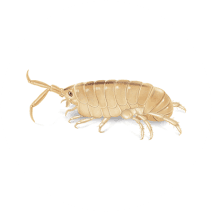
Larva is the second stage of a flea's life cycle and typically looks like tiny, pale worms.
A flea's life cycle consists of four stages-- egg, larva, pupa and adult.
Fleas can be seen moving along animals or surfaces; however, itchy, irritated skin on your pets may also be a sign of a flea infestation.
Flea bites typically appear as itchy small red bumps that are surrounded by red haloes.
Flea bombs release insecticide throughout a room to get rid of fleas; however, they do not reach cracks and crevices, making them ineffective at removing a flea infestation.
Fleas can spread several diseases to humans and animals including, plague, flea tapeworm, and cat scratch disease.
Fleas can lay their eggs and hide in carpet, which makes it incredibly to get rid of fleas in carpet without help from your Orkin Pro.
If your pet is infested with fleas and sleeps on your bed, fleas can easily transfer onto bedding, the mattress, and the remainder of the room.
Fleas are wingless and cannot fly; fleas move around by crawling and jumping.
There are several types of fleas, including dog fleas, cat fleas, rat fleas, and more.
Are Cat Fleas and Dog Fleas The Same?
Although dog fleas and cat fleas are two different species, cat fleas are the most common type of flea in North America.
Although some essential oils and plants may help repel fleas, the best way to control fleas is with a flea extermination program from your Orkin Pro.
How Do I Prepare For Flea Extermination?
Find these helpful tips to help you prepare for your flea treatment appointment.
What is the Cost for Flea Treatment?
A comprehensive flea inspection will help determine the full extent of your infestation and provide the most accurate cost for flea control service.
How Will You Know If You Have Fleas in The House?
Look for these signs of flea activity to find out if you have fleas in the house.
How to Get Rid of Fleas on Dogs
Learn helpful tips on how to get rid of fleas on dogs.
Can You Have Fleas Without Pets?
It is possible to have fleas without pets, so a full pest control inspection from our Orkin Pros is needed to identify where the fleas are coming from.
Get a quote today
We are here for you 24 hours a day, 7 days a week.
877-819-5061