Indian Meal Moth Facts & Information
Protect your home or business from Indian meal moths by learning techniques for identification and control.

Treatment
How do I get rid of Indian meal moths?
What You Can Do
Controlling Indian Meal moths starts with a careful inspection to identify all the infestation’s food sources. Pay particular attention to items that have remained in the cupboard for long periods or foods that are loosely sealed or are in thin wrapping. Some additional ways of handling these pests include:
-
Inspection: Empty cabinets and pantries and check inside every food package. Get rid of any food that is infested. When looking for Indian Meal moths, do not forget to look in dried plant and dried flower wreath arrangements.
-
Thorough Cleanup: Use a vacuum to remove spilled food and insects from the empty shelves while paying close attention to the cracks and gaps between shelves and cabinet walls. Cleaning with soap and water is also needed.
-
Seal Holes: Any holes should be sealed. Remember that the larvae leave the food to change into adults. It is important to check the walls and ceiling in the pantry and the nearby area for crawling larvae. Larvae and pupae can be in cracks, behind appliances and even behind picture frames on the wall.
-
Proper Storage: Store food products in sealed glass or plastic containers to prevent a re-infestation. If pet food or animal feed is stored in the garage or shed, check it too, since this often is a source of the infestation. Keep these products in tightly sealed containers. Also, food may be stored in the refrigerator.
What Orkin Does
Your local Orkin Pro is trained to help manage Indian Meal moths and similar pests. Since every building or home is different, your Orkin Pro will design a unique moth treatment program for your situation.
Orkin can provide the right solution to keep Indian Meal moths in their place…out of your home, or business.
Frequently Asked Questions
Behavior, Diet & Habits
Understanding Indian Meal Moths
Appearance
-
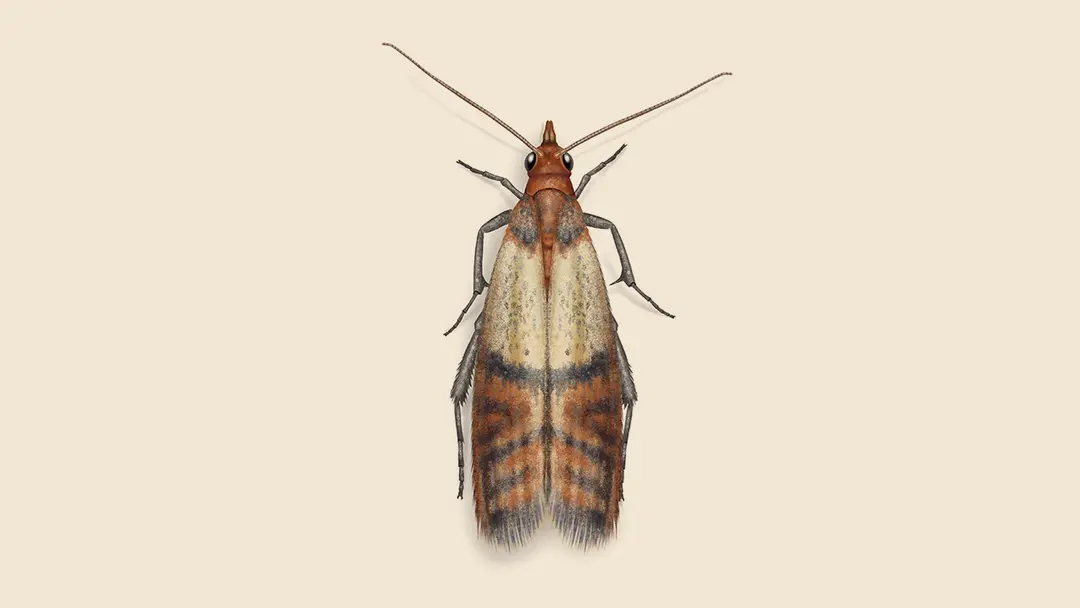
Size: The adult is a small moth, about 3/8 inches long with a wingspan of about 5/8 inches.
-
Larvae Color: The larval stage is usually cream colored, sometimes with yellowish-green or pinkish shades, and has a dark brown head.
-
Wings: The wing color is generally gray but the rear half of the wing is rusty brown or nearly bronze. This wing pattern allows Indian Meal moths to be easily distinguished from other household moths.
Diet
Indian Meal moth larvae can infest a wide range of dry foods, which explains why they are considered by many experts to be the most common stored-food pest in homes and grocery stores. Commonly infested foods include:
-
Birdseed
-
Breads & grains
-
Cereal
-
Dried fruits & nuts
-
Dry pet food
-
Flour
-
Pasta
-
Rice
-
Spices
Life Cycle
The Indian Meal moth life cycle is described as complete metamorphosis:
-
Egg
-
Larval (caterpillar)
-
Pupal
-
Adult stage