Mediterranean Flour Moth Facts & Information
Protect your home or business from Mediterranean flour moths by learning techniques for identification and control.

Treatment
How do I get rid of Mediterranean flour moths?
What You Can Do
The first step in controlling Mediterranean flour moths is a careful inspection. Empty the kitchen cabinets and the pantry to look for insects on shelves and examine food packages. Food that is covered with webbing is infested and should be discarded. Make sure to re-inspect every one or two months to uncover and act upon any future problems. And remember, always contact your pest professional to help control a Mediterranean flour moth infestation. Other suggested prevention tips include:
-
Food storage: New food should be stored in sealed glass or plastic containers for protection until you are sure the infestation is resolved. Also, use the oldest foods first. Remember FIFO – first in, first out.
-
Sanitation: Vacuum the empty shelves to remove any cocoons and food scraps, as well as the edges of doors, inside wire shelving, cracks and crevices, edges of walls, and any shelf support holes. Pantry moth eggs and larvae may be hidden in these places.
-
Blocking entry: If you purchase organic or bulk grains, carefully monitor those items since you could be bringing home an insect problem along with the products. Check to ensure you do not purchase products in broken packages. There is a greater chance for infestations in a broken package than a perfectly sealed one.
What Orkin Does
Your local Orkin Pro is trained to help manage Mediterranean flour moths and similar pests. Since every building or home is different, your Orkin Pro will design a unique moth treatment program for your situation.
Orkin can provide the right solution to keep Mediterranean flour moths in their place…out of your home, or business.
Frequently Asked Questions
Behavior, Diet & Habits
Understanding Mediterranean Flour Moths
Appearance
-
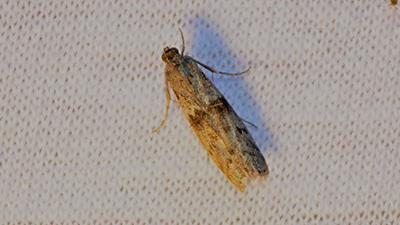
Characteristics: When at rest, the adult moth extends the forelegs, which raises the head and gives the body a sloping appearance. This is a very distinctive characteristic and is useful for identifying Mediterranean flour moths.
-
Adults: The adult Mediterranean flour moth is pale-gray color and about 3/4 inch long, with a wingspread of about one inch. Black, wavy lines run across the wing.
-
Larvae: The off-white or pink larvae have a dark head and are about 1/2 inch long when full grown.

Behavior
Mediterranean flour moths are common moth pests of food goods in the kitchen or pantry. This moth attacks:
-
Beans
-
Cereals
-
Chocolate
-
Dried fruits
-
Flour
-
Grains
-
Pet food
Geographic Range
The Mediterranean flour moth is common in every part of the United States.
Eggs
The female moth lays somewhere between 100-200 eggs, often attached to flour or grain particles. These small, white eggs hatch in just a few days and the larvae immediately begin to spin silken threads and crawl around eating. The silken threads mat the food particles together and are one of the more obvious signs of an infestation. Adult moths do not damage food.