Hobo Spider Facts & Information
Protect your home or business from hobo spiders by learning techniques for identification and control.
Treatment
How do I get rid of hobo spiders?
What Orkin Does
Your local Orkin Pro is trained to help manage hobo spiders and similar pests. Since every building or home is different, your Orkin Pro will design a unique spider treatment program for your situation.
Orkin can provide the right solution to keep hobo spiders in their place...out of your home, or business. For more help getting rid of hobo spiders, contact your local Orkin branch today.
Frequently Asked Questions
Behavior, Diet & Habits
Understanding Hobo Spiders
What do hobo spiders look like?
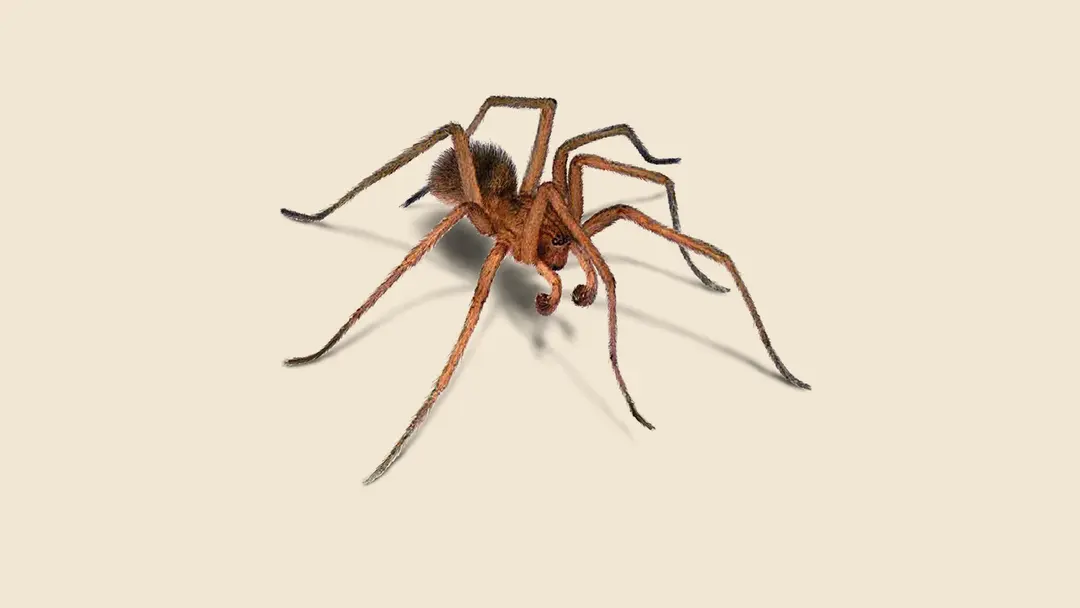
Tegenaria agrestis are known as hobo spiders and aggressive house spiders. Because of its common features and color, they can easily be confused with other spiders.
-
Females: The hobo spider female measures between 11 to 14 mm in body length. Its brown legs are solidly colored and exhibit no markings. Females have slightly larger abdomens than males.
-
Males: The males are rarely longer than 11 mm and have a swollen appendage that appears menacing, but is merely the hobo spider’s reproductive organs.
-
Color: Hobo spiders exhibit varying hues of brown and resemble many other common spiders such as wolf spiders and brown recluse spider.
-
Characteristics: They have eight eyes clustered together, but the best characteristics to identify a hobo spider are difficult to see with the naked eye.
Are hobo spiders funnel weavers?
Hobo spiders belong to the Family Agelenidae, a group of spiders known for their funnel-like web construction, and are also called funnel weaver spiders. These arachnids spin horizontal layers of entangled silk threads that serve as nests, detection devices, and traps for potential prey.
What does a hobo spider eat?
Hobo spiders feed on various insects and may also consume other arachnids. Hobo spider webs are not adhesive. Rather, hobo spiders rely heavily on the web construction's ability to trip or tangle insects. Their webs are funnel-shaped, allowing the spiders to remain hidden in the narrow end until prey arrives. Prey that comes into contact with the web triggers vibrations along the silken structure, alerting the spider. After attacking their prey, they will consume it within the narrow end of their funnel-shaped spider webs.
What does a hobo spider web look like?
Hobo spiders weave webs in the shape of funnels that also serve as mating grounds. Females generally remain within the perimeter of their nests, while males move about in search of potential mating partners.
How do hobo spiders mate?
Males cautiously approach their female counterparts, mating only after finding that the female is receptive, rather than hostile. Females remain in their nests after mating. Males will either die soon afterward or move on.
Where do hobo spiders live?
As a species of house spider, hobo spiders are most commonly found in and around human dwellings and work spaces. They inhabit lesser-used and dark areas of such places, thriving best in humid conditions. Hobo spiders may also be found beneath rocks and among woodpiles outside.
What is the habitat of a hobo spider?
Native to Europe, the aggressive house spider, or western hobo spider, was accidentally introduced to the Northwestern United States in the 1980s. They are found primarily in: