Brown Recluse Spider Facts & Information
Protect your home or business from brown recluse spiders by learning techniques for identification and control.

Treatment
How do I get rid of brown recluse spiders?
What Orkin Does
Orkin Pros are trained to help manage brown recluse spiders. Since every building or home is unique, your Orkin Pro will design a special spider treatment program for your situation.
Keeping spiders out of homes and buildings is an ongoing process, not a one-time treatment. Orkin’s exclusive Points of Service process is a continuing cycle of five critical steps.
-
We Investigate: We’ll inspect your home from top to bottom, inside and out, for current or potential brown recluse spider problems.
-
We Protect: We’ll treat the perimeter of your structure with the appropriate materials, remove all accessible spider webs and use the safest methods available.
-
We Fortify: We’ll do everything we can to keep spiders out--seal, caulk, plug, and secure gaps and cracks.
-
We Keep Watch: We’ll treat the interior of your home and install pest monitors in critical areas such as kitchens, baths, utility rooms, and garages.
-
We Report: We’ll always provide a detailed report of services rendered and recommendations to help keep your home free of spiders and other pests.
-
We Follow Up: We’ll stay in touch between our regularly scheduled visits and respond to any immediate needs.
Orkin can provide the right solution to keep spiders in their place...out of your home, or business. For more help getting rid of spiders and preventing brown recluse spider infestations, contact your local Orkin branch today.
Frequently Asked Questions
Behavior, Diet & Habits
Understanding Brown Recluse Spiders
What do brown recluse spiders look like?
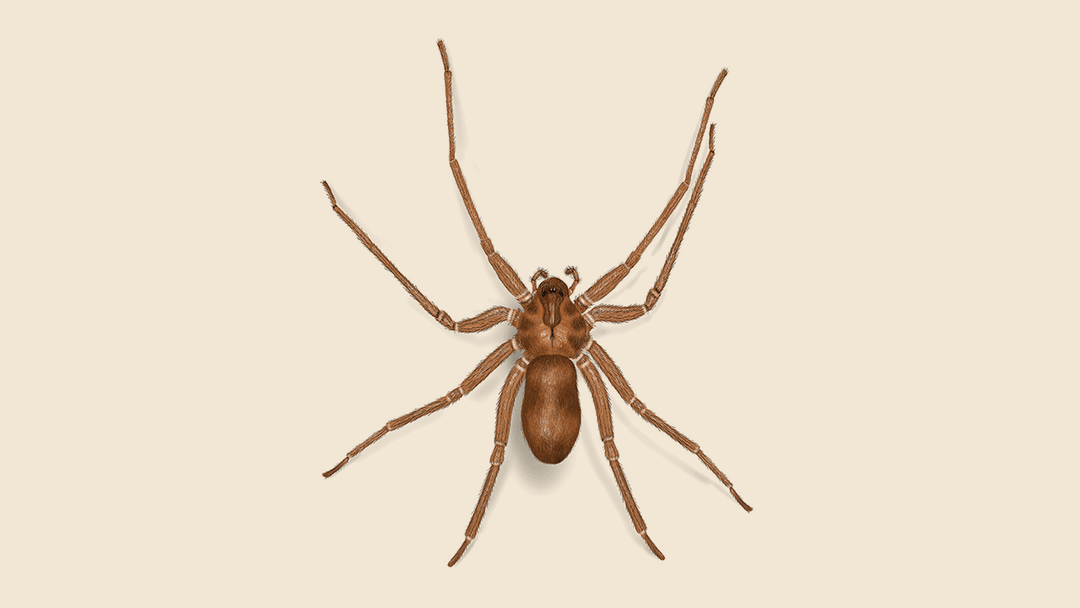
The most telltale characteristic of brown recluse spiders is the presence of a dark, violin-shaped mark on the dorsum of the arachnid's light brown or yellowish-brown cephalothorax. The neck of this distinct violin pattern is directed toward the abdomen. Due to this marking, brown recluses are also commonly known as fiddle-back spiders. Baby brown recluse spiders do not have this distinctive marking. It develops as the spiders grow into adulthood. To positively identify a spider as a recluse, both the eyes and fiddle marking must be seen, since other spiders may possess one or the other characteristic alone.
Due to misinformation and fright, many people identify harmless spiders as brown recluses. They are also referred to as fiddleback spiders due to a distinctive marking on the thorax, which resembles a violin. Brown recluses have uniformly colored legs and abdomens, so any spider exhibiting distinct color variations and patterning on the legs or abdomen is not a brown recluse.

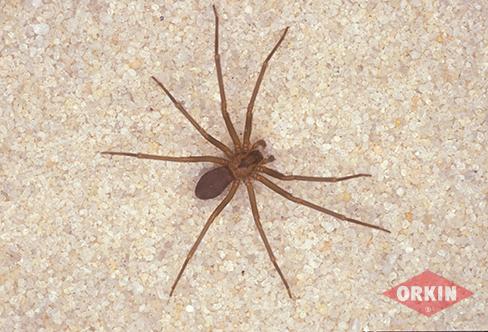
Picture of Violin Markings on Brown Recluse Spider
Where do brown recluse spiders live?
Brown recluse spiders dwell in many of the same dark, sheltered places as black widow spiders. They can be found in homes, barns, and basements. Brown recluse spider webs tend to appear disorganized and are built most commonly near ground level beneath rocks and logs. The spider is a hunter, so the web is not intended to catch prey but instead roams around searching for prey. The brown recluse is found in the central southern part of the U.S., from Texas to the westernmost part of Florida.
Although urban myth purports that they are found throughout the U.S., studies have shown otherwise. Brown recluse spiders are endemic only to the American South and Midwest. Relocation of the brown recluse can occur in boxes or items moved from its native range. These usually are isolated events and do not result in an entire area becoming infested.
Brown Recluse Mating & Lifespan Facts
Brown recluse spider mating occurs from February to October and results in 40 to 50 eggs that are deposited in off-white, round silken cases. The average lifespan of a brown recluse spider averages from one to two years.
Brown Recluse Spider Bites
Brown recluse spiders are shy and rarely bite unless provoked. Bites usually go unnoticed until effects manifest a few hours later. Most bites become red and fade away, but in uncommon cases, necrosis or tissue damage can occur. A medical professional should be consulted if there are medical concerns.
Many conditions are mistakenly diagnosed as brown recluse spider bites, including
Lyme disease, diabetic ulcers, reactions to medication, and bacterial infections.
More Information About Brown Recluse Spiders
Differences Between Brown Recluse Spiders vs. Desert Recluse Spiders
Although brown recluse spiders and desert recluse spiders look similar, they are typically found in different states.
This spider image gallery contains close-up pictures to help identify brown recluse spiders.
Symptoms of Brown Recluse Spider Bites
Learn more about the dangers and symptoms of brown recluse spider bites.
Where can you find brown recluse spiders?
Brown recluse spiders can mainly be found in the Midwest and the South; they typically live in dark, undisturbed places.
How to Identify a Brown Recluse Spider Web
Brown recluse spider webs are irregularly shaped and typically found in dry, dark areas.
Life Cycle of Brown Recluse Spiders
Brown recluse spiders can make 1-5 egg sacs during their lifespan and take approximately 10-12 to fully mature.

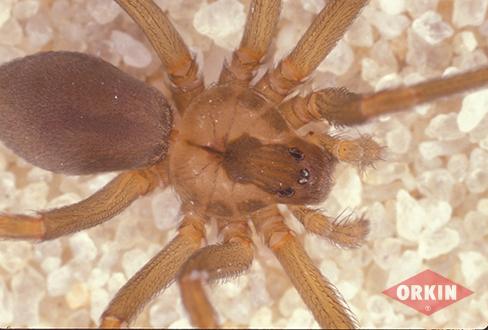
Close-up Picture of Brown Recluse Spider

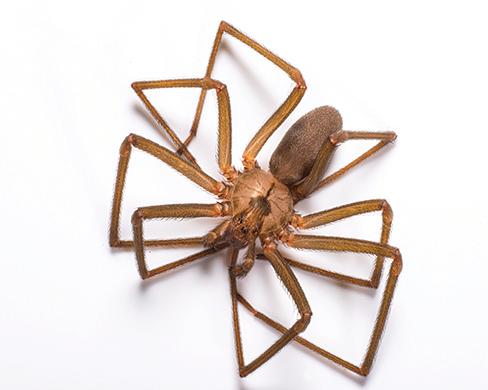
Image of Adult Brown Recluse Spider