Tarantula Facts & Information
Protect your home or business from tarantulas by learning techniques for identification and control.
Treatment
How do I get rid of tarantulas?
What Orkin Does
Your local Orkin Pro is trained to help manage tarantulas and similar pests. Since every building or home is different, your Orkin Pro will design a unique spider treatment program for your situation.
Orkin can provide the right solution to keep tarantulas in their place...out of your home, or business.
Frequently Asked Questions
Behavior, Diet & Habits
Understanding Tarantulas
Appearance
-
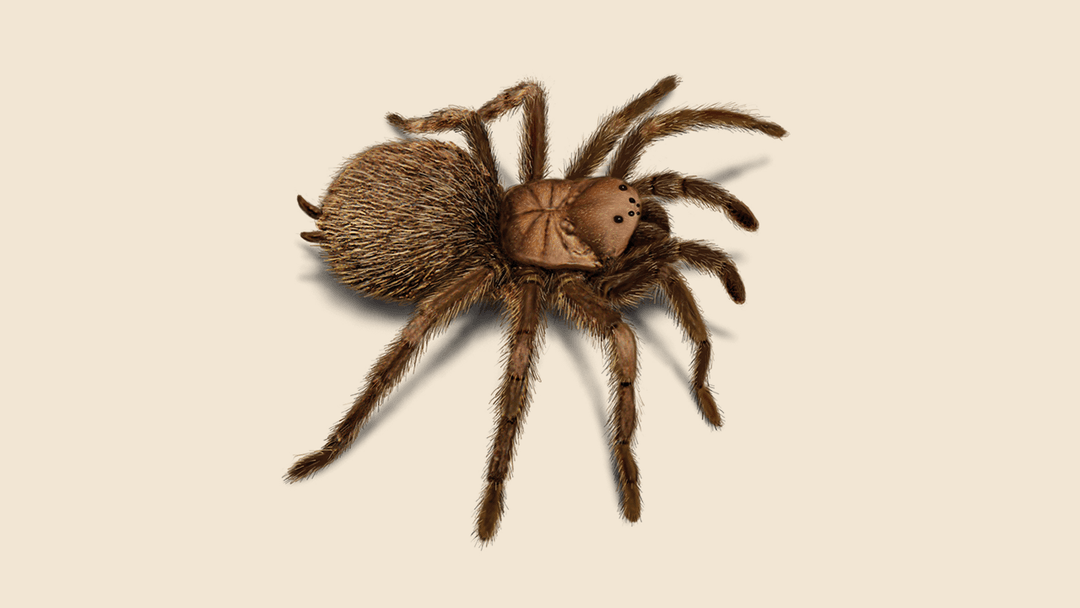
Size: They are the largest known arachnids. On average, they measure 7 to 10 cm in length. However, they are capable of exceeding 30 cm. The perceived size of specimens is oftentimes exaggerated, due to the tarantula’s abundant hair.
-
Hair: They are distinguishable from other by the dense body hair. This hair, which covers the entire body of the tarantula, serves as a defense mechanism against predators.
-
Exoskeleton: They have strong exteriors known as exoskeletons. The tarantula's body is comprised of two major parts: the prosoma, also known as the cephalothorax, and the abdomen, or opisthosoma. These two parts are joined by a pedicle, or pregenital somite, which is perceived to be the waist of the tarantula's body. This pedicle is crucial to the mobility and agility of these spiders, as it allows the opisthosoma a larger range of movement.
-
Legs & Fangs: The eight legs, pedipalps and fangs of the tarantula are also connected to the body at the prosoma. The chelicerae, or fangs, which release venom, are located below the eyes. The legs are seven-segmented and feature retractable claws, which are used for climbing. Hairs present on the legs are also useful in climbing upright or slippery surfaces.
Common U.S. Species
Five genera and 30 species of tarantulas have been documented in the United States, each with its own scientific name. There are over 800 documented species in the world.
-
Eurypelma californicum - This species is the most common tarantula in the U.S. and can be found in the desert areas of California, Texas, and Arizona.
-
Aphonopelma chalcodes - Also known as the desert tarantula, this species is primarily found in Arizona and other arid locations. Desert blond tarantulas can grow up to 7.5 cm in length and range in color from gray to dark brown.
-
Aphonopelma hentzi - Otherwise known as Texas brown tarantulas, this species can be found in Kansas found around rocky habitats or hillsides.
-
Brachypelma vagans - Although tarantulas are not native to Florida, several species have been introduced due to pet trade and importation. The most recognized species in Florida is the Brachypelma vagans. Originally of Mexican origin, these are believed to have entered Florida in the 1980s, although official identification did not occur until 1998. Also commonly known as Mexican red rumps, these arachnids are black with red abdomens. While painful, their bites are not fatal to humans.
Diet
Although they do have silk-producing capabilities, most tarantulas do not weave aerial webs to trap their prey. Rather, they utilize ambush strategies or hunt for food at night. Depending on the species, most hide within their burrows to ambush prey as it walks by or may wander nearby to the burrow looking for a meal. These spiders will feed on:
Habitat
Tarantulas typically live in arid, semidesert regions and in tropical rainforests. Some are arboreal and spin silken retreats in tree holes, while others are terrestrial and dwell in burrows.
Life Cycle & Reproduction
Life cycles vary from species to species. The life cycle begins with the mating process, during which males leave their territories in search of mates. Male tarantulas can travel great distances in order to locate females (which leads people to think they are migrating). Unfortunately, their wanderings may lead them into contact with people, such as on roadways or in people’s homes.
Males usually spin a web onto which they deposit sperm, and then draw the sperm web into their pedipalps. Once they locate a female, they test her receptiveness by tapping near her burrow or web. After performing a specialized courting ritual, males fertilize females and then move on quickly, as females are sometimes known to devour their mates following sexual contact. However, males that resist consumption rarely survive more than a few months following copulation, while females can live up to 35 years.
Development & Molting
Females deposit their eggs into cocoon-like structures known as eggs sacs. These eggs incubate for a period of time and hatch into young tarantulas, which molt several times as they grow. All tarantulas undergo molting, during which they shed their exoskeletons in order to grow. Molting continues throughout the life of the female, while males usually cannot successfully molt after they become mature.
Predators
The natural enemies of tarantulas are varied and include other arachnids, such as scorpions. Because both arachnids reside in desert habitats, they may come into contact with one another. While both are equipped with specialized defense mechanisms, scorpions might overcome tarantulas with their more powerful venom and claws.
The tarantula hawk, a large wasp, is one of the tarantula’s deadliest enemies. Some are metallic blue to green with reddish orange wings. The tarantula hawk uses its venom to paralyze the tarantula. The wasp then drags the prey back to its lair, where its immobilized body is used as an incubation site for their eggs. When the eggs hatch, they consume the tarantula’s still living body.