House Spider Facts & Information
Protect your home or business from house spiders by learning techniques for identification and control.
Treatment
How do I get rid of house spiders?
What Orkin Does
While the common house spider may pose little or no danger to humans, it doesn’t mean you want these uninvited guests crawling into your home. It’s important to take action once you notice signs of a spider infestation. Keeping pests out of your home is an ongoing process, not a one-time treatment. Orkin Pros are trained to identify the different household spider species and know the most effective solutions to help treat and prevent spiders in the house.
Since every home is different, the Orkin Pro will design a unique treatment program focused on specific needs. To learn more about how to get rid of house spiders and how to protect your home, contact your local spider control experts by calling your Orkin branch.
Frequently Asked Questions
Behavior, Diet & Habits
Understanding House Spiders
What do house spiders look like?
-
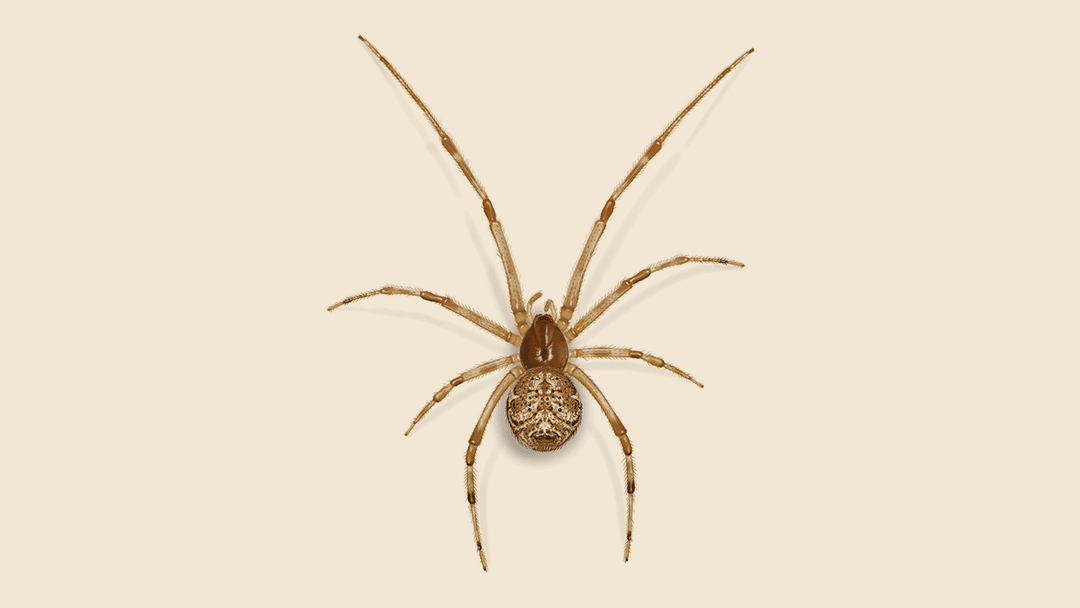
Size: Female common house spiders measure 5 to 8 mm in length, while males measure only 4 mm.
-
Color: Common house spiders are typically brown or gray in color, with darker chevron markings along their bodies.
-
Body: A house spider’s body is divided into the cephalothorax and the abdomen. Like scorpions, mites and ticks, house spiders are wingless.
-
Eyes: Eight, single-lens eyes
Where are house spiders found?
Common house spiders are abundant in dark or musty areas, such as basements, crawlspaces, attics, and closets, with activity often becoming more noticeable during spider season.
Funnel Shaped Webs
House spider webs are irregularly shaped and can be located in various places within a home, including windows, ceiling corners and above or beneath fixtures.
Webs are designed as trapping mechanisms and are funnel-shaped, with the narrow end acting as a den for the arachnid. Any contact made with the web produces vibrations throughout the strand, signaling to the common house spider that prey is present. Although common house spiders feed primarily on insects, they may also consume larger spiders, scorpions, rodents and small reptiles.
Cobwebs
The presence of common house spiders is typically characterized by the formation of cobwebs. These silken thread structures can be found throughout infested homes. This abundance of empty webs is caused by the common house spider's propensity to spin webs in various locations until it finds the most suitable place to catch prey.
How to Identify House Spider Infestations
If you think you’re experiencing a house spider infestation, it’s important to know which steps you need to take. Here are a few telltale signs to help determine if you have a spider problem or just a few uninvited guests:
Spider Webs
Spider webs are commonly found in corners or hard-to-reach areas such as within chandeliers or along ceiling beams. Sometimes mistaken for cobwebs, the main difference between the two is that cobwebs are empty and look like tangled fibers while webs are crafted with detail and sometimes hold spider egg sacs or trapped insects being stored for food.
Spider Egg Sacs
Egg sacs indicate an active infestation and are often found within spider webs or tucked into safe, dark areas. Since these sacs contain hundreds of spider babies, it’s important to remove them if discovered, as one sac can lead to the beginning of a new spider generation within your home.
Seeing House Spiders
If you’re seeing spiders around your home, odds are they’re not lone rangers. Since two spiders could potentially create hundreds of babies, it’s important to get rid of any spiders you may come across.
More Information
From egg to adult, explore the development of small house spiders.
Find out how to identify a spider bite and when to seek medical treatment.
Explore the most effective treatment strategies to help repel house spider nests and prevent a spider infestation.
Brown House Spiders (Steatoda grossa)
Discover helpful tips for homeowners who want to prevent a brown house spider infestation.
Red House Spiders (Nesticodes rufipes)
Avoid spider issues by following these helpful tips for preventing an infestation.
Black House Spiders (Badumna insignis)
Learn how to identify a black house spider infestation based on its appearance, habitat, and diet.
Giant House Spiders (Eratigena atrica)
Find out the signs of a giant house spider infestation and what to do if you encounter heavy spider activity.
Southern House Spiders (Kukulcania hibernalis)
Explore the signs of a Southern House Spider infestation and the steps to take in order to prevent a future infestation.
Domestic House Spiders (Tegenaria domestica)
Discover where these spiders prefer to live and how to prevent a domestic house spider infestation.