Stink Bug Facts & Information
Protect your home or business from stink bugs by learning techniques for identification and control.
Treatment
How do I get rid of stink bugs?
How Orkin Helps Get Rid Of Stink Bugs
Orkin Pros are trained to help manage stink bugs and other pests. Since every yard or home is different, the Orkin Pro will design a unique stinkbug treatment program for your situation.
For homes and businesses, stink bug treatments generally focus on two species that are very bothersome: the brown marmorated stink bug (BMSB) and the kudzu bug. Both of these insects create troubles for home and business owners when the pests fly to structures looking for overwintering sites. Therefore, pest management professionals focus on treatment methods that will control the bugs or help prevent them from getting inside.
Exterior Treatments for Stink Bugs
In most situations, the best treatment for stink bugs is preventing them from getting inside to their overwintering sites. Your Orkin Pro will probably recommend sealing all cracks that are more than 1/8 inch wide, screening or repairing existing screens over roof vents, gable vents, windows and doors and installing door sweeps.
Chemical products can be applied around possible stink bug entry points. Based on your inspection, initial application and reapplications of products may be required to treat other stink bugs that fly to the property and attempt to get inside.
Frequently Asked Questions
Behavior, Diet & Habits
Understanding Stink Bugs
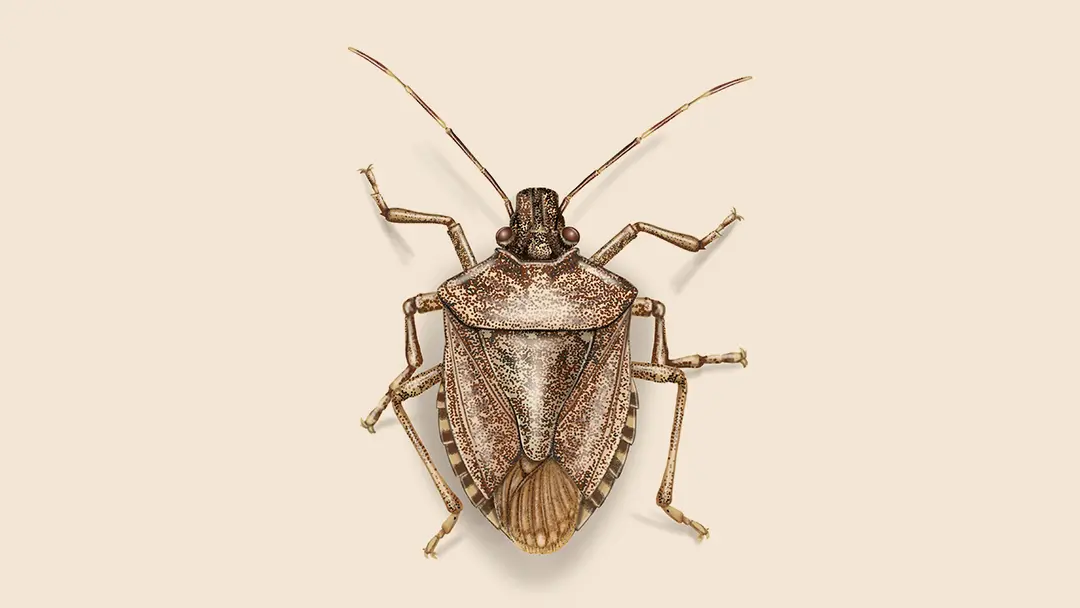
What do stink bugs look like?
-
Mouth - piercing sucking mouthparts
-
Antennae - straight antennae with light brown bands
-
Shape - characteristic shield shape.
-
Length - 12 to 17 mm long
-
Color - mottled brown color
-
Wings - dark bands on the front wings
The immature bug, called a nymph, is yellow and red with red eyes. As it grows, the yellow lightens to off-white. Read more about what a stink bug looks like.
What do stink bugs eat?
-
Fruits
-
Vegetables
-
Apples
-
Peaches
-
Blackberries
-
Tomatoes
-
Corn
-
Soybeans
-
Lima beans
-
Green peppers
Read more about what stink bugs eat.
Where do stink bugs come from?
Brown marmorated stink bugs (BMSBs) are native to China, Japan, Korea, and Taiwan. They were discovered in eastern Pennsylvania in 1998 but probably arrived several years earlier. It was first collected in the United States in 1998. Since their arrival, they've expanded their presence to approximately 41 states.
Where do stink bugs live?
-
Inside homes - Besides being an agricultural pest, the brown marmorated stink bug is often a pest in homes. In late summer, the adult bugs gather on homes. The bugs are seeking sheltered places to spend the winter.
-
In walls - They spend the winter hiding inside the walls or in the attic or crawl space. When spring comes, the stink bugs become active. As they begin to move around, some of them emerge into the living space.
Stink Bug Life Cycle
Females typically lay 20 to 30 eggs which she secures on the underside of the host plant in the summer. Eggs hatch four to five days later and the nymphs will begin to feed. They undergo a series of molts until they become adults by fall. More info on the stink bug life cycle
More Stink Bug Facts
Stink bugs are not poisonous or harmful to humans, but they emit a foul odor as a defense mechanism and can be a nuisance when they invade homes.
Stink bugs do not bite nor do they use blood as a food source.
Stink bugs can fly, though they are clumsy in the air and often make a buzzing noise while in flight.
Stink bugs produce a foul odor as a defense mechanism to deter predators and when they feel threatened.
Stink bugs typically live for about 6 to 8 months, depending on environmental conditions and access to food.
Learn how Orkin can help get rid of stink bugs in your home and yard.
Stink bug eggs are usually laid in clusters on the underside of leaves, and they hatch into nymphs that mature into adult stink bugs over several weeks.
Stink bug nymphs, which hatch from eggs, resemble small adults but lack fully developed wings and can go through several molts before becoming mature adults.
The stink bug life cycle includes several stages: egg, nymph, and adult, with the entire process taking about 30 to 60 days depending on environmental conditions.
Stink bug season typically occurs in the fall when they seek shelter indoors, peaking in late summer and early fall as they prepare for winter.
Stink bug traps are designed to capture these pests using various attractants, helping to reduce their population in homes and gardens.
Cedar spray can deter stink bugs due to its strong scent, which masks the odors that attract them, providing a natural repellent option.
Stink bugs are attracted to citrus plants, where they feed on the fruit and foliage, potentially causing damage to crops and gardens.
Stink Bugs and Pets (Cats & Dogs)
Stink bugs can cause gastrointestinal irritation in pets if ingested, leading to symptoms such as vomiting and excessive drooling.
Stink bugs can be harmful in the garden, as they feed on various plants and fruits, causing damage that can impact crop yields and plant health.
In winter, stink bugs seek shelter indoors to escape the cold, often congregating in homes and buildings, which can lead to infestations.
Stink bugs and kissing bugs can be distinguished by their physical features: stink bugs have a more rounded shape and a distinctive triangular scutellum, while kissing bugs have a more elongated body and longer mouthparts.
There are various species of stink bugs, each with distinct characteristics, but they all share the common trait of emitting a foul odor when threatened.
Stink bugs are pests known for their distinct odor and potential to damage plants and crops.
Stink bugs are attracted to homes by warmth, light, and the presence of food sources, particularly during the fall when they seek shelter for the winter.
Stink bugs primarily feed on the sap of plants and fruits, using their piercing mouthparts to extract juices.
What Does a Stink Bug Look Like?
Stink bugs have a distinctive shield-shaped body, usually measuring about half an inch long, with a range of colors from green to brown and often featuring a series of small, prominent markings.
Stink bugs are preyed upon by various natural predators, including birds, spiders, and other insects, helping to control their populations in the ecosystem.
Stink bugs are commonly found in gardens, fields, and wooded areas, but they often invade homes during colder months in search of shelter.