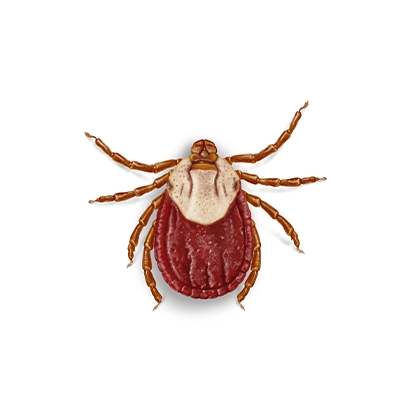
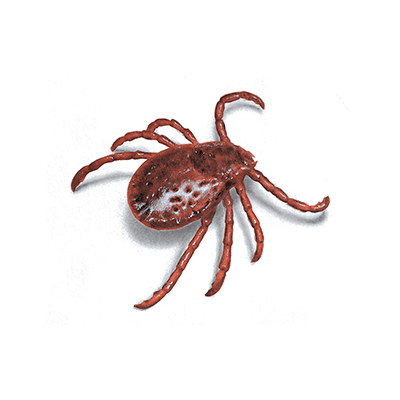
Deer Tick Bite Facts
What Happens When a Deer Tick Bites You
Most of the time a person bitten by a deer tick, also known as a black-legged tick, doesn’t know they’ve been bitten until the tick is embedded into the skin and feeding on their blood for a day or more. Sometimes, the black-legged tick may not be noticed at all until it stops taking a blood meal and falls off the skin.
Deer Tick Bite Symptoms
Should a tick feed long enough to cause symptoms, the first sign is redness around the tick’s bite. Other symptoms that follow may include itchiness and burning. However, many persons bitten by deer ticks develop no symptoms and may not even recall being bitten, while others with a severe allergic reaction to the tick’s bite can experience rash, shortness of breath, swelling, numbness or paralysis. These are life-threatening reactions and a medical professional must always be contacted for treatment.
What is Lyme disease?
Lyme disease, while not a direct result of a deer tick bite, may occur if the biting tick is infected with the Lyme disease-causing organism. If so, one of the first signs is the “bulls-eye” rash that normally shows up around the site of the deer tick’s bite. Early symptoms also include fever, headache and fatigue. Untreated or even treated Lyme disease symptoms may spread to other parts of the body and result in muscle, joint, heart and nervous system abnormalities. Again, these are life-threatening reactions and a medical professional must always be contacted for treatment, and you should become familiar with Lyme disease symptoms, as it is the disease most commonly transmitted by deer tick bites.