Tick Bites and Lyme Disease
The Truth About Ticks
True or False:
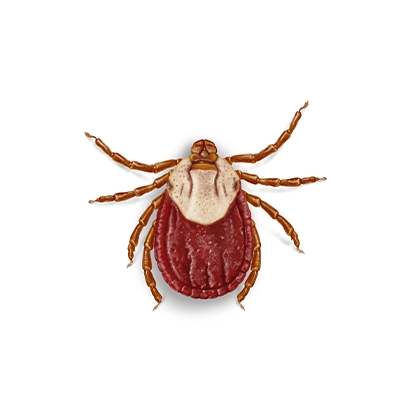
Brown Dog ticks are the primary cause of Lyme disease in the U.S.
-
FALSE* Deer ticks are the primary cause of Lyme disease in the U.S. The small size of the deer tick is a factor in the prevalence of Lyme disease. Their bites are not painful, and most victims do not notice them until they have become engorged from prolonged feeding.
Lyme disease symptoms can include fatigue, rash and facial paralysis.
-
TRUE* These are life-threatening reactions and a medical professional must always be contacted for treatment.
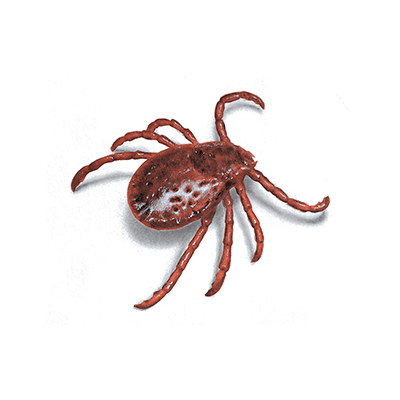
A single bite from a Lone Star Tick could lead to a red meat allergy.
-
TRUE* While not every bite leads to an allergy, Lone Star Ticks are the primary source of Alpha-gal syndrome in the U.S. They can transmit a sugar molecule that may cause your immune system to react to red meat.
For many years, Lyme disease was unknown and misdiagnosed as the flu or rheumatoid arthritis. However, the frequent occurrence of these symptoms in the Lyme, CT area led to research to find out what was happening. After extensive research and disease investigation, it was determined the symptoms were related to a bacterial disease that became known as Lyme disease.
Transmission of Lyme Disease
Ticks may carry Borrelia burgdorferi, the bacterium that causes Lyme disease, and pass it through bites. In the northern, mid-Atlantic and north-central states, Lyme disease is spread by the blacklegged tick (Ixodes scapularis), while in the Pacific coastal states, the western blacklegged tick (Ixodes pacificus) is responsible for spreading the disease. Lone star ticks (Amblyomma americanum), American dog ticks (Dermacentor variabilis), Rocky Mountain wood ticks (Dermacentor andersoni), and the brown dog tick (Rhipicephalus sanguineus) are not known to transmit Lyme disease in the United States.
Ticks can attach to any part of the body, but most often embed themselves in the hairy parts of the body such as the groin, armpits and scalp. They are somewhat slow feeders, so they must penetrate the skin and transmit the Lyme disease bacterium in the process of taking a blood meal in at least 24 or more hours.
Both of these tick species undergo a life cycle consisting of four stages: eggs, larvae, nymphs and adults. People are infected with the bacterium by bites of both the nymph and adult stages. Nymphs are very small, less than 1/10 of an inch long; very hard to see; and are most active during the spring and summer months. Adults are much larger, so they are easier to find when attached to the skin.
Adult ticks are primarily active during months that experience cooler weather.
No evidence exists to suggest that Lyme disease is transmitted from person-to-person or from touching, kissing or sexual activity with an infected person. Although no cases of Lyme disease have been directly linked to blood transfusions, the American Red Cross has strict conditons pertaining to blood donations.
Ticks can also transmit Lyme disease to domestic pets, but there is no proof that pets can pass the disease to humans. However, pets can bring infected ticks into the home or onto the property, so use tick control products that are approved by your veterinarian.
Lyme disease is not known to be transmitted from eating the meat of animals with Lyme disease, but the meat should be prepared using proper food safety practices and always thoroughly cooked.
Lyme Disease Signs & Symptoms
If bitten by a tick in a location known for Lyme disease, or if someone has traveled to an area where the disease occurs, the following signs and symptoms may appear. If any of these symptoms occur, or you find a tick on your body, seek medical attention immediately.
Early localized stage (3-30 days post-tick bite)
During the early localized stage, individuals may experience chills, fever, headache, fatigue, swollen lymph nodes, and pain in the muscles and joints. Also a reddish, expanding rash called erythema migrans (EM) may accompany these symptoms.. In some cases, small bumps or redness occurs around the bite site, but it goes way in a day or two. This is not a sign that you have Lyme disease.
Erythema migrans (EM) or "bull's-eye" rash stage
The "bulls-eye" rash appears at the bite site and may last between three and 30 days. About 70 to 80 percent of people developed EM after being bit, and the rash can occur anywhere on the body. In most people, the symptoms last about a week. Rashes spread over the course of several days and may measure to up to a foot across. Sections of the rash just outside of the bite site may clear up and give the appearance of a bulls-eye. Rashes are rarely painful or itchy, but they may feel warm to the touch.
Early disseminated stage (days to weeks post-tick bite)
Untreated Lyme disease infections may spread throughout the body, and victims may experience a myriad of passing symptoms. Common symptoms include EM lesions on other areas of the body, facial or Bell's palsy, pain and swelling of the joints, irregular heartbeat, and neck stiffness.
Symptoms may subside in a few weeks or months, even without treatment. However, lack of treatment may result in additional serious complications.
Late disseminated stage (months to years post-tick bite)
Approximately 5 percent of untreated patients develop chronic neurological symptoms, which can manifest several months or several years after infections. Signs of Lyme-disease-caused neurological conditions include sharp pains through the body, numbness of hands and feet, and short-term memory issues.
Post-treatment Lyme Disease Syndrome stage
About 10 to 20 percent of patients treated for Lyme disease syndrome experience lingering symptoms, referred to as Post-treatment Lyme Disease Syndrome (PTLDS). Common PTLDS symptoms include muscle and joint pain, cognitive disorders, fatigue, and trouble sleeping.
The cause of these post-treatment symptoms is not clearly understood, but there is no indication these symptoms are due to ongoing infection with B. burgdorferi. Lyme disease specialists have determined there is some evidence suggesting that PTLDS is caused when a person's immune system continues to respond to infection, causing damage to the body’s tissues even after the infection has been cleared. Individuals that experience PTLDS may overcome the affliction over the course of six months or more.
Lyme Carditis
Lyme carditis is another problem that may occur when Lyme disease bacteria enter the heart tissues, thus interfering with the heartbeat. This condition can be mild, moderate or severe and can progress rapidly. Common symptoms include shortness of breath, fainting, light-headedness, irregular heartbeat, and chest pain. Based on disease surveillance over the past decade, about 1 percent of Lyme disease patients had this condition.
Skin Conditions That Are Not EM
A number of skin conditions that are not EM, and therefore not associated directly with Lyme disease, include hives, insect bite or sting hypersensitivity and drug reactions to the skin, ringworm and common skin rashes.
Prevalence of Lyme Disease in the United States
Lyme disease is the most frequently reported vector-borne illness in the United States. Although very prevalent in the northeasten and upper Midwestern states and to a lesser extent in the Pacific coastal states, the disease rarely occurs in other parts of the country unless a person who gets Lyme disease visited a disease prevelent area.
Lyme Disease in Children
Transmission dynamics are virtually the same for children as adults, but since children usually spend more time outdoors than adults, they are more likely to be exposed to ticks. Therefore, Lyme disease occurs more often in children than adults, but when Lyme disease is diagnosed early, most children will fully recover. The typical symptoms found in children are those commonly experienced by adults.
Tick Prevention for Children
The following are ways to prevent tick exposure and Lyme disease:
-
Regular tick checks are needed, especially when children are outdoors. Check behind the knees, between fingers and toes, underarms, naval, in and behind the ears, neck and hairline at the base of the neck and on top of the head. Running fingers gently over the skin is a good way to locate ticks.
-
Wear protective clothes. Dress in long-sleeved shirts and long pants and closed-toe shoes. Light-colored clothes make it easier to see ticks on clothing.
-
Shower after all outdoor activities. It may take 4-6 hours for ticks to attach firmly to skin, so showering or bathing will help remove unattached ticks. Use tick repellents that are recommended by your family physician and treat your child precisely as instructed on the product label.
-
Ticks like low-level shrubs and grasses, particularly at the edges of wooded areas. Educate your children to stay out of such areas.
Lyme Disease in Pets
Dogs and cats that are fed upon by an infected black legged tick can pick up Lyme disease. Dogs and cats may get Lyme disease, but no evidence shows that pets can spread the disease to humans. However, pets can bring infected ticks into your home or yard and increase the possibility of disease transmission.
Dogs with Lyme disease may develop arthritis, lameness, lethargy and loss of appetite and swelling of the lymph nodes. The Lyme disease rash that occurs on people is rarely seen on dogs. Consult your veterinarian if you notice Lyme disease symptoms, find an embedded, blood fed tick on your pet or your pet frequents tick habitat when outdoors.