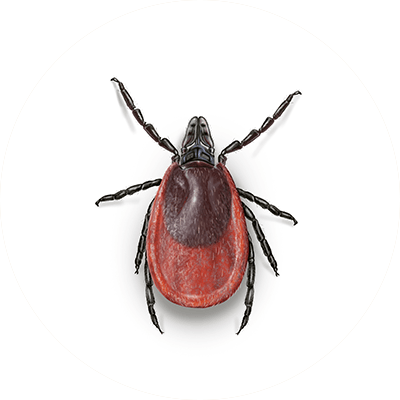
Tick Bites
Hundreds of species of ticks have been documented throughout the world. These arachnids consume blood for nutrients and are capable of introducing a bevy of disease pathogens while feeding. While some tick bites are innocuous, they are associated with diseases: Rocky Mountain spotted fever, ehrlichiosis, Lyme disease, tularemia, babesiosis and relapsing fever.

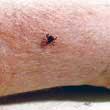
Tick On A Person
Symptoms
More often than not, humans are not aware of having been bitten by ticks. Bites are not initially painful. Tick bites do not always result in disease transmission. If transmission occurs, symptoms are not always obvious until ticks detach from their hosts. Furthermore, victims of tick bites may not test positive for tick-borne diseases until long after exposure. If a tick has bitten you, remove the tick carefully. Put the tick in a jar for identification later. If you cannot remove the tick, experts suggest that you call your doctor.
It is imperative to seek medical attention if any such symptoms appear. Tick-borne diseases can be serious if not treated.
The American dog tick transmits Rocky Mountain spotted fever most commonly. Ehrlichiosis is caused by the transmission of the bacteria Ehrlichia by tick bite. Ehrlichia is known to attack healthy blood cells. The deer tick as well as the lone star tick carries Lyme disease caused by the bacteria Borrelia burgdorferi. It is important to seek medical attention if there are concerns of disease transmission from a tick bite.
Ticks and Mosquitoes: Health Risks
Learn about the diseases & risks of being bitten by ticks & mosquitoes & how to protect yourself.