Weevil Facts & Information
Protect your home or business from weevils by learning techniques for identification and control.

IDENTIFY
Types of Weevils
What are weevils?
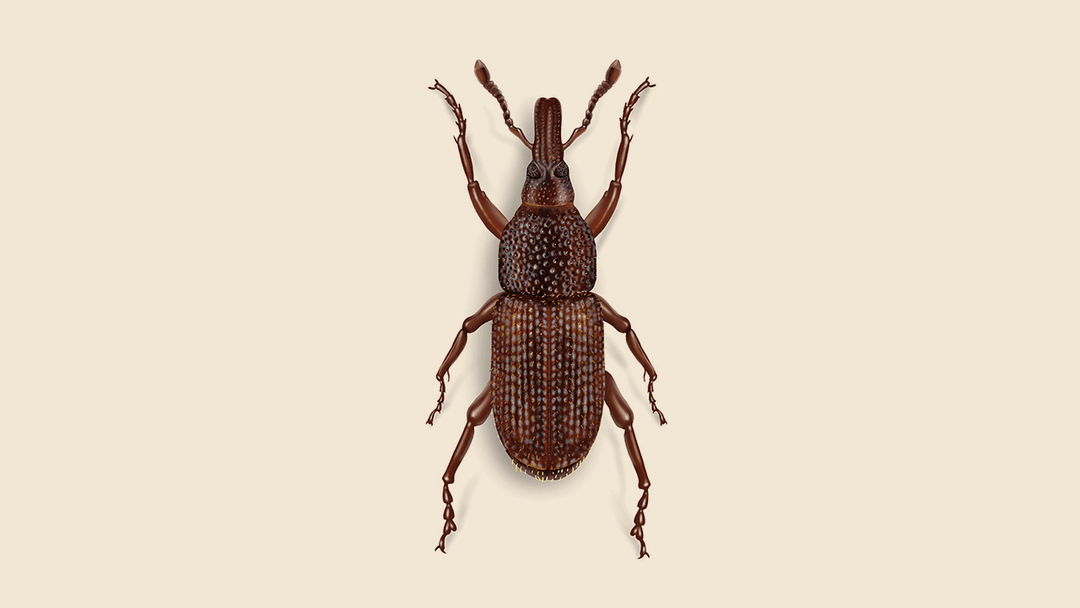
Weevils are actually beetles. There are more species in this family than in any other beetle group. Scientists estimate that there are over 1,000 species of Curculionidae in North America.



Treatment
How do I get rid of weevils?
What You Can Do
If weevils haven’t invaded, there is time for some prevention. Check outside for any openings that weevils could use to get inside. Look around doors and windows for missing caulk and damaged weather stripping. Check attic vents and crawl space vents for torn screens.
Most likely, homeowners seeing weevils are dealing with the stored product species. The most important control methods are to find the infested material and eliminate it. Careful inspection of items before purchasing can help prevent getting a new infestation. Products with holes or signs of damage on the packaging should not be purchased.
A vacuum cleaner is a quick way to remove weevils from the walls and furniture. Be sure to take the vacuum outside to empty it so the weevils don’t reinfest the home.
What Orkin Does
Orkin Pros can help you manage weevils using our exclusive A.I.M. system—Assess, Implement and Monitor. Your Orkin Pro will design a treatment plan for your property’s situation. By focusing on the source of the problem, Orkin helps keep weevils from invading again.
Frequently Asked Questions
Behavior, Diet & Habits
Understanding Weevils
Appearance
Weevil species occur in a wide range of colors and body shapes:
-
Size: Many are slender or oval-shaped insects. Depending on the species, weevils range in size from about 3 mm to over 10 mm in length.
-
Color: They are usually dark-colored (brownish to black).
-
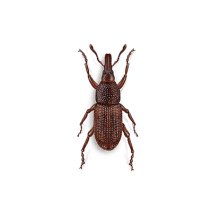
Head: The most distinctive feature of weevils is the shape of their head. An adult weevil has an elongated head that forms a snout. The mouth is at the end of the snout. Some weevils have a snout that is as long as the body. Another family of beetles called
Bruchidae, such as the cowpea weevil, have a different appearance from the typical weevil. They lack the elongated snout found in the
Curculionidae.
Diet
Weevils feed on plants in the larval stage and as adults. Some can be very destructive to crops. For many years, one of the most destructive weevils was the cotton boll weevil. The black vine weevil, Otiorhychus sulcatus (F.), is found in many parts of the United States. It feeds on a variety of plants, including hemlocks and rhododendrons.
Habitat
Most weevils are found in
-
Fields
-
Gardens
-
Orchards
Life Cycle
Weevil life cycles depend greatly on the species. For some, in spring, adults lay their eggs on the ground near host plants. When the eggs hatch, the larvae burrow into the ground and feed on the roots. Since the larvae are underground, people seldom see them.
Many of the larvae spend the winter in the ground and emerge as adults the following spring. However, the adults that emerge during the summer or fall may invade homes for shelter. Some, like the Asiatic oak weevil, are attracted to light, so they are drawn to homes at night. Others may be attracted by the warmth from the house.
Types of Weevils
Boll Weevil—The boll weevil (Anthonomus grandis) is a type of beetle that is known to cause severe damage to cotton crops. The boll weevil measures an average length of 6 mm. It feeds on the buds and flowers of the cotton plant.
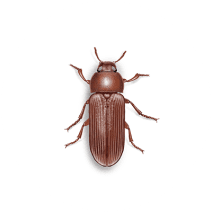
Flour Weevil—Wherever flour is present, the beetle known as the flour weevil (Family Tenebrionidae) follows. They are not able to feed on whole grains. These beetles are not actually weevils.
Rice Weevil—While it is true that the rice weevil (Sitophilus oryzae) is harmless in itself, it hurts human beings on a larger magnitude by compromising food supplies. What it lacks in stinging or biting, it makes up for in causing destruction on a potentially massive scale.
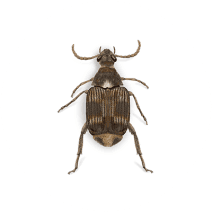
Bean Weevil— is the scientific name of The bean weevil (Acanthoscelides obtectus) the farmers' scourge. Technically, they belong to the cadre of seed beetles and are not true weevils.
Wheat Weevil—Commonly called the granary weevil, the wheat weevil (Sitophilus granarius) holds notoriety for its destructive potential in agriculture. Historically, it is known as one of the most formidable pests.
Black Vine Weevils—The black vine weevil (Otiorhynchus sulcatus) is believed to be another species that migrated to the United States.
Rose Weevil—The rose weevil (Merhynchites bicolor) is a serious threat to all horticulturists. Its snout can drill through flower buds. These weevils cause irreparable harm by feeding on petals.
White Pine Weevil—The white pine weevil (Pissodes strobi) is a pest that infests pine and spruce trees.
Cowpea Weevil—True to its name, this pest infests cowpeas and stored soybeans. Cowpea weevils (Callosobruchus maculatus) lay eggs on the stored beans that they eat, and the larvae use the beans as food while they develop.