Bee Facts & Information
Protect your home or business from bees by learning techniques for identification and control.

IDENTIFY
Types of Bees
What do bees look like?
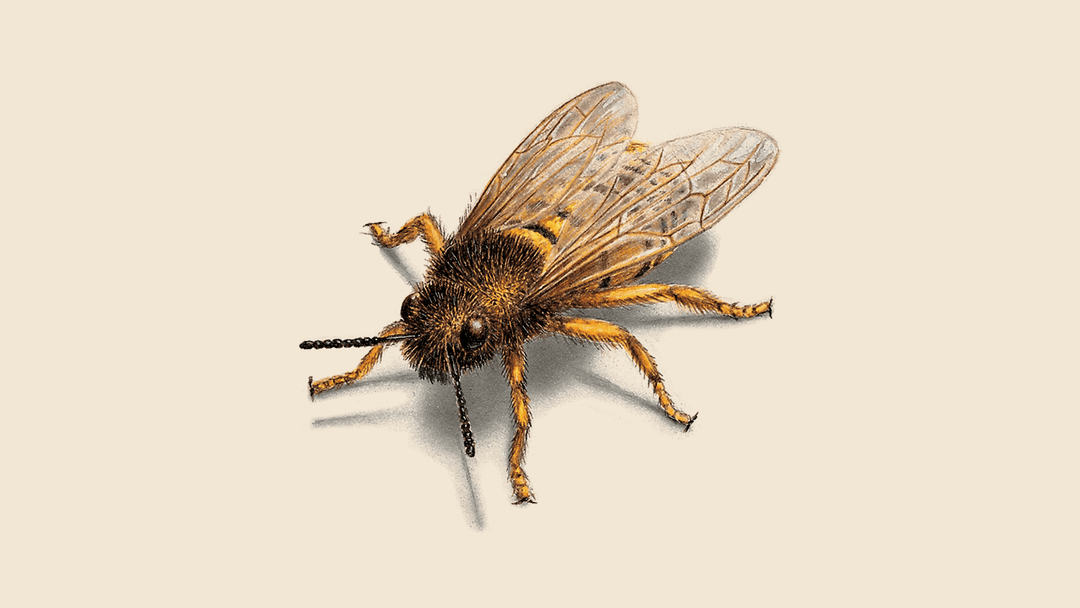
Bees are winged insects with more than 20,000 recorded species found globally. Bees can be black or brown with red, yellow or lustrous blue stripes. Megachile pluto, the largest of these creatures, is reported to be 3.9 cm long, while Perdita minima, the most diminutive of bees, are shorter than 2 mm long.


Bee Treatment
How do I get rid of bees?
What You Can Do
Consider contacting a local beekeeper to relocate the nest. A beekeeper can assess the situation and, if it’s a honey bee nest, determine if it is feasible to remove the nest. For more information on honey bee nest relocation, contact a local bee keeper or an apiary society. If a beekeeper cannot remove the nest, contact us for assistance.
What Orkin Does
It is important to properly identify the particular species living near your home, as bees are often mistaken for wasps, each requiring unique treatment methods.
It is also necessary to know effective application strategies, as well as the limitations and dangers associated with each method. In many regions, special licenses are required to treat infestations.
The only way to rid a home of bees is to remove the hive entirely. For safety and efficiency purposes, contact your local pest management professional for help with bee control.
Frequently Asked Questions
Behavior, Diet & Habits
Understanding Bees
Bee Social Castes
While some bees are solitary, species such as honey bees and bumble bees are tremendously social. Bee colonies are comprised of three castes: the queen bee, infertile female worker bees, and male drones.
Bee Lifespan
The queen mates and lays eggs for the span of her life. Honey bee queens can live up to five years, though most average a lifespan of two to three years. Male drones exist solely to fertilize the queen and die soon after having fulfilled their task. Female worker bees perform a multitude of tasks necessary to the survival of the hive. As a result of their constant laboring, their average lifespan is usually a mere six weeks.
Bee Pollination
Flowers and flourishing vegetation often attract these insects, and there is no insect as important as the bee when it comes to pollination. All bees are hairy, a crucial trait for pollen collection.
Female Bees
Many female bee species have rows of bristles on their hind legs which form a hollow basket. When the bee lands on a flower, pollen grains are combed into the hollow basket and bristles. Cross-pollination occurs when the displaced grains of pollen are distributed to the fertile pistils of other flowers as the bee alights upon them.
What do bees eat?
Although only females are able to transfer pollen, all bees are able to sip the nectar from flowers using a tongue-like organ. This nectar is their primary source of energy. Pollen is sustenance for both adult and larval bees, as it contains protein and other nutrients necessary to their survival. Bees possess an organ that converts nectar into honey, which is collected, depending on the species, inside the hive or bee colony.
Bee Swarms
The most well-documented and encountered bee swarms are those of honey bees. Typically, honey bee swarms are not a major threat, unless when dealing with Africanized honey bees. The bees do not have a nest or young and, therefore, are less defensive. But, they will sting if provoked.
Why do bees swarm?
Bee swarming typically occurs in colonies that are thriving and with robust populations. Weak colonies may not swarm until they become stronger and larger in population. Starvation, disease, or failing queens are common factors that make a colony weak. Seasonal changes and overcrowding a just a couple reasons swarms occur.
Bee Relocation
Swarming involves a contingent of workers and a queen departing the original colony. The swarm typically gathers at a resting site, often in a tree, after leaving the colony. Scouts are sent to locate a new location, such as in a log or other cavity. Once a suitable location is found, the swarm will move to the site and begin to nest.
Primary vs. Secondary Bee Swarms
Two kinds of bee swarms occur: primary and secondary. The queen bees lead primary swarms, which include a larger number of workers acting to protect the egg-laying queen. Secondary swarms are led by several virgin female bees and as a result, these swarms are half the size of the primary swarm and do not occur as often.
More Bee Facts
Learn about different types of bee stings and the varying levels of allergic reactions people may have.
Two major factors for when bees are most active are the seasonal patterns of flowers and the temperature outside.
The life cycle of bees starts with the queen, who can lay up to 2,000 eggs a day.
Nests can help you identify which species of bees are near your home.
An easy way to attract bees is to fill your garden with bee-friendly plants like daisies and zinnias.