Gold Scorpion Facts & Information
Protect your home or business from gold scorpions by learning techniques for identification and control.

Treatment
How do I get rid of gold scorpions?
What Orkin Does
Your local Orkin Pro is trained to help manage gold scorpions and similar pests. Since every building or home is different, your Orkin Pro will design a unique treatment program for your situation.
Orkin can provide the right solution to keep gold scorpions in their place...out of your home, or business.
Behavior, Diet & Habits
Understanding Gold Scorpions
Appearance & Habitat
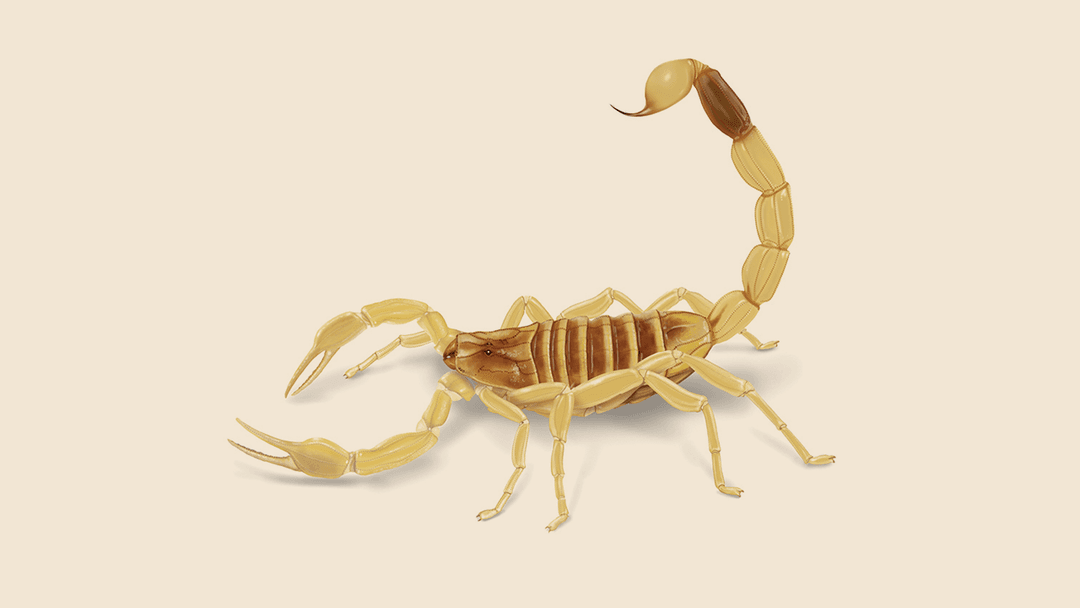
The gold or tan color is a common characteristic among most adult scorpions. A particular gold colored scorpion worthy of note is the death stalker scorpion (Genus Leiurus), which has very potent venom.
This scorpion is not to be confused with the yellow scorpion Tityus serrulatus, which is considered very poisonous as well.
There are several species in the Genus Leiurus. They typically are found in the Middle East and Northern Africa. It has been observed that they are prevalent in desert habitats and similar warm habitats, but they can also thrive in dry forests and are a burrowing species. Death stalker scorpions can dig a shallow burrow or take refuge under objects.
Behavior
Death stalker scorpions are known to be defensive and are extremely venomous which can be fatal for victims that aren't in the best of health. The poison of death stalker scorpions can quickly cause symptoms, including an elevated heart rate, convulsions, fever, blood pressure and coma. Severe reactions can also result in increased fluid secretion in the lungs and bronchioles. Death can occur as a result of heart or respiratory failure.