Tailless Whip Scorpion Facts & Information
Protect your home or business from tailless whip scorpions by learning techniques for identification and control.

Treatment
How do I get rid of tailless whip scorpions?
What Orkin Does
Your local Orkin Pro is trained to help manage tailless whip scorpions and similar pests. Since every building or home is different, your Orkin Pro will design a unique treatment program for your situation.
Orkin can provide the right solution to keep tailless whip scorpions in their place...out of your home, or business.
Behavior, Diet & Habits
Understanding Taillness Whip Scorpions
Appearance & Habitat
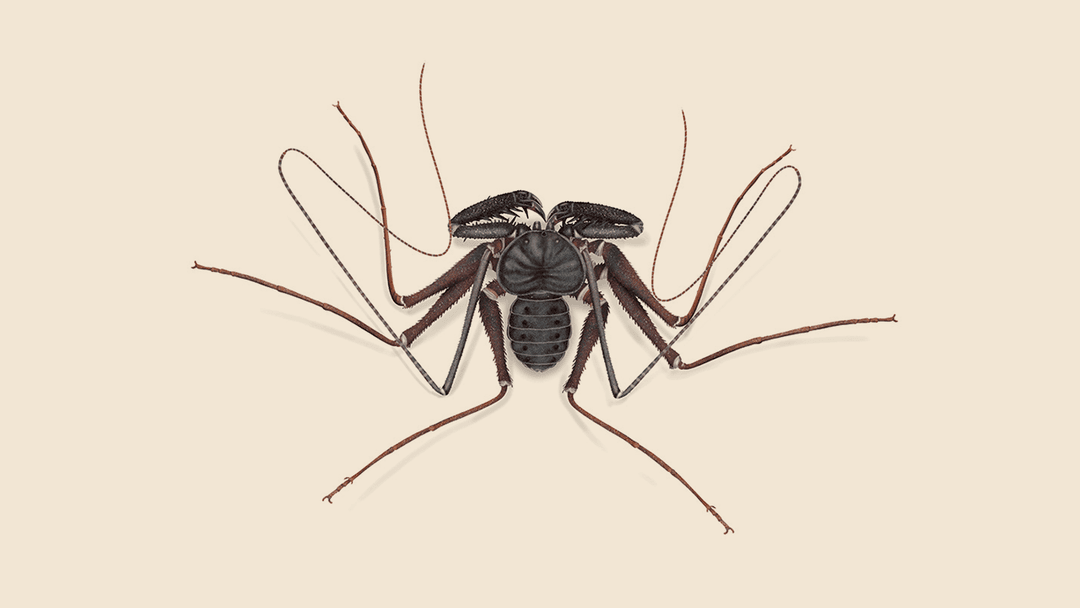
A member of the arachnids, tailless whip scorpions are known for their long, whiplike front legs. This species is not a member of the scorpion family, but resemble a cross between a scorpion and a spider. They are classified as part of the order Amblypygi, phylum Arthropoda. They must not be confused with a vinegarroon also called whip scorpion, or solpugid, also known as the wind scorpion.
Tailless whip scorpions live in humid tropical and subtropical habitats. They protect themselves by hiding under leaves and debris by day. At night, they come out to hunt and feed. Some species stay in caves while some dwell in houses. It has been estimated that there are about 150 known species of tailless whip scorpions.
These creatures measure from 10 to 25 cm, including legs. The foremost pair of legs is much longer than the body and functions like feelers to sense prey as well as navigate at night. It walks sideways with its legs leading the way. Meanwhile, its leg-like mouthparts, known as the pedipalps, are used to capture and hold prey.
The body section, which is the cephalothorax, has a wide shell-like covering called the carapace. It also has one pair of eyes toward the front of the cephalothorax, and another three pairs on the sides. Tailless whip scorpions are harmless to humans and are not venomous.
Tailless whip scorpions are found in the tropical parts of North and South America, Asia and Africa. They dwell under bark or stones, and they often enter homes. They are also present in forests, scrublands and deserts.