Paper Wasp Facts & Information
Protect your home or business from paper wasps by learning techniques for identification and control.


Treatment
How do I get rid of paper wasps?
What Orkin Does
Removing a paper wasp nest may be dangerous. It is advised that a pest control professional be contacted to assist in treatment of paper wasp infestations.
Your local Orkin Pro is trained to help manage paper wasps and similar pests. Since every building or home is different, your Orkin Pro will design a unique treatment program for your situation.
Orkin can provide the right solution to keep paper wasps in their place...out of your home, or business.
Frequently Asked Questions
Behavior, Diet & Habits
Understanding Paper Wasps
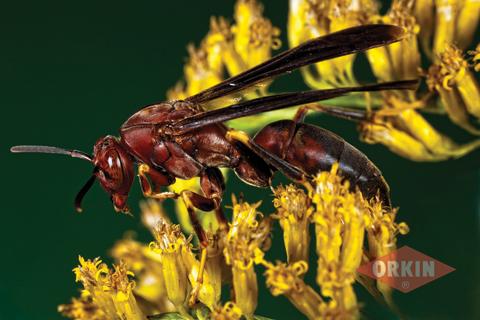
What do paper wasps look like?
-
Size: These wasps measure 1.9 to 3.2 cm in length.
-
Color: Their narrow bodies are most commonly dark brown in color, with black wings and yellow markings. Some even appear similar to yellow jackets in coloration.
Difference Between Paper Wasps vs. Yellow Jackets
To the untrained eye, these black and yellow flying insects can often be mistaken for one another. Yellow jackets are considered to be the most dangerous stinging insect in the United States — while paper wasps don’t typically sting humans unless provoked. Although paper wasps and yellow jackets look incredibly similar, knowing the difference between the two is key to finding which treatment and prevention method would be most effective. There are a few characteristics that can help you identify which pest you’re dealing with — here are a few ways to tell them apart:
Paper Wasp vs. Yellow Jacket Body Type:
-
Paper wasps have longer bodies, dangling legs, and orange-tipped antennae
-
Paper wasps are thinner near the waist
-
Yellow Jackets are larger in overall size
Paper Wasp Nest:
-
Typically located above ground in areas such as under decks or grills
-
Constructed in an open-cell paper format; often visible interior structure
-
Bulbous shape that resembles a paper lantern
Yellow Jacket Nest:
-
Often hidden underground, within a wall or a tree
-
Is constructed of many large cells and layers; not visible structure
-
Spherical and can sometimes reach the size of a basketball

Paper Wasp Nest Facts
These insects are called paper wasps due to the construction of their nests. Paper wasp nests are made from plant material combined with saliva and appear to be made from paper. Their nests include numerous compartments within which wasps lay their eggs and rear their young. They typically do not have an outer shell with the cells of the nest visible. In fact, it somewhat resembles an umbrella and is the reason they may be called umbrella wasps.
Where do paper wasps live?
Swarms of the pests around specific areas of the house often indicate the location of a nest. Around homes, nests are frequently found in sheltered areas, such as
-
Attics
-
Door frames
-
Eaves of houses
-
Wall voids
-
Window sills
What do paper wasps eat?
Paper wasps feed on nectar and pollen, although they also hunt for insects such as caterpillars with which to nourish their colonies' larvae.
How to Keep Paper Wasps Away
Wasps can be a serious issue, especially during the warmer months. When spring arrives, these social insects will begin to build a nest and lay their eggs. The best plan of attack to prevent your property from being overrun by winged invaders is to destroy any wasp nest you may encounter. Even though they aren’t keen to sting humans, they will do anything to protect their nests. If you’re wondering how to keep wasps away from your property in the first place, there are a few things you can do at home as a paper wasp deterrent.
How to Prevent Paper Wasps From Building Nests:
-
Seal up and repair any damaged window sills, vents, or screens
-
Display a fake wasp nest to prevent new invaders from moving in
-
Remove any protein such as outside pet food or food debris from a picnic
-
Cover any open compost bins or garbage cans
-
Paint areas of potential wasp activity sky blue as wasps will not build a nest on this particular color
As with most pest control methods, it’s best to contact your Orkin Pro to ensure an effective and safe paper wasp nest removal.
More Information
How to Identify Stinging Insects
Learn about stinging pests throughout North America such as wasps, yellow jackets, hornets & even some species of flies.
Learn about the physical characteristics, where these insects live, and what paper wasps eat.
How do paper wasps get in homes?
Discover the steps to take in order to prevent a wasp infestation on your property.
Explore the inner workings of how these flying pests live and cohabitate.