Western Yellow Jacket Wasp Facts & Information
Protect your home or business from western yellow jackets by learning techniques for identification and control.

Treatment
How do I get rid of western yellow jackets?
What Orkin Does
Orkin Pros are trained to help manage western yellow jackets and other stinging pests. Since every yard or home is different, the Orkin Pro will design a unique treatment program for your situation.
Keeping western yellow jackets out of your home is an ongoing process, not a one-time treatment. Orkin’s exclusive A.I.M. solution is a continuing cycle of three critical steps — Assess, Implement and Monitor.
Orkin can provide the right solution to keep western yellow jackets in their place…out of your home.
Behavior, Diet & Habits
Understanding Western Yellow Jackets
Appearance
Of the 17 different yellow jacket species in North America, the western yellow jacket is the most common in the western United States. Overall, yellow jackets are easily identified by their black and yellow stripes, defined waist and long wings, which lay laterally against the body when at rest. They range from 10 to 16 mm in length and reach their largest numbers in summer and fall.
Colonies & Reproduction
At its peak in the fall, a western yellow jacket colony may contain thousands of insects, but in the winter, worker yellow jackets perish while fertilized queens hibernate. The queens establish new nests in the spring, laying eggs to start new colonies. When the first generation of wasps reaches maturity, they are the first workers. They begin nest building and tend to the queen and subsequent eggs and larvae.
Western yellow jackets are ground-nesters and are likely to build their colonies beneath porches or in cracks in sidewalks or steps. They may also construct nests in wall voids or other structural cavities. Because they live close to or within the earth, western yellow jacket wasps are likely to come into regular contact with humans.

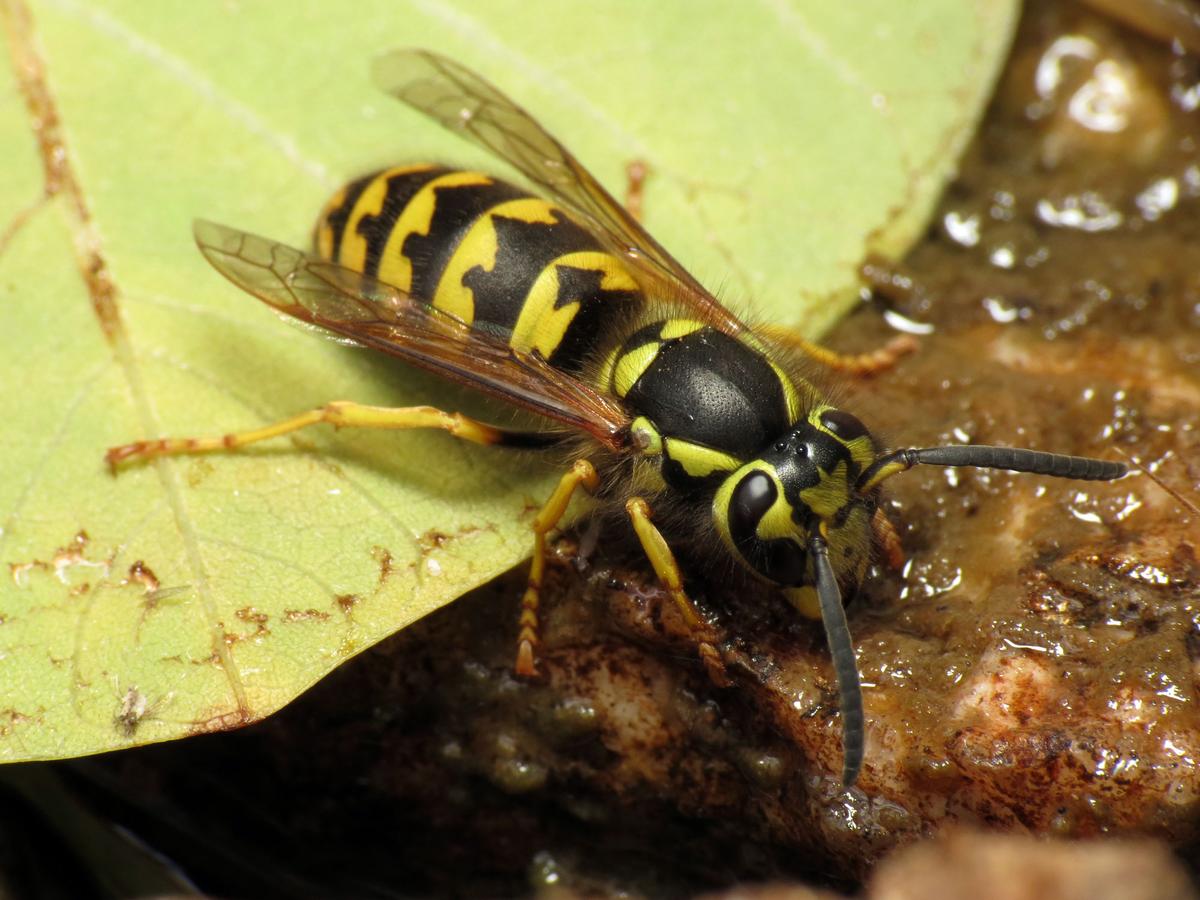
Image licensed under CC
Diet
Yellow jackets are sometimes considered ecologically beneficial, as they pollinate flora and feed on flies, beetle grubs, caterpillars and other pests. However, western yellow jackets can be scavengers on human food and are known to be pests near trash cans and picnic sites.
Sting
The sting of the western yellow jacket is painful and may cause severe allergic reactions in some individuals. A common instinct upon encountering yellow jackets is to swat at or run from them. However, sudden motion further aggravates yellow jackets and may encourage attacks. If attacked, quickly exit the area with the least amount of movement.