Characteristics of a Termite
Termite Description
Termites play a vital role in nature. They break down dead wood and other cellulose materials. This is helpful in the ecosystem and the balance of nature.
However, in residential areas, these behaviors can become liabilities.
Features
Termites range in size from 1/8 inch to 1 inch long. Termites vary in color from white to brown to black, depending on the species and the life stage of the particular termite. Read more about what termites look like.

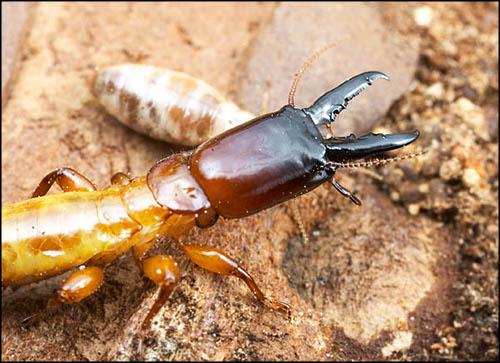

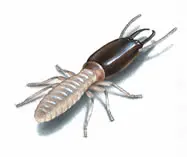
Illustration of Drywood Termite

Illustration of Subterranean Termite
Workers
Across most species of termites, a worker termite looks like an insect in the larval stage. Worker termites have soft exteriors and tend to be white or pale brown.
(Drywood termites do not have a specific worker caste and instead, rely on nymphs to perform the typical “worker” role.)
Soldiers
Soldier termites have the same soft bodies as worker termites, but with much larger heads that have a hard exterior and large, well-developed mandibles (jaws).
Alates
In the alate stage, termites look like flying ants. However, these insects can be distinguished by inspecting their wings, antennae and abdomen.
-
Termites have straight antennae and two sets of wings that are equal length. They also have two body segments with a straight abdomen.
-
Ants have antennae that bend in the middle, two sets of wings of different lengths and three body segments with a very narrow waist.
Read more on differences between flying ants and termites.
Behavior
Colonies
Termites are social insects in that they have an organized structure in a colony with a king, queen and various castes, each of which have a specialized function. Each caste has its own characteristics.
Communication
Since termites are blind, they communicate through vibrations and pheromones (chemical signals). Pheromones support the termite social structure, as these insects recognize nest mates by scent. Each colony develops its own scent. Termites can secrete pheromones to mark the trail to food or alert the colony to danger.
Swarming
Swarming is the most visible sign of termite behavior around homes. Termites swarm in order to mate and start new colonies. Subterranean termite colonies can produce thousands of swarmers, while others species of termites, such as drywood termites, produce fewer swarmers and may have less noticeable swarms.
Termites usually are cryptic, meaning that they don’t come out into the open.
These species can be further broken down into two major pest categories which cause problems to human structures: subterranean termites and drywood termites. Each type requires a different method of extermination.
Drywood Termites
Drywood termites inhabit the same wood or other source of cellulose material on which they feed. Drywood termites can live within furniture and in the wood behind walls, creating elaborate systems of tunnels. Drywood termite infestations are oftentimes not recognized until they are widespread and require professional treatment. However, it is possible to identify a drywood termite infestation by loose piles of pellets, known as frass, which appear near where feeding is happening. Drywoods are less cold tolerant and are more commonly found in the southern U.S.
Subterranean Termites
Subterranean termites are far more cold tolerant than drywood termites and, therefore, are more common throughout the United States. These termites build their colonies within loose, damp soil and create elaborate mud tunnels through which they access above-ground food sources. Subterranean termites tend to move within foundation cracks and feed on damp wooden sections of the home. Presence of mud tunnels is a certain sign of current or past infestation.
Diet
Termites eat materials containing cellulose, but the specific termite diet varies by species. Depending on the species’ need for moisture, termites may eat dead plants and trees, including materials used in buildings, carpet, insulation and wallpaper, plastic, fabric, or animal feces. Termites require the help of protozoa and bacteria in their digestive systems to break down the cellulose into sugars they can digest.
Termite Control
How do you know if you have termites?
Learn the signs to look for to determine if you might have a termite infestation.
Termites cost Americans more than $5 billion in damage each year and most insurance plans don’t cover the damage.
Schedule a FREE termite inspection
We’ll determine whether you actually have termites, then discuss a treatment plan including financing that works for you.
Learn what to expect from your Orkin Pro.