






Termite Facts
Understanding Termite Problems
The more you know about termites, the better you can predict and control their behavior. Here are some quick facts to help you on your way.
Protect your home or business from termites by learning techniques for identification and control.
Types of Termites
What are the different types of termites?
There are over 2,000 different species of termites with over 40 species in the United States alone. Although they have distinct characteristics, most look similar. The three most common main types of termites are subterranean termites, drywood termites and dampwood termites. Subterranean include termites such as arid-land subterranean, desert subterranean, eastern subterranean. Drywood include termites such as western drywood, southeastern drywood and desert drywood. Dampwood includes termites such as Florida dampwood, Nevada dampwood and Pacific dampwood.
Since termites feed primarily on wood, they are capable of compromising the strength and safety of an infested structure and can cause severe damage for homeowners. Based on the layout of your property and the degree of termite infestation, Orkin will create a customized termite treatment plan tailored for your situation. This can include a variety of treatments such as Termidor Liquid, Dry Foam and OrkinFoam, and Sentricon Bait and Monitoring dependent on the areas of usage, situations and species of termite.
Ongoing prevention is your best bet when it comes to termites because most homeowner insurance plans don’t cover termite damage. Don’t let these troublesome pests put a dent in your home or your wallet. For help with termite extermination, schedule an appointment to get a free termite inspection from a local Orkin Pro.
To learn more about how to prevent termites and protect your home, contact your nearest Orkin branch.
The more you know about termites, the better you can predict and control their behavior. Here are some quick facts to help you on your way.
Learn the many signs of termite damage, how to identify a termite infestation and what to do to resolve the situation.
Explore what you need to know about termite damage repair and next steps to take.
How to Identify Termite Activity
Familiarize yourself with the signs to look for to determine if you have a termite infestation.
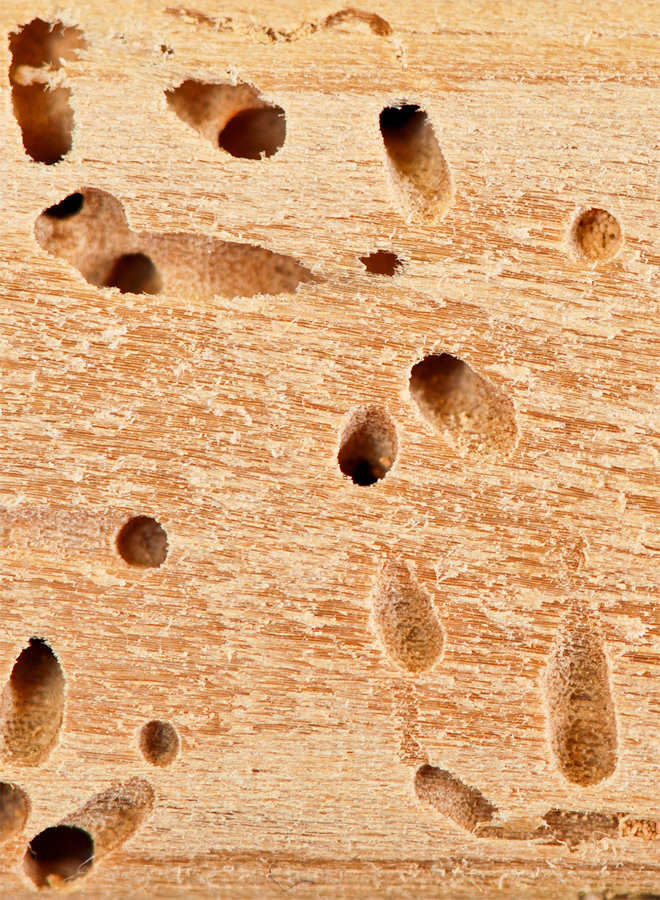
Termite exit holes are round and typically measure approximately 1/8 of an inch or smaller.
Learn how to recognize the different types of drywood termite droppings, or frass, and which type of termite they belong to.
What is a Termite Mud Tube (Termite Tunnel)?
Explore the four types of mud tubes that are used by subterranean termites to connect their colonies in the soil underground to their above-ground food sources.
Follow the life cycle of a termite from mating to adulthood.
Termite eggs are very small, white and oval-shaped and are laid deep inside termite nests.
Newly hatched termites are sometimes referred to as ""larvae,"" which is not to be confused with the larvae of complete metamorphosis insects like flies.
For many homeowners, a termite swarm may be the most visible sign of a termite infestation as it indicates that a current colony is flourishing nearby.
Learn how to identify a termite infestation as flying termite swarms may be a serious warning sign of potential damage for homeowners.
Depending on the type of termite, worker termites can live for 1-2 years, and termite queens may live several decades.
Termites can damage a number of structural components in a house, most of which is not covered by standard homeowner insurance policies.
Termites can damage the underlying flooring of laminate — making it impossible to repair the existing flooring.
As a homeowner, it’s important to recognize the signs of termite ceiling damage in order to remain vigilant and prevent costly repairs.
Learn how to identify the telltale signs of termite-inflicted wall damage and how to get rid of termite infestations.
While termites cannot damage concrete foundations, they can damage nearby wood sources and cause significant damage to structural supports made of wood.
While termites typically are feared for their wood-destroying abilities, they can also consume any product made of cellulose, including carpet fibers, carpet pads, subfloor and carpet tack strips.
In a termite colony, the queen is responsible for laying eggs to sustain the colony's growth and survival.
Next to the queen termite, the king is the most important member of the colony when it comes to keeping the colony well populated.
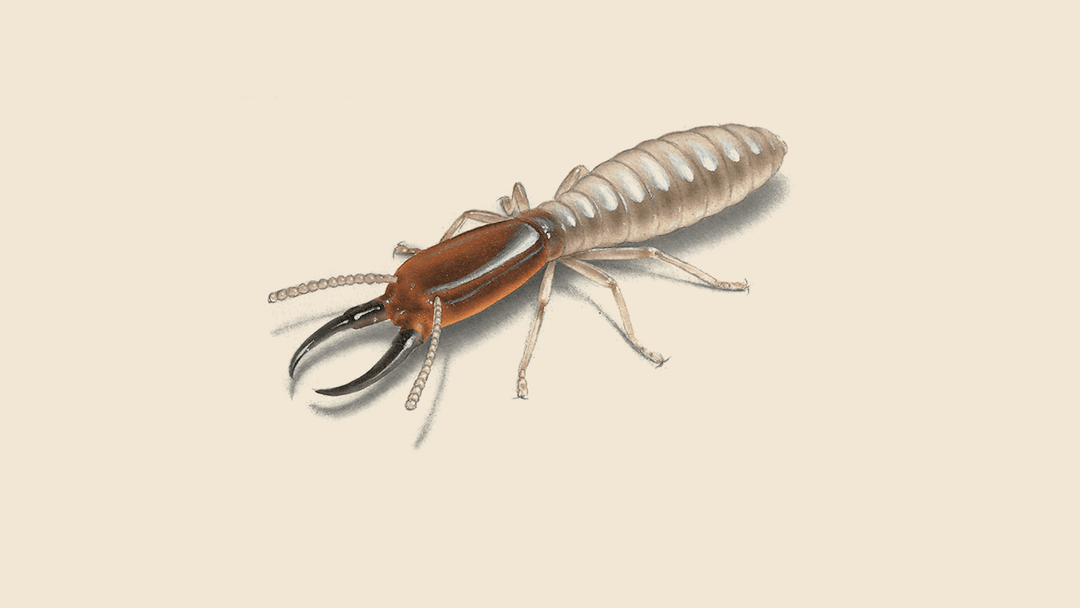
Soldier termites are responsible for the protection of their colony by defending the nest.
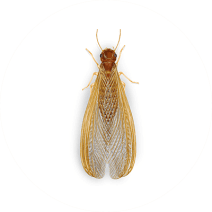
Termites with wings (also called swarmers or alates) are reproductives that leave the nest to start new colonies.
Young or recently developed worker termites usually remain in the colony to do general repair and maintenance work on the galleries, while older workers are primarily responsible for foraging for food.
Reproductives are the only sexually mature members of the colony, aside from queens and kings.
Familiarize yourself with the many types of termite colonies, how they function, their different sizes and how to identify which species of termite calls it home.
Explore the world of termites from what they require to survive to common termite facts and questions answered by an Orkin Pro.
Are Flying Termites Attracted to Light?
Like most nocturnal insects, the flying termites will be drawn to light sources around the home, such as porch lamps, motion lights and light reflected from inside.
Flying termites, which are also called swarmers or alates, are the reproductive members of their nests. They are the only termites with wings.
Can Rain Stimulate Termite Activity?
Rain increases swarm activity by prompting flying termites to begin their mating process, which can make getting rid of termites even more difficult.
Termites build their colonies in moist soil, as well as damp and dry wood that contains very little moisture, and may be found in decaying, damp and dead trees.
Can Termites Swarm After Treatment?
Post-treatment termite swarms are not uncommon and may occur up to around four weeks after treatment — but it does not indicate that the treatment was ineffective.
Termites are highly tuned to water-damaged wood in homes and can follow the scents of fungi and decaying wood or plants from short distances.
Unlike many pests, termites rely on other senses more than eyesight to interact with the world around them.
How Do You Know if You Have Termites?
Learn how to spot infestations before they get serious and how to identify the clear signs that termites are present.
How Fast Do Termites Eat Wood?
The rate at which termites eat wood depends on many factors such as the species of termite, size of the colony, type of wood, climate and location.
Termites are considered insects because their bodies are divided into distinct sections for the head, thorax and abdomen.
Gain an understanding about the different types of termites, which include subterranean termites, drywood termites and dampwood termites.
Learn the preferences of the three common types of home-invading termites and the reasons they’re drawn to those structures in particular.
What to Do When You Find Termites?
Discover the main signs of a possible infestation and what termite control options can help quickly eliminate the potential of destructive termite activity.
What Does Termite Larvae or Eggs Look Like?
Immature termites look very similar to adults — white, soft-bodied insects.
What Wood Will Termites Not Eat?
Homeowners may reduce the chances of termite infestations by using pressure treated, naturally resistant or composite wood.
Termites enter specific environments to fulfill their food and shelter needs and frequently find sustainable nest sites inside homes.
Termites' diets are primarily made up of cellulose, an organic fiber that is plentiful in wood and other plants such as grass.
Buying a Home with Termite Damage
If an infestation or termite damage is found during a termite inspection prior to purchase, the buyer should obtain estimates for treatment and repair — these costs may be negotiated with the seller.
In order to know which style of termite treatment is best for an infestation, it’s important to properly identify the species causing the problem.
Learn about when you should request a termite inspection and explore helpful tips on how to prevent termites in your home.
While springtime typically promotes mating swarms, termites that have infested a house can cause damage at any time, regardless of the weather.
Does DIY Termite Control Work?
There are a few DIY termite treatment methods that may rid visible pests, but they rarely succeed in fully eliminating a termite infestation.
Get a quote today
We are here for you 24 hours a day, 7 days a week.
877-819-5061