Termite Larvae
While adult reproductive termites are not usually responsible for structural damage, it is essential that the worker termites be exterminated to eliminate an entire infestation. Termites follow the typical life cycle of insects that have a gradual life cycle: they begin as eggs, and then enter nymphal to adult stages. In termite development, newly hatched termites are sometimes referred to as "larvae," which is not to be confused with the larvae of complete metamorphosis insects like flies.
Identifying Subterranean Termite Larvae
Termite larvae are very small and about the size of the termite eggs. They have soft, white bodies and look like smaller versions of worker termites. This is because the larvae have not fully matured.
Termite larvae (top left) and worker termites (center):

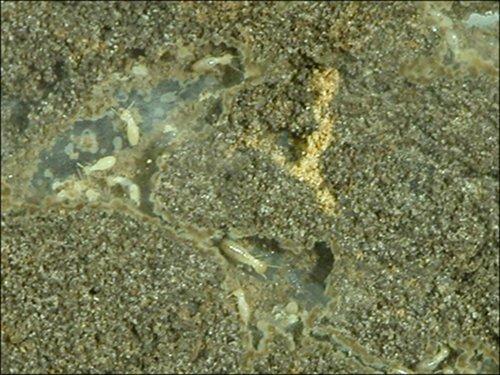
Termite Larvae And Workers In Colony
What Do They Eat?
Like adults, larvae feed on cellulose. However, workers must break down the larval termites' food for them, since they are unable to digest it without help.
The Life Cycle of Larvae
Larvae molt several times before they are fully grown. Through this process, larvae turn into workers, reproductives, or soldiers based on the colony's needs. Most become workers, as colonies have a higher demand for this role. Worker termites may later turn into soldiers, if needed. Termite larvae that become alates are able to grow wings and reproduce.

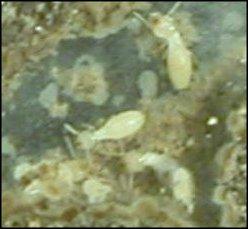
Termite Larvae Close Up
Once termite eggs hatch, the hatchlings are called termite larvae or immatures (sometimes referred to as "baby" termites"). Each larva then goes through a series of molts (process of growing and shedding its exoskeleton) to become a worker, soldier or reproductive termite. The termite king and/or queen use pheromones (chemical signals) to direct which role each termite larva will play in the colony.
Depending on the colony’s needs, larvae that develop into worker termites may remain workers, develop into soldier termites or grow wing buds in the process of becoming a reproductive (called a nymph).
Termite larvae that turn into nymphs can molt to become primary reproductives (alates) that develop wings and eyes in preparation for swarming, or secondary reproductives that support the colony’s egg production. If needed, some worker termites may molt to become tertiary reproductives that further support the termite queen’s egg production.
Not all nymph termites continue to molt and become reproductives. If the colony needs more workers, some nymphs may regressively molt, losing their wing buds to become termite pseudergates or “false workers.”
Damage Caused by Termite Larvae
Larval termites are indirect damagers of homes. Although they do not forage for cellulose like mature workers, larvae must be feed by workers that consume wood in homes.
Control & Removal
Termite larvae die if they are not fed and protected. Since termite infestations can silently destroy homes over long periods of time, any sign of termites needs to be addressed immediately. To efficiently eliminate the pests, professional assistance is recommended.
If you suspect you have termite activity in or near your home, contact a pest control professional. Termite damage can go undetected and result in significant financial loss from their damage. A termite inspector can inspect a home for signs of activity and conditions that are attractive to termites. They also can offer services to treat and protect the home from potential future damage.
Termite Control
How do you know if you have termites?
Learn the signs to look for to determine if you might have a termite infestation.
Termites cost Americans more than $5 billion in damage each year and most insurance plans don’t cover the damage.
Schedule a FREE termite inspection
We’ll determine whether you actually have termites, then discuss a treatment plan including financing that works for you.
Learn what to expect from your Orkin Pro.