Types of Termite Nests
Termite Nest Facts and Identification
Termite colonies live in nests or mounds that they build themselves. Where a colony chooses to live and how they build depends on the specific species’ source of food, moisture, and colony protective needs. Termite nests have been reported to be extremely large, spreading over a 50 to 100 meter radius. Both subterranean and above-ground termite nests also function as shelter and a place to rear their offspring.
Subterranean Termite Nests
Subterranean termites require an association with continuous and a lot of moisture, so they build their nests in underground soil.
Galleries
This ensures that their habitat always remains damp and cool. The nests may be located between 4 to 18 inches or more underground and are made up of several rooms, called galleries. These galleries are connected by tunnels made of mud. The tunnels not only connect galleries, but also connect the termites to food sources.
Subterranean termite foraging territories – the area over which the colony’s workers may range looking for sources of food – are large. For example, their foraging area may involve more than ½ acre and workers may forage more than 250 feet from one spot to another.
Because of their environmental needs,subterranean termites do not nest inside of homes, unless they are able to do so by constructing a secondary colony that is near moisture from a leak or other structural flaw that enables the wood within the house to stay moist.

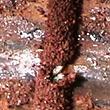
Subterranean Termite Mud Tunnel
Drywood termites are aptly named, as dry wood is exactly where they prefer to live. They do not need much moisture to survive, so it’s not necessary for the wood they inhabit to be close to or connected to the ground and thus remain moist. As drywood termites inhabit and feed off of the wood, they create maze-like tunnels from the inside out. Homeowners may see this species if the pest chooses to inhabit furniture, wooden support beams or hardwood floors.
Dampwood Termite Nests
Dampwood termites also do not require contact with the soil to obtain moisture, but do require environments with more moisture than their drywood counterparts. They prefer to infest wet, rotting wood that is close to the ground. Because of this, dampwood termites often pose a problem to homeowners in wood that may already be affected by wood decaying microorganisms such as fungi. However, they may choose to infest your wooden structures if you have a leaking roof, plumbing issues or other water-related damage.
Formosan Termite Nests
Formosan termites, a species of subterranean termite, build the largest nests of any termite species in the U.S. Due to their colony size – which can contain millions of termites – Formosan termites cause the most damage of any termite species.
Cartons
Unlike subterranean termites, Formosan termites do not need direct contact with the soil to survive. Formosan termites can build nests both above and below ground. Above ground, these nests are called cartons. Cartons are formed from soil mixed with chewed and unchewed wood, and can be found in the walls of homes.


Termite Tunnel Damage
Termite Mounds
Termite mounds are above-ground structures made from termite fecal matter, saliva and mud. They are built by termite species in hot climates such as Africa and Australia and are designed to protect termites from scorching temperatures. Chimneys are incorporated in mound architecture in order to better circulate airflow, which keep temperatures moderate inside. Termite mounds have become a popular tourist attraction because of their large size. The largest recorded was 19 feet wide, and the tallest measured at 41 feet tall.
Think you might have termites in your home? Schedule an appointment to get a free termite inspection from a professional Orkin Pro.