Orkin

For your convenience and immediate attention, call 866-949-6097

Bats

Bats:  Facts, Identification & Control

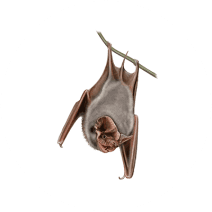
Bats are a unique mammal that has a long and storied history full of misconceptions. Through time, they’ve become associated with evil of many forms such as sorcery, witchcraft, haunted cemeteries, and vampires. Bats also have long been feared due to a belief that rabies is rampant within their population. This is only partially true. Bats can carry rabies, but it is rare and most bats prefer to avoid interaction with humans so the chances of transmittal are low except when performing bat control work. What is true about bats is they’re nocturnal and the only mammal truly capable of flight. Bats are beneficial to humans since common species feed entirely on insects. Some people even choose to install bat houses on their property to encourage nesting.Though bats are distinct as a family, individual species can be difficult to differentiate. There are over 980 species of batsworldwide with approximately 40 of them residing in the United States. The three most common species encountered domestically are the big brown bat, the little brown bat, and the Mexican free-tailed bat. These can be difficult to tell apart (even for a professional), so it’s recommended that an expert be consulted prior to attempting any control efforts.Bats range in size across the different species, but tend to average about 2 ¼” to 7 ½” in length (tip to tail) with a wingspread of approximately 6” to 15”. Most weigh between 1/8 oz. and 2 1/8 oz. (in the U.S.). Bats’ bodies are covered with hair varying in color from tan to black. Their wings stretch across elongated arm and finger bones.

Bats emerge in the early days of spring and leave their overwintering sites for summer homes. Typically, the first to establish nesting areas are the females ready to give birth. Because of their impending maternity, these new colonies are known as maternity or nursery colonies. Baby bats are usually born during the months of June and July. The infant bats breastfeed until they’re ready to fly and hunt food on their own (typically, three to seven weeks old). The bats remain in this roost until the fall when it’s time to overwinter. Prior to leaving for winter residence, males begin arriving at these colonies in large numbers ready to mate with the female inhabitants. Winter hibernation is an instinct felt by all domestic bat species. Some travel less than one hundred miles while others travel thousands of miles from their summer roost. Equally as fascinating is that some species winter in small groups while others choose to gather in large numbers for their winter rest.

Bat management is truly a challenge. Any opening 3/8 inch or larger is sufficient for entry of smaller bats, so pest management professionals must be very thorough in their efforts. The first part of successfully managing a bat infestation is to inspect and evaluate the situation. Two inspections may be necessary for a full understanding of the situation. An inspection at dusk determines the size of the infestation as the bats leave for their nightly feeding. Also, it shows their preferred exit point from the structure. A second inspection needs to take place during daylight hours when humans can see best (bright lights such as flash lights and work lights may scare the bats at night and cause them to change their habits) and the bats are sleeping. This inspection needs to identify deficiencies of the building/structure, the roosting site, species of bat, and equipment needed to effectively control. Once the situation is assessed and understood, a humane solution should be devised.

The most accepted and effective way to control a bat population is through bat proofing of the structure. This is a biologically accepted, practical, and economical solution. The best time of year to accomplish this is late fall after the roost clears for hibernation or late winter / early spring prior to bats returning. All openings 3/8 of an inch or larger must be sealed. Another effective method if worried about trapping bats inside is installation of one-way bat check valves. If the potential entry points are too numerous, then plastic bird netting is an effective solution.

Bats are a potentially dangerous infestation to control. Not only can they as pests cause problems, but there are medical implications to consider. Bats can carry rabies without showing any signs and working near bats may increase chances of exposure. Also, accumulation of their droppings creates a suitable environment for the growth of Histoplasma capsulatum, a fungus which can cause lung disease in humans. Spores contained within the dust are inhaled into the lungs. Severe cases can be fatal. This danger and access to the proper safety equipment are two reasons why only experts should attempt to control bat infestations.
Bat Problems and Pest Control

Are Bats Harmful

What are Some Facts about Bats

How do Bats Fly?

What do Bat Droppings Look Like?

What do Bats Eat?

Where are Bats Found?

Bats in the House

How to Control Bats?

How to get rid of bats in an attic?

Sign up for Orkin Pest Control today!

For your convenience and immediate attention,
call or fill out the form below.