Drain Fly (Sewer Fly) Facts & Information
Ever spotted a fuzzy, moth-like insect chilling on your bathroom wall? Meet the drain fly. Also known as sewer flies, moth flies, or by their scientific name Psychodidae, these pests love your plumbing almost as much as you do.

Treatment
How do I get rid of drain flies?
What You Can Do to Get Rid of Drain Flies
Generally, the best control for these flies is to remove the breeding site, which is the organic material that collected in the drain. The site must be located and cleaned. Drain cleaner will not fix the situation. Read more about drain flies and bleach.
Once the material is removed (along with the larvae) the problem is solved, except for the adult flies. They will live about 20 days, but will have no place to lay eggs to continue their life cycles.
What Orkin Does to Get Rid of Drain Flies
Sometimes a scrub brush isn't enough. If you have a persistent sewer fly infestation or can't locate the breeding source, you need backup. Your local Orkin Pro is trained to help manage sewer flies and similar pests. Since every building or home is different, your Orkin Pro will design a unique fly treatment program for your situation.
Frequently Asked Questions
Behavior, Diet & Habits
Understanding Drain Flies
What Are Drain Flies?
Drain flies are exactly what they sound like, flies that hang out in drains. But don't let the name fool you; whether you call them sewer flies, sink flies, or filter flies, they are all the same nuisance.
What Do Drain Flies Look Like?
-
Appendages: Drain or sewer flies have six legs and a pair of wings and antennae.
-
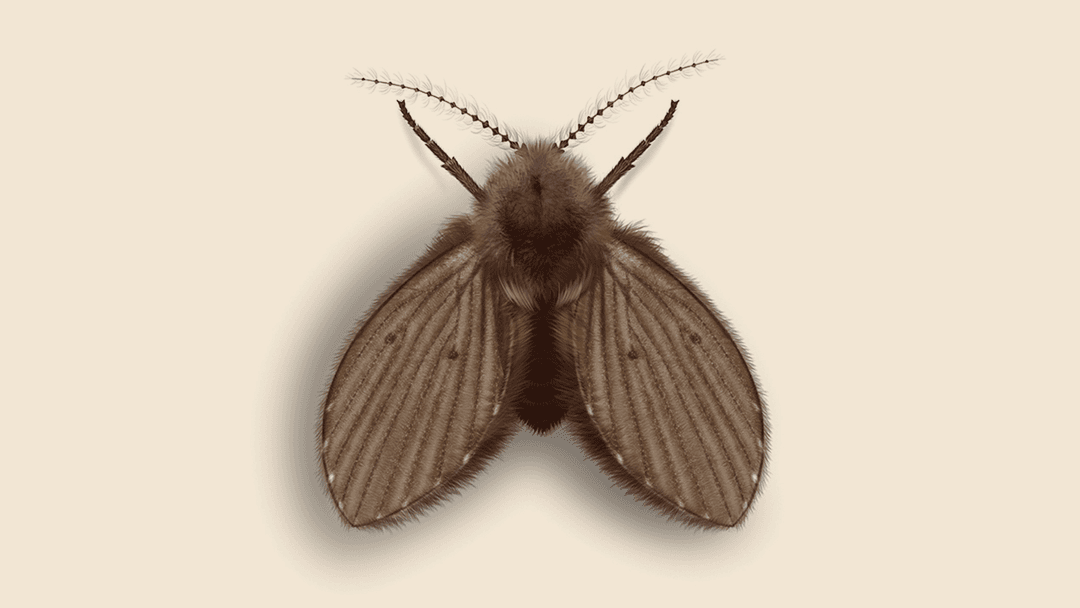
Body: Light gray or tan body and lighter-colored wings. The body and the wings are covered with long hairs, giving the fly a fuzzy appearance.
-
Characteristics: When at rest, the drain fly folds its wings over the body in a characteristic roof-like manner.
-
Size: Drain and sewer flies measure about 1.5 to 5 mm long.
-
Larvae: Drain fly larvae are not longer than 4 to 10 mm when fully mature and they are slender with a dark strip on the "back" or dorsal area. Larvae do not have eyes, and they are legless. On one end of the larva, there is a dark breathing tube used to extend out of the film to obtain air.
Where Do Drain Flies Live?
Drain flies are common in moist areas coated with nutrient-laden organic material. As their name implies, they are found in house and storm drains. They can also be found near decaying logs and compost piles.
What Do Drain Flies Eat?
Drain flies feed on organic matter and sewage that builds up inside drains, pipes, and sewer lines. This includes decomposing food particles, grease, soap residue, hair, and other sludge that collects along the inner surfaces of drains. The larvae thrive in this moist, bacteria-rich environment, making clogged or slow-moving drains an ideal food source and breeding ground.
Drain Fly Life Cycle
Eggs are laid in irregular masses almost anywhere decomposing organic materials are found. Drain fly eggs hatch into white, nearly translucent larvae. These larvae have been known to survive dramatic temperature swings and low oxygen levels. Under favorable conditions, the sewer flies can go through one generation in as little as one week. Two to three weeks is more typical.
Drain Fly Larvae
Usually, the homeowner never sees drain fly larvae since the larvae are located in the gelatinous film inside drains. However, sometimes, when drains are taken apart, larvae can be found in the film. In small numbers, larvae are considered beneficial because they break down materials that cause drain clogs. They have extremely strong jaws and are capable of cutting through layers of dense slime and build-up.
Sewer fly larvae are not longer than 4 to 10 mm when fully mature and they are slender with a dark strip on the "back" or dorsal area. Larvae do not have eyes, and they are legless. On one end of the larva, there is a dark breathing tube used to extend out of the film to obtain air.
Adult Drain Fly
After the larvae mature, they will pupate or rest until they emergence as adults. The adult is the only life stage usually observed. Adult sewer flies usually live about two weeks, but newly emerged adults rapidly replace them. These flies are also known as moth flies due to their appearance: they are small and furry with large, ovoid wings and prominent antennae. When at rest, the drain fly folds its wings over the body in a characteristic roof-like manner.
Drain Flies vs. Fruit Flies
Drain flies and fruit flies are often confused, but they come from very different sources. Drain flies breed in the slimy buildup inside drains, sewers, and pipes, and are commonly found near sinks, showers, and floor drains. Fruit flies, on the other hand, are attracted to ripe or fermenting fruits, sugary spills, and trash, and are usually seen hovering around kitchens and food storage areas. Identifying where the flies are coming from is key to getting rid of them and preventing future infestations.
More Resources
Restaurant flies are attracted to food waste, spills, and moisture commonly found in kitchens, dining areas, and dumpsters, making sanitation and proper waste management critical for prevention.
Garbage flies breed in trash, decaying food, and organic waste, especially when bins aren’t sealed or emptied regularly, leading to rapid infestations.
Stable flies are biting flies that breed in decaying organic matter like manure and wet hay, often found near farms or livestock, and can cause painful bites to both animals and people.