Wolf Spider Facts & Information
Protect your home or business from wolf spiders by learning techniques for identification and control.

Wolf Spider Treatment
How do I get rid of wolf spiders?
Orkin Wolf Spider Pest Control
Orkin Pros are trained to help manage wolf spiders. Since every home is different, the Orkin Pro will design a unique spider treatment program for your situation.
Keeping wolf spiders out of your house is an ongoing process, not a one-time treatment. Contact your local Orkin branch to schedule an inspection and find the spider control solution for your home.
Frequently Asked Questions
Behavior, Diet & Habits
Understanding Wolf Spiders
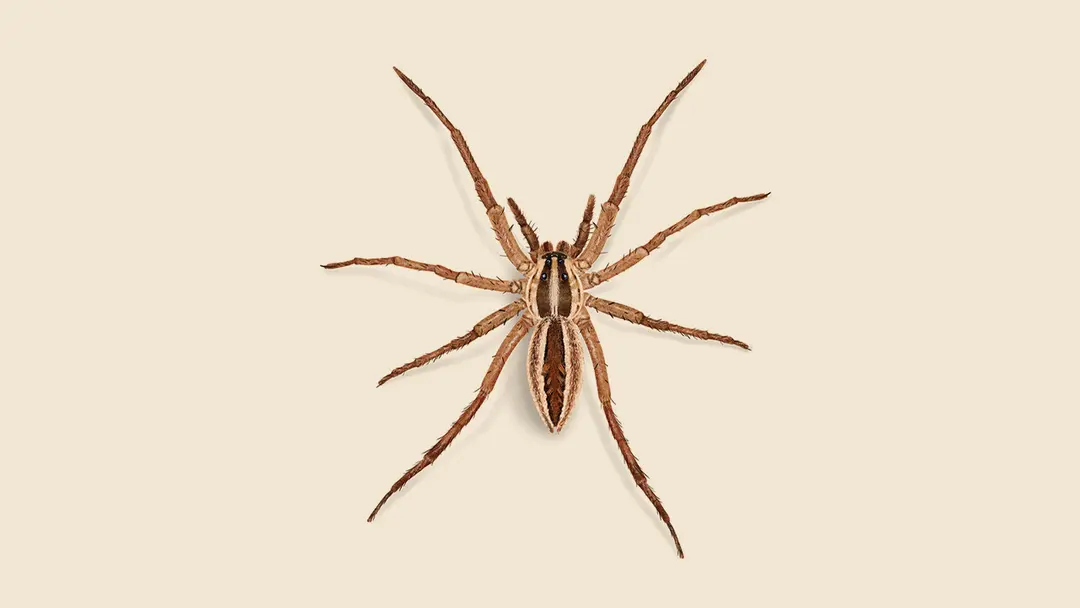
What do wolf spiders look like?
-
Size: Wolf spiders are hairy arachnids that can grow up to 35 mm in body length.
-
Color: Their bodies are commonly patterned in black, gray and brown hues.
-
Body: Quick moving and relatively large in size, wolf spiders often inspire fear when they are found within human dwellings.
-
Eyes: The eight noncompound eyes of the wolf spider are arranged with one lower row of four small eyes, two larger eyes and two more small eyes on top of the head.
Difference Between Other Spiders
Wolf spiders are also sometimes confused for tarantulas, nursery web and fishing spiders, and brown recluse spiders.
It can be difficult to differentiate between wolf spiders and the many species that resemble them. Most spiders have in common two-segmented bodies, eight legs and fang-like mouthparts known as chelicerae. However, wolf spiders do have shorter legs than web-building spiders and appear more robust than other species.
Wolf Spider vs. Brown Recluse
It may help to observe the movements of the spider in question. Named for their swift motion, particularly while attacking prey, the wolf spider can sometimes be seen scurrying across open surfaces. The brown recluse, on the other hand, tends to hide in dark, unvisited places and is rarely seen in the open. Recluses also have six eyes arranged in pairs combined with a violin marking on their cephalothoraxes. Wolf spiders do not have these combined characters.
Wolf Spider Jaws & Fangs
Chelicerae, or jaws, are used to hold prey, inject venom and eat. Two sharp, horizontal fangs are present at the extreme bottom of these jaws. Also present near the jaw are the palps, which serve as sensory structures and as sperm storage in the male wolf spider.
The circulatory system of the wolf spider is open, meaning the blood isn’t confined and delivered inside of a closed system, and contains hemolymph, a respiratory protein similar in function to hemoglobin. Hemolymph is pumped through the heart and bathes the internal organs and tissues.
Wolf Spider Bites
Although their reputation would lead one to believe otherwise, the bite of the wolf spider is not a significant medical threat to the average adult. Wolf spiders typically do not bite unless threatened or provoked. In most cases the wolf spider will first retreat or rear up on its legs, exposing its large fangs.
Where do wolf spiders live?
Wolf spider habitats range from woodlands and dry, inland shrub lands to wet, coastal forests and alpine meadows. Some wolf spider species prefer to dwell in suburban gardens. Coastal sand dunes, mountain herb fields or riverbank gravel beds are also home to many wolf spider species. Because wolf spiderlings travel great distances, the habitat of a single species can span a large region.
There are several wolf spiders found in the west that are most commonly brown in color, although gray and black specimens have also been documented. Colored markings may appear along their bodies. Some western wolf spiders can be found indoors, while others are specific to wet outdoor areas like riverbanks.
Wolf Spider Burrows in the Ground
Wolf spiders do not spin webs and reside instead within burrows. These burrows may be open or sealed with silken doors. In rainy seasons, wolf spiders plug their burrows with pebbles and build turrets to deflect floodwater. Twigs may also be placed at the top of the burrow.
Wolf Spiders In the Home
At the onset of the fall season, wolf spiders seek warmer habitats and have been known to enter homes, where they are found in windows, doors, garages, basements and houseplants.
Signs of a Wolf Spider Infestation
All spiders have the potential to come indoors. Wolf spiders often scurry under gaps below doors, and jumping spiders accidentally may be carried in on people. Sightings of wolf spiders are the main sign of their activity. If wolf spiders are found invading a structure it is best to contact a local pest management agency.
Wolf Spider Facts
Wolf spiders are common throughout the United States, especially Missouri, Texas, and California. In California, they are sometimes referred to as California wolf spiders. The Kauai cave wolf spider (Adelocosa anops) inhabits the caves of Hawaii's Kauai Island. These spiders are eyeless and reddish-brown in color. Specimens can measure up to 20 mm in length.
Other Types Of Wolf Spiders
The Carolina wolf spider is the largest documented wolf spider in the United States. Its color matches its habitat, allowing for camouflage. Other wolf spider species may inhabit alpine meadows, coastal forests, dry shrub lands and woodlands. Most species are burrowers that live underground, although some specimens can be seen traveling above ground in leaf litter, on lawns and in gardens. Most wolf spiders are also nocturnal, although some do hunt in the morning. A wolf spider’s diet typically consists of insects and other small spiders.
Carolina Wolf Spiders (Hogna carolinensis)
Texas Wolf Spiders (Rabidosa rabida)