Pseudoscorpion Facts & Information
Protect your home or business from pseudoscorpions by learning techniques for identification and control.

Pest Control Treatment for Pseudoscorpions
How do I get rid of pseudoscorpions?
What Orkin Does
Your local Orkin Pro is trained to help manage pseudoscorpions and similar pests. Since every building or home is different, your Orkin Pro will design a unique pest control treatment program for your situation.
Orkin can provide the right solution to keep pseudoscorpions in their place...out of your home, or business.
Frequently Asked Questions
Behavior, Diet & Habits
Understanding Pseudoscorpions
What do Pseudoscorpions look like?
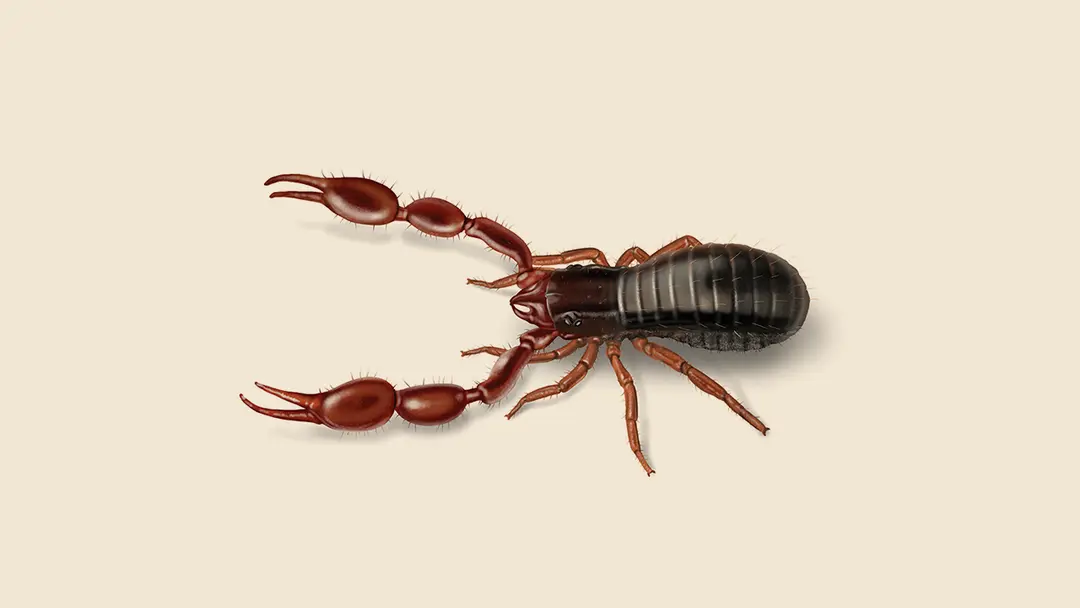
Pseudoscorpions are a member of the Arachnid class, and belong to the order Pseudoscorpionida. Its name literally means "false scorpion." It is known for its flat, pear-shaped body and pincers that resemble those of a real scorpion. The body grows from 2 to 8 mm in length. Despite the superficial similarities, pseudoscorpions lack the true scorpion's long tail and sting.
Where do Pseudoscorpions live?
This small creature can be found worldwide, especially in the tropics and subtropics. Common species of this creature can be seen in the following types of places:
-
behind tree bark
-
in tree hollows
-
in leaves and pine litter
-
beneath the soil
-
under stones
-
in caves
-
at the seashore
-
within fractured rocks
Pseudoscorpion Reproduction
During the mating dance, the male pulls the female over a spermatophore that is deposited upon a surface. After the mating period, the female carries the fertilized egg in a brood pouch that is attached to her abdomen. When the egg hatches, the young stay with the mother for a period of time. The young go through three molts, which can span several years, before they mature. It has been estimated that the adults live up to two to three years.
What do Pseudoscorpions eat?
Pseudoscorpions present less risk to humans, than actual scorpions. Although they have pincers, which they use to grasp their prey, these pincers are too small to hurt people. Pseudoscorpions are actually beneficial as they help control pest populations by preying on small insects such as ants, small flies, mites, carpet beetle larvae, clothes moth larvae and booklice.
More Information on Beetles
What Made the Mounds of Dirt in My Flowerbeds and Lawn?
Mounds of dirt in flowerbeds and lawns are often caused by earthworms or beetle grubs, with skunks digging for these grubs also potentially creating similar mounds.
I Found a Small Oval Brown Bug With Horizontal Stripes
The small, oval brown bug with horizontal stripes is likely a larder beetle, which infests homes and feeds on various stored products
What Beetle Looks Like a Small Crab?
Pseudoscorpions are small, crab-like bugs that are harmless to humans and pets and prey on mites and small insects.
What Bugs Have a Hard Shell and Six Legs?
Small, hard-shelled bugs with six legs found in kitchens are likely stored product beetles. These are common pantry pests that infest flour, grains, and other food items.
What Bus Has an Orange Stripe and Long Nose?
Weevils, specifically strawberry root weevils, have an orange stripe and long nose. They pose no threat to humans or pets, but can damage plants