Garbage Fly Facts & Information
Garbage Flies Treatment
How do I get rid of garbage flies?
How to Keep Flies out of the Garbage Can
Flies are attracted to garbage cans as a source of food, shelter, and a place to lay eggs. To deter flies, it is essential to make your trash can an undesirable environment.
-
Bag and Seal All Waste: Always place trash in sealed garbage bags before depositing it into the can. Avoid placing loose food scraps or unbagged items directly into the bin.
-
Regular Cleaning: Frequently rinse your garbage bins to eliminate residues. For a thorough clean, scrub with soap and water or a vinegar solution.
-
Secure Lids: Utilize a tight-fitting lid to contain odors and create a physical barrier against flies.
-
Odor Absorption: Use baking soda, activated charcoal, or salt at the bottom of the bin to absorb odors and moisture. Citrus peels or dried herbs such as basil and bay leaves can also be effective.
-
Natural Repellents: Flies dislike certain essential oil scents. Place a cotton ball with peppermint, eucalyptus, or lavender oil inside the lid to deter them.
What Orkin Does to Get Rid of Garbage Flies
Orkin Pros are trained to help manage garbage flies. Since every home is different, the Orkin Pro will design a unique fly treatment program for your situation.
Keeping garbage flies out of your home is an ongoing process, not a one-time treatment. Orkin’s exclusive A.I.M. solution is a continuing cycle of three critical steps—Assess, Implement and Monitor.
Orkin can provide the right solution to keep garbage flies in their place...out of your home or business.
Frequently Asked Questions
Behavior, Diet & Habits
Understanding Garbage Flies
What do garbage flies look like?
Garbage flies are small, measuring between 1/8 to 1/4 inch long. Here's how to spot them:
-
Gray bodies with four distinctive black stripes running down their backs
-
Bright red or dark compound eyes (females have wider spacing between their eyes)
-
Tiny hairs covering their bodies that act like taste buds
-
Six legs and a pair of antennae
-
Wings with a slight upward bend in one of the veins
Garbage Fly Behavior
The housefly (Musca domestica) is one of the flies that is commonly referred to as the filth or garbage fly. These flies have earned this classification based on their egg-laying sites, which consist of offal, decaying organic material and corpses. While garbage flies play a vital role in breaking down dead matter, their feeding habits make them incredibly unsanitary, especially if they are present in large numbers.
What do garbage flies eat?
Adult garbage flies are opportunistic eaters, consuming various fermenting, rotting, or decomposing substances. Their diet commonly includes:
-
Decomposing fruits and vegetables
-
Food waste
-
Sugary liquids
-
Animal excrement
-
Other organic materials in decay
The larvae, or maggots, feed on similar decaying organic matter, accumulating nutrients for their development into adult flies.
Where do garbage flies live?
These flies are resourceful, setting up shop wherever there's moisture and decomposing organic matter. You'll typically find them:
Outdoors:
-
Garbage bins and dumpsters
-
Compost piles
-
Sewage areas
-
Animal waste
-
Rotting vegetation
Indoors:
-
Kitchen trash cans
-
Sink drains
-
Forgotten food spills
-
Pet food areas
Garbage Fly Life Cycle
Garbage flies thrive in warm, moist conditions and are most active during summer months. Under optimal conditions, they can complete their entire life cycle, from egg to adult, in just seven days.
-
Egg Stage: Female flies lay eggs in warm, moist organic material.
-
Larval Stage (Maggots): Eggs hatch into legless larvae that feed on decaying matter.
-
Pupal Stage: Larvae find dry, dark spots to develop in small brown cases called puparia.
-
Adult Stage: Fully developed flies emerge ready to feed and reproduce within hours.
This rapid reproduction means one or two flies can quickly become a swarm if conditions are right.
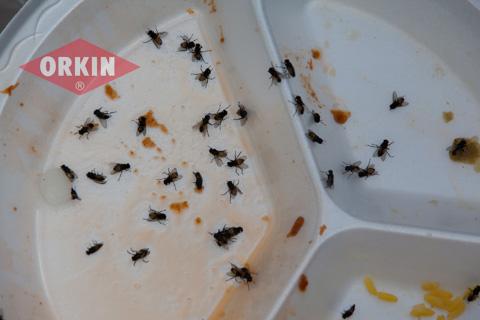
Garbage Flies on Dirty Plates
More Information
Flies in restaurants spread harmful bacteria and thrive in food prep areas. Orkin offers targeted solutions to help control fly activity and support sanitation efforts.
Sewer flies breed in organic buildup inside drains and pipes, often indicating hidden moisture or sanitation issues. Their presence can signal deeper plumbing concerns.
Flies are among the most common and unsanitary pests, often spreading bacteria as they move between waste and food sources. Their rapid breeding makes control essential.