What are the Signs of Rat Infestations?
Rats are responsible for the transmission of many diseases. Their feeding habits are destructive, and their nesting behaviors can compromise the structure of infested buildings. However, rats are secretive and not seen by humans when populations are low. Therefore, an infestation may prove difficult to confirm.

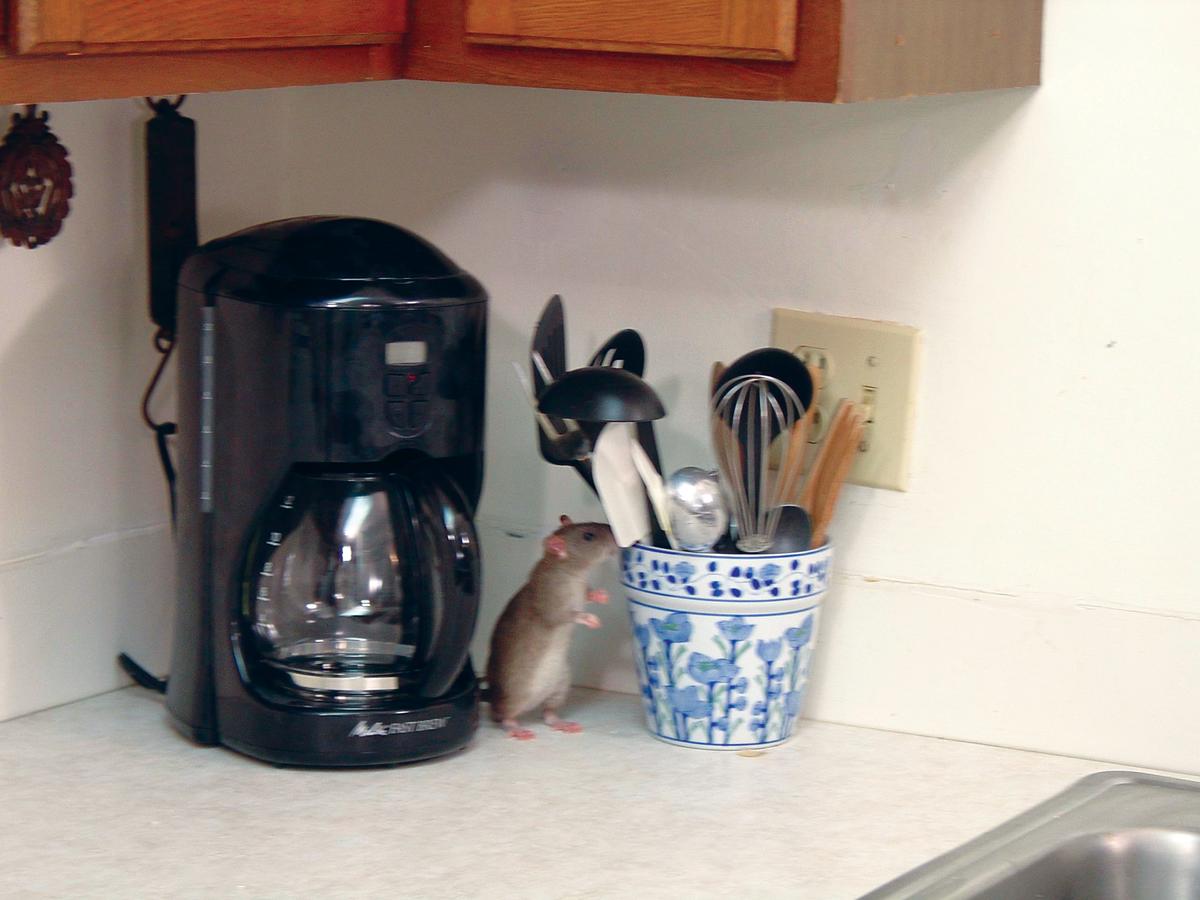
Norway Rat on Counter
How to Identify Signs of a Rat Infestation
Visual Evidence
Spotting the signs of a rat infestation early is essential for effective control. Seeing live or dead rats, along with other clear indicators, can help gauge the severity of an infestation. Look out for these key warning signs:
-
Live or Dead Rats: Seeing rats during daylight hours signals a significant population
-
Rat Droppings: Dark, pellet-like droppings in hidden areas
-
Grease Marks: Oily smudges along walls and baseboards
-
Gnaw Marks: Large, rough teeth marks on wood, plastic, and other materials
Habitat Indicators
Rats build distinct habitats that can give away their presence, even if you don’t see them directly. Knowing where to find nests and burrows can help you understand their activity levels. Watch for these common signs:
-
Rat Runs: Established foraging paths in grass and low vegetation
-
Burrows: Ground nests near tree roots, pavement edges, and drain covers
-
Hidden Nests: Locations in attics, lofts, and beneath floorboards
Structural Damage
Rats are known for chewing on materials to keep their teeth sharp, often causing significant damage. Spotting signs of structural damage can help identify an infestation early and prevent it from escalating. Look out for these telltale indicators:
-
Large Holes: Significant damage in walls, floors, and structural materials
-
Chewed Materials: Extensive gnawing on various surfaces
-
Compromised Surfaces: Weakened wood, plastic, and building materials
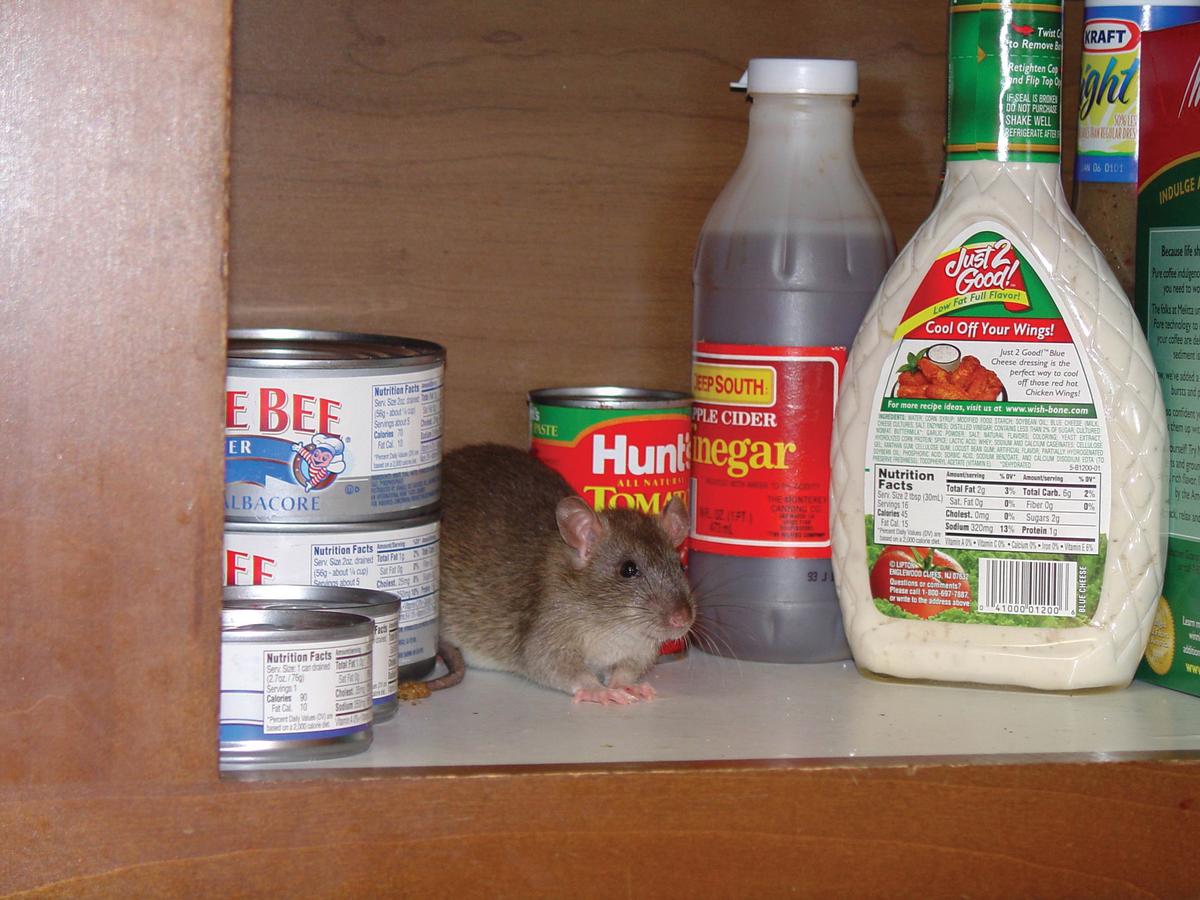
Rat in Kitchen Pantry
How to Prevent Rat Infestations
Preventing rat infestations starts with proactive measures to address their needs for food, water, and shelter. Here are some effective strategies:
-
Seal Entry Points: Inspect your home for holes, cracks, or gaps larger than a quarter, and seal them using steel wool, caulk, or metal sheeting to block access.
-
Remove Food Sources: Store food in rodent-proof containers, avoid leaving pet food outside, and clean up spills and crumbs regularly to eliminate attractants.
-
Maintain Cleanliness: Keep your yard tidy by removing debris, trimming overgrown vegetation, and clearing potential nesting sites. Store firewood at least 18 inches off the ground.
-
Limit Water Access: Fix leaks and eliminate standing water around your property to reduce rats' drinking sources.
-
Use Natural Deterrents: Plant mint in your garden or use peppermint oil indoors, as these scents are known to repel rats.
-
Invest in Professional Pest Control: Regular pest control services from a rodent exterminator can help monitor and manage rat populations effectively, offering long-term peace of mind.
Implementing these steps can help lower the risk of a rat infestation and protect your home.
Professional Rat Control
In the event of an infestation, it is best to consult an exterminator. Although various traps are available, they address only individual specimens and will not prove effective in the face of an infestation. Additionally, rats tend to be wary of unknown objects in their established foraging paths, rendering many traps initially ineffective.
For help protecting your home against rat infestations, contact an Orkin Pro for professional rodent control.
More Rat Facts
Rats display complex social behaviors and thrive in human environments, making them challenging pests to manage.
Rats can transmit diseases like hantavirus through their bites, urine, and feces, creating significant health risks for humans.
Rats are opportunistic eaters, consuming a wide range of foods, from meat to fruit, wherever abundant food sources are available.
Rat fleas are blood-feeding parasites that can transmit diseases like bubonic plague and are capable of jumping impressive distances for their size.
Norway rats prefer burrowing, while roof rats thrive in elevated spaces like trees and attics, both adapting well to environments near human homes.
Rat holes create entry points for pests and can cause property damage. They're typically found in concealed or cluttered areas near water sources and building materials.
Norway rats and roof rats are the two main rat species in North America, differing in appearance, habitat preferences, and behavior.
While rats are typically found in urban areas, muskrats thrive in wetlands.
Rats have an excellent sense of smell, using specialized receptors to detect chemicals and pheromones in their surroundings.
Rats leave distinctive four-toed front and five-toed back tracks along foraging paths, often found in muddy or dusty areas.
In North America, the two main rat species are Norway and roof rats, each with unique traits: Norway rats are stocky ground dwellers, while roof rats are agile climbers that prefer elevated spaces.
Rats have unique characteristics, such as front incisors that grow continuously, a range of sizes and colors depending on the species, and differences in tail length and body shape.
Rats have many predators in both urban and natural environments, including humans, domestic cats, birds of prey like hawks and owls, and various snake species.
Rat bites can be quite painful due to their large teeth. Rat bite symptoms include redness and swelling.