Syrphid Fly Fact & Information
Learn more about syrphid flies (hoverflies or flower flies) by learning techniques for identification.
Syrphid Fly Management
How do I keep syrphid flies from entering my home?
How to remove syrphid flies from your home
Syrphid flies, commonly referred to as hoverflies or flower flies, are beneficial insects that play an important role outdoors by helping control aphid populations and supporting pollination. While they are harmless to people and structures, you may occasionally notice them gathering near entry points such as doors or windows. Syrphid flies generally have no interest in living indoors; however, they can accidentally enter homes while following light sources or seasonal warmth. Taking simple preventive steps, such as sealing gaps around doors and ensuring screens are in good repair, can help keep these and other outdoor insects where they belong.
You can easily manage hoverflies by removing their attractants.
-
Reduce the aphid populations on your interior plants, as this eliminates the primary food source for their larvae.
-
Minimize flowering plants right next to your doors or open windows.
-
Clean up decaying organic matter around your foundation.
To keep them outside, use tight-fitting screens on all your windows and doors. If one gets inside, simply use a vacuum or gently swat it back outdoors. You never need to use chemicals to handle an indoor hoverfly.
Humane relocation requires very little effort. If a hoverfly gets trapped indoors, open a nearby window or door and guide it outside with a piece of paper. They don’t bite or sting, so there should be no risk of getting near them - although they look like a bee, they are flies mimicking bees only. You can also turn off the indoor lights and leave a single light on near an open door, as they naturally fly toward light sources.
What does Orkin do to get rid of syrphid flies?
Orkin Pros are trained to help manage syrphid flies and similar pests. Since every yard or home is different, your Orkin Pro will design a unique pest control program for your situationto help reduce their attraction to your home while enhancing their presence outside in the garden
Frequently Asked Questions
Behavior, Diet & Habits
Understanding Syrphid Flies
What do syrphid flies look like?
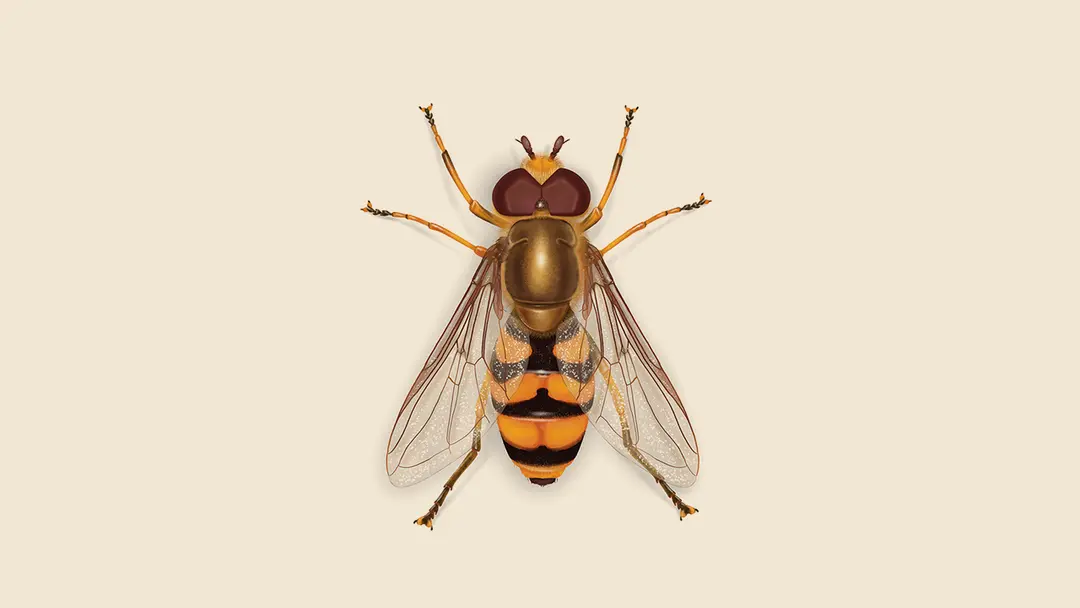
Syrphid flies range in size from a quarter of an inch to three-quarters of an inch long, depending on the exact species. They feature distinctive black and yellow or orange banded bodies. This coloring mimics the appearance of wasps and bees, keeping them safe from hungry birds.
Unlike bees, they possess large compound eyes that cover most of their head and very short antennae. If you look closely at their wings, you will notice a distinct, clear venation pattern. They also display a highly recognizable hovering flight behavior, remaining perfectly still in mid-air before darting away.
What is the difference between syrphid flies, wasps, and bees?
You can easily tell a syrphid fly from a bee or wasp by watching its behavior and seeing those fly-like eyes and antennae that are different from those of wasps and bees. Syrphid flies cannot sting. They fly much more slowly when hovering, whereas bees tend to buzz clumsily, and wasps fly with direct purpose.
Physically, syrphid flies have softer, rounder bodies compared to the hard, slender bodies of wasps. They also possess only one pair of wings, while bees and wasps have two pairs.
Common Syrphid Fly Species
Several species of syrphid flies populate gardens around the world.
-
Toxomerus species are incredibly common across North America, often spotted resting on leaves.
-
The European hoverfly (Episyrphus balteatus) features striking orange and black bands and migrates in massive numbers.
-
Another frequent garden visitor is Syrphus ribesii, which you can typically find near large aphid colonies.
Where can syrphid flies be found?
These adaptable insects thrive in a wide variety of environments. You can find them almost anywhere that flowers bloom.
Geographic Distribution
Syrphid flies live worldwide. They boast a massive population across North America, Europe, and Asia. You will find them most abundantly in vibrant gardens, sprawling meadows, quiet woodlands, and large agricultural fields.
Micro-Habitats
Within these regions, hoverflies seek out specific micro-habitats. They flock to flowering plants and vegetable gardens that offer plentiful nectar. They also actively hunt out fields with high aphid populations to lay their eggs. You can often spot them resting in moist, sheltered outdoor areas during the hottest parts of the day.
What do syrphid flies eat?
The diet of a syrphid fly changes completely as it grows. Larvae feed predominantly on plant-eating insects like aphids and lace wings. Adult syrphid flies feed on nectar and pollen and are important pollinators. Both life stages provide immense value to the environment.
What do adult syrphid flies eat?
Adult syrphid flies feed exclusively on nectar and pollen. They spend their days moving between flowers to gather the energy they need to fly and reproduce. As they travel from bloom to bloom, they act as highly effective pollinators for your garden.
What do syrphid fly larvae eat?
The larvae operate as tiny garden carnivores. They feed primarily on plant-feeding insects like aphids and lace wings, making them a major natural pest-control asset. Depending on the species, some larvae also eat thrips, small caterpillars, and other soft-bodied insects. A small number of syrphid fly species produce larvae that consume decaying organic matter instead.
Syrphid Fly Lifecycle Stages
The syrphid fly undergoes complete metamorphosis. It progresses through four distinct stages: egg, larva, pupa, and adult. The entire process typically takes five to nine weeks, although the exact timeframe depends heavily on the specific species and the local climate.
Syrphid Fly Reproduction
Female syrphid flies seek out large aphid colonies to lay their eggs, thus their alternative name, the hoverfly. A single female can lay hundreds of eggs during her short lifespan. Once the eggs hatch, the larvae begin a vigorous feeding period that lasts for a week or two. After eating their fill, the larvae drop to the ground and pupate in the soil or beneath protective plant debris.
What are the benefits of syrphid flies?
Syrphid flies earn their reputation as one of the most beneficial insects you can welcome into your yard.
Adult hoverflies play a crucial role in ecological health. While bees often get all the credit, syrphid flies rank as incredibly efficient pollinators. They cover vast distances and visit countless flowers daily, ensuring the health and reproduction of native plants and food crops.
Gardeners love syrphid fly larvae. A single larva can consume hundreds of aphids before it pupates. Welcoming these insects into your garden provides an environmentally friendly alternative to harsh chemical pesticides. They handle your pest problems naturally and quietly.