Concord’s wooded lots, older wood-frame homes and frequent spring rains add up to one thing for local property owners: ants marching where they don’t belong. Whether it’s a steady trail along the backsplash or winged swarmers popping up in late spring, ants can turn kitchens and basements into busy highways.
We help Concord homeowners and businesses figure out what ant species they’re seeing, why they’re seeing them and how to get rid of ants with a plan built on science. Our Orkin Pros live and work near you, so we know how central New Hampshire’s climate and construction quirks influence ant behavior.
Understanding Ants in Concord
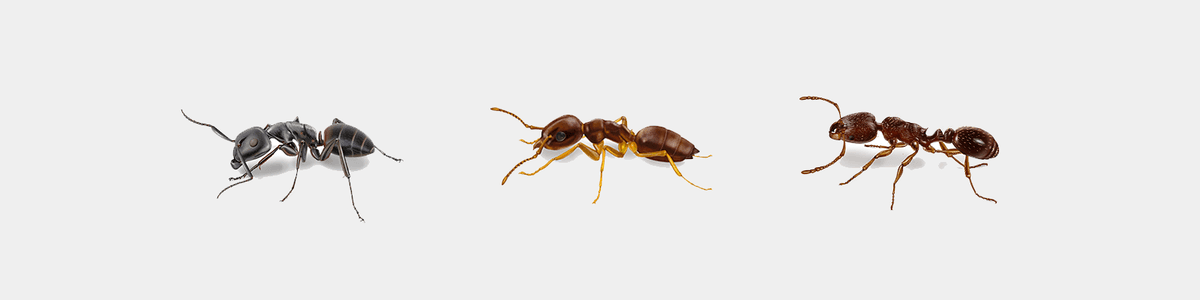
Here are the species most Concord customers ask us about and why they show up.
Carpenter ants (Camponotus spp.)
With four species in the state, carpenter ants are one of the most troublesome structural pests in New Hampshire. Workers are relatively large, often black, and do not eat wood but excavate smooth, clean galleries in moist or decayed wood. Indoors, they may be in porch columns, under eaves, between walls, window frames, beams and joists. Winged males and females emerge in spring and summer, and nests are mostly inactive in winter, though a few ants may appear on warm days.
Why Concord homes see them: moisture issues in basements or crawl spaces, leaks, wood-to-soil contact, firewood stacked against the house, or overgrown vegetation touching the roofline.
Pavement ants (Tetramorium caespitum)
Common across New England and often nesting under sidewalks and foundations. Colonies may exceed 10,000 workers. Foraging is mostly at night, though they move by day in early spring and summer. These ants are attracted to sweets and protein and may trail to kitchens. Their sting is too weak to damage human skin.
Why Concord homes see them: slab foundations, patio blocks, cracks in masonry and elevated moisture around the perimeter.
Odorous house ants (Tapinoma sessile)
Small, dark ants that smell like rotten coconut when crushed. They nest opportunistically under mulch, timbers, stones and siding and often link indoor and outdoor nests. Increased indoor activity is often associated with rain. Colonies in urban settings may have many queens and multiple nest sites.
Why Concord homes see them: rainy spells, abundant landscape mulch, trees or vines contacting siding, easy access to sweets and water indoors.
Health and Property Concerns Caused by Ants
-
Ants may contaminate food and surfaces when they forage in pantries and across countertops. Some species are known to transmit bacterial and fungal organisms in sensitive settings, so keeping ants out of food areas matters.
-
Carpenter ants don’t eat wood, but they may cause costly damage by excavating galleries to expand a colony’s nursery chambers.
Environmental and Climate Factors in Concord
Concord’s climate shapes ant activity and your chances of seeing trails indoors.
Warmer season activity: Concord’s spring and summer temperatures align with peak ant activity, especially for species like odorous house ants.
Rain drives trails: Increased indoor activity by odorous house ants is often associated with rain, which helps explain those sudden spring kitchen invasions.
Seasonal windows: Most ant pressure occurs from late spring through early fall. In winter, most colonies slow down, though carpenter ants might appear indoors on unusually warm days.
Concord Ant Season at a Glance
-
Late March–April: First warm-ups and rain may push odorous house ants indoors. Early foraging increases.
-
May–July: Peak activity. Carpenter ant swarmers may appear. Pavement ants forage day and night, often nesting under slabs and foundations.
-
August–September: Trails persist, especially after storms. Keep vegetation off the house and food sealed.
-
Winter: Activity slows. Occasional indoor sightings may occur on warm days, especially where moisture is present.
How to Get Rid of Ants in Concord, NH
You can reduce ant pressure with a few simple, highly effective steps, especially important in Concord’s rainy spring and wooded neighborhoods.
DIY tips you can do now:
1. Eliminate moisture
-
Repair plumbing leaks and grade soil away from the foundation.
-
Improve ventilation in basements, attics and crawl spaces. Better airflow helps deter carpenter ants that prefer damp wood.
2. Cut off bridges to the house
Trim trees and shrubs so they don’t touch siding or the roof. Ants use branches like on-ramps.
3. Manage wood and mulch
Store firewood away from the home and off the ground. Keep mulch to a light layer and pull it back from the foundation.
4. Seal and sanitize
Seal gaps around utility lines, window frames and door sweeps. Clean up crumbs, wipe spills, rinse recyclables and keep pet food areas tidy.
5. Track the trail
Identify where trails start and end. For pavement ants, look for small soil piles near cracks in slabs or door jambs.
How Orkin Pros Approach Ant Control
Ant control isn’t one-size-fits-all. Species, nest location and conducive conditions determine what works. Our Orkin Pros begin with science and may prescribe an A.I.M. plan, Assess, Implement, Monitor, tailored to your home or business.
Assess
Identify the species, find conducive moisture, follow trails to likely nest sites, then map indoor and outdoor pressure points.
Implement
Depending on the species and where nests are located, we may prescribe:
-
Targeted baits selected for the ant’s preferred foods
-
Precise applications around entry points and the ground/foundation interface
-
Strategic exterior bait placements where activity is heaviest
-
Exclusion recommendations to close gaps and reduce trails
For odorous house ants, control is often more effective when we target outdoor activity to impact indoor trails. For carpenter ants, finding and addressing moisture-damaged wood is critical alongside control tactics. For pavement ants, nest access under slabs or stones often drives the plan.
Monitor
We check activity, adjust placements and update recommendations, so you see fewer ants over time.
Tools matter. When an Orkin Pro shows up in Concord, we bring monitoring stations, inspection lights, moisture meters and species-specific products to address your exact situation.
Why Choose Orkin in Concord
Local know-how, backed by science: We live and work here. We know where carpenter ants hide in older basements, which landscapes tend to harbor odorous house ants and how Concord’s April–May rains can flip a light trail into a full-on parade.
A legacy of expertise: Orkin Pros train on ant biology, behavior and control strategies so we can prescribe a plan that fits your home and your species problem.
Built around your property: Homes and businesses in the South End, West End or out by the Merrimack aren’t all the same. We assess construction type, moisture, landscaping and entry points before we act.
The Bottom Line for Concord, New Hampshire Ant Control
Ants are persistent, but they’re predictable when you understand the species, the season and the structure. In Concord, moisture management and precise control tactics make all the difference.
Seeing trails today or finding winged ants indoors this spring? We can help. Contact Orkin to talk with an Orkin Pro about ant control in Concord, and we’ll assess your situation, then prescribe a plan to help get rid of ants and keep them from coming back.