Citronella Ant Facts & Information
Protect your home or business from citronella ants by learning techniques for identification and control.
Citronella Ant Treatment
How do I get rid of citronella ants?
Because citronella ants are subterranean and often build their colonies deep under concrete slabs or basement floors, DIY pest control is rarely effective. Simply spraying the visible ants won't solve the root of the problem. While a vacuum cleaner is the fastest way to physically remove a sudden swarm of winged ants in your living room, long-term eradication requires identifying the nest and treating it directly.
What does Orkin do to get rid of citronella ants?
Your local Orkin Pro is trained to help manage citronella ants and similar pests. Since every building or home is different, your Orkin Pro will design a unique ant treatment program for your situation.
Orkin can provide the right solution to keep citronella ants in their place…out of your home, or business.
Frequently Asked Questions
Behavior, Diet & Habits
Understanding Citronella Ants
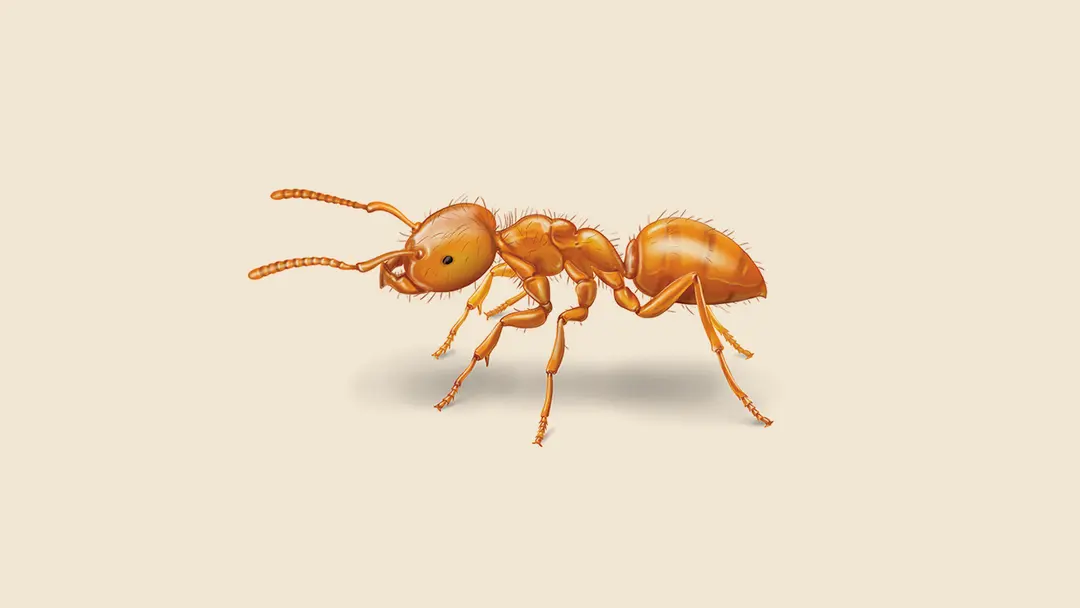
What do citronella ants look like?
Workers are yellow and approximately 4 mm long. The queens are about 8 mm long. The workers have a strong lemon-like smell when crushed, which results in their name of citronella ant.
Where do citronella ants nest?
Citronella ants nest in the soil. Outdoors, they nest under logs and rocks and landscape timbers. They also nest beside foundations and inside of crawlspaces. They make mounds of soil while they dig their galleries underground.
They often make their nests under slabs and porches. Sometimes they push soil up through a crack in a slab while they nest underneath. Homeowners sometimes mistake this soil as a sign of termite activity.
Inside homes, citronella ants nest in areas of high moisture. They often nest in wood that has already been damaged by fungus or termites. If citronella ants invade a home, it may be a sign that there is a moisture problem inside. Finding and solving the moisture problem is a priority.
What do citronella ants eat?
Unlike the ants you might find raiding your kitchen pantry for crumbs and sugar, citronella ants have a highly specialized diet. They feed almost entirely on honeydew, a sugary substance excreted by underground aphids and mealybugs that feed on plant roots. Because the workers spend their time underground tending to these aphids, you will rarely see them foraging out in the open.
Citronella Ant Colonies
The reproduction and lifecycle of citronella ants are rooted in the highly organized social structure of their colonies, with each member having a distinct role.
Colony Roles:
-
Queen: The central figure responsible for laying all the eggs and populating the colony.
-
Workers: Handle the labor, including maintaining the nest, caring for the young, and foraging for food.
-
Males (Drones): Exist solely to mate with new queens during mating flights.
Citronella Ant Reproduction
Reproduction begins when winged males and females, known as swarmers, leave the colony to mate. These mating flights typically happen on humid summer nights. After mating, the males die, and the newly fertilized queens shed their wings to find a suitable location for a new nest. They often choose moist soil near foundations or decaying wood, where they lay their first eggs to start a new generation.
Citronella Ant Lifecycle
The citronella ant lifecycle follows four distinct stages: egg, larva, pupa, and adult. This entire process, from egg to mature ant, can take several weeks to a few months, depending on environmental conditions like temperature. A colony can survive for years, continuously producing new workers and swarmers.
Citronella Ant Swarming Season
Citronella ants often go completely unnoticed until it's time to mate. Periodically, the queen produces winged males and females known as swarmers. These swarmers leave the colony in massive numbers to mate and establish new nests. Swarms typically occur in the mid-to-late summer, but it is also common for them to swarm inside heated homes during the late fall or early spring. Seeing hundreds of winged ants suddenly emerge from a basement wall or floor crack can be highly distressing but remember that these swarmers will not cause structural damage.
How to Prevent Citronella Ants
The best way to discourage citronella ants from settling near your home is to eliminate excess moisture and potential nesting sites:
-
Dry out damp areas: Use a dehumidifier in basements and crawlspaces.
-
Repair water damage: Fix any rotten wood inside or outside your home.
-
Seal entry points: Fill cracks and holes in your foundation and basement floor.
-
Store firewood properly: Keep it stacked off the ground and away from the house.
-
Clear yard debris: Remove rotting logs, large rocks, and other potential nesting sites near the foundation.